
Explore Natural Philosophy

Phil • Cr. Think • Science • Hist •

FAQ

What does the Idea of Ideas say about Hoffman’s evolutionary simulations?

Sun 2 Aug 2026
Published 22 hours ago.
Updated 22 hours ago.
Related FAQs
Can our perception of size and scale be trusted?
How did writing first evolve?
When did ancient humans develop symbolic thought?
What ancient human species first realized it was going to die?
What Is Life?
Are dogs and wolves the same species?
Share :
Email
Print

What does the Idea of Ideas say about Hoffman’s evolutionary simulations?

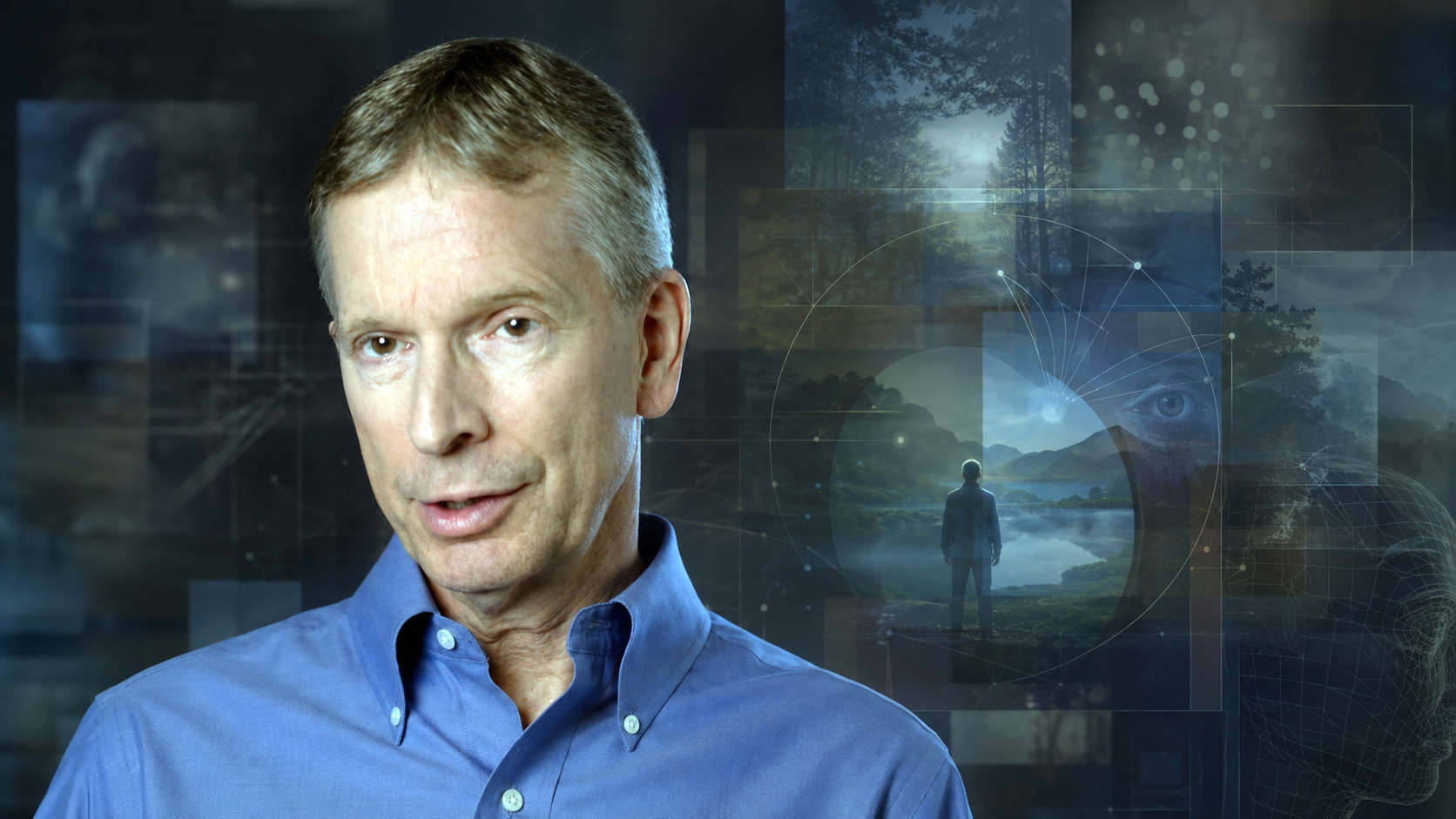
The Idea of Ideas sorts Hoffman cleanly. Evolved perception is empirical. His simulations are rational. The claim that perception has no meaningful correspondence with reality is speculative. The claim that consciousness creates spacetime is even more speculative. His reliance on math as a kind of proof is a common mistake in science. The major error here is only in presenting a speculative idea, a hypothesis, as something more.

Here are the details.

First, Donald Hoffman starts with a good idea. We do not experience reality raw. Evolution shaped our senses to simplify the world and guide behavior, but the map is not the territory. That part is within established science.

His evolutionary simulations are interesting too, but they remain models. His models that are disconnected from reality are speculative and false in a logical setting. His models that show empirical patterns are rationally true. That part of his work is also well within established science, but let’s be clear about which models model reality  and which ones model the speculative ideas of Hoffman.

Where I part ways with Hoffman is his claim that evolved perceptions have no meaningful connection to reality. His argument treats fitness and truth as though they are opposites. They are not. A gazelle does not need to understand a lion fully to react. Evolution evolved many triggers for survival. Evolution may favor simplified truth over exhaustive, but survival still requires enough correspondence with reality to act successfully.

And as I concluded in chapter 22 of 30 Philosophers, whether this world is base reality, a simulation, or something stranger, it is still the only material world. Hoffman takes the possibility of a deeper reality and mistakenly uses it to undermine the reality already beneath his feet.
— map / TST —

Hoffman begins with a valuable warning against naïve realism: perception is an evolved interface, not reality unfiltered. But he inflates that insight into a consciousness-first metaphysics his simulations cannot establish. Whatever reality ultimately rests upon, repeatable evidence still reveals a stable world that resists our guesses and corrects our mistakes.
Michael Alan Prestwood
Author & Natural Philosopher
Prestwood writes on science-first philosophy, with particular attention to the convergence of disciplines. Drawing on his TST Framework, his work emphasizes rational inquiry grounded in empirical observation while engaging questions at the edges of established knowledge. With TouchstoneTruth positioned as a living touchstone, this work aims to contribute reliable, evolving analysis in an emerging AI era where the credibility of information is increasingly contested.
The Prestwood Column
Menu
August 2026
»COLUMN ARCHIVE
--COLUMN--
Column Research….
1. Timeline Story
Ethical Roadmap
2. Linked Quote
“The greatest weapon against stress is our ability to choose one thought over another.”
3. Science FAQ »
Did morality evolve?
4. Philosophy FAQ »
Is the Me Too movement consistent with TST Ethics?
5. Critical Thinking FAQ »
When should you stop following the crowd?
6. History FAQ!
What did the Nuremberg Trials clarify about moral agents?
Bonus Deep-Dive Article
TST Ethical Roadmap: A Process Model for Ethical Guidance and Moral Choice

Comments

Join the Conversation! Currently logged out.
NEW BOOK! NOW AVAILABLE!!

30 Philosophers: A New Look at Timeless Ideas

by Michael Alan Prestwood
The story of the history of our best ideas!
Scroll to Top