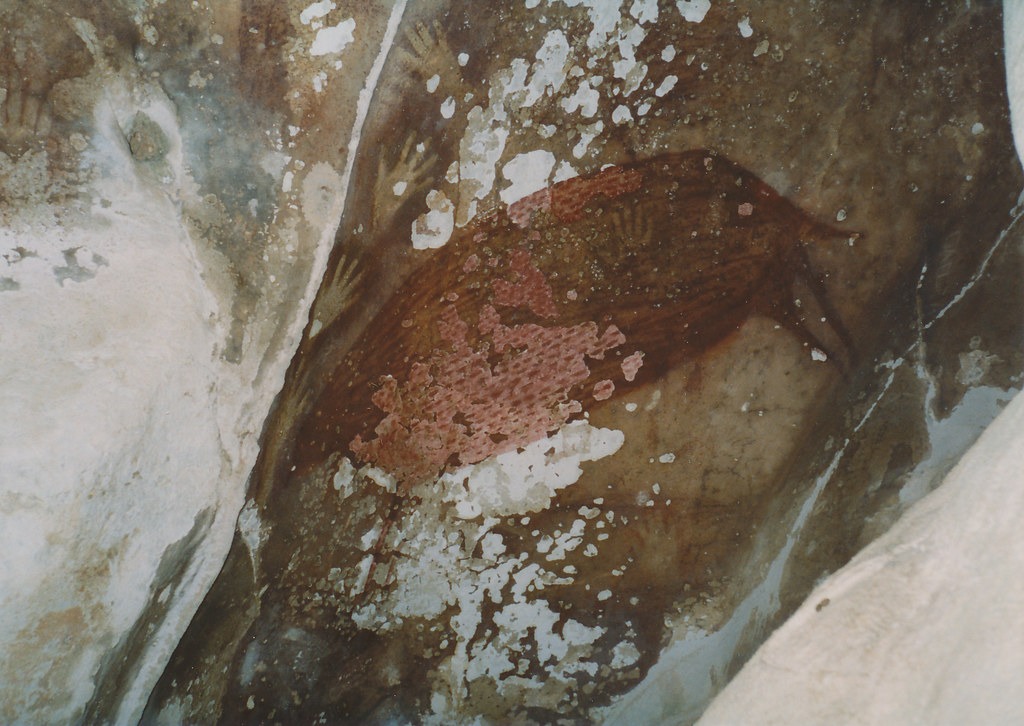
Sulawesi Cave Art
Discovered in Indonesia, these hand stencils and depictions of animals are among the oldest known figurative artworks.


Prehistory Age (50,000 to 4,000 years ago): After the cognitive age, the prehistory for modern humans starts. The time after the stabilization of our raw cognitive abilities.
Discovered in Indonesia, these hand stencils and depictions of animals are among the oldest known figurative artworks.

Since grain is easy to grow, does this suggest agriculture might have started a few thousand years earlier? Under study, but the discovery of bread-making from around 14,000 years ago indeed suggests that humans were experimenting with grains before the widespread adoption of agriculture, which is traditionally dated to about 12,000 years ago with the
The Invention of Bread Read More »
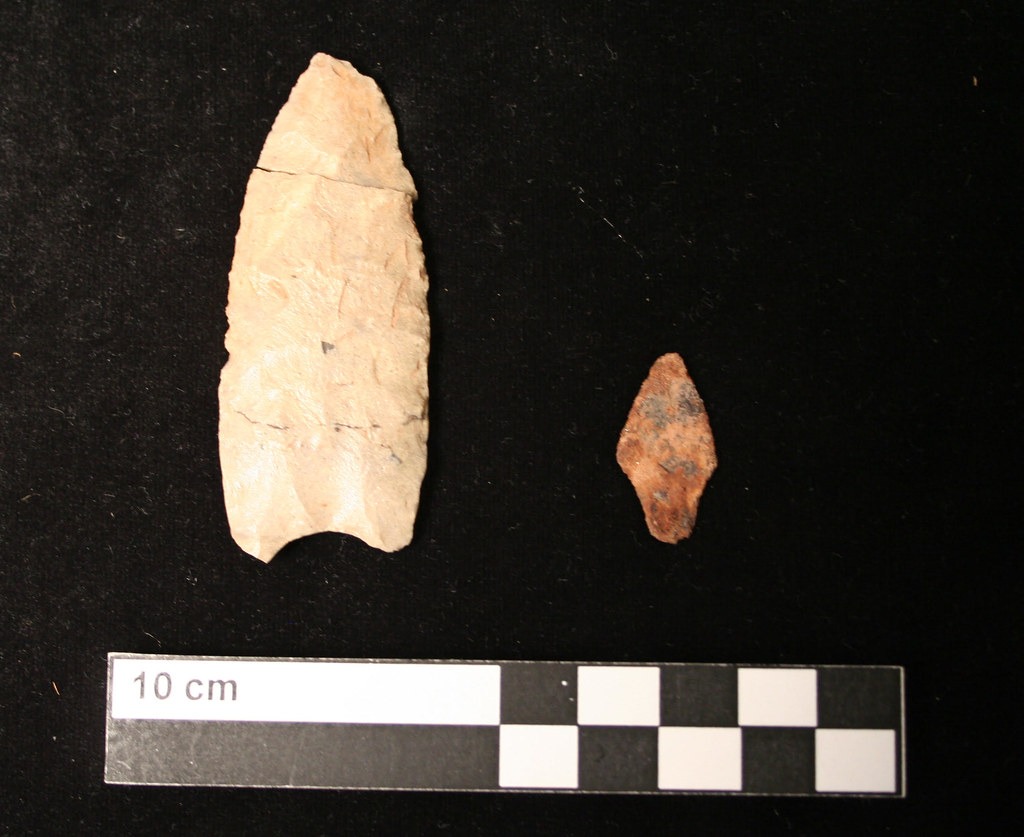
In what is now the United States, the Clovis culture, named after distinctive stone tools found near Clovis, New Mexico, represents one of the earliest known sophisticated societies in the Americas. Dating back to around 13,000 BCE, the Clovis people are believed to be among the first inhabitants of the continent, crossing the Bering Land
The Clovis Culture Read More »

In the lush, fertile lands of the Yangtze River Valley in ancient China, early inhabitants achieved a milestone that would revolutionize human society: the domestication of rice. Around 8,000 BCE, these innovative communities began to cultivate wild rice, laying the groundwork for sedentary agriculture and complex civilizations. This agricultural breakthrough not only provided a stable
The Domestication of Rice Read More »

Potential earliest writing in Asian zone: the Oracle Bone Script, circa 1250 BCE is oldest confirmed. These symbols which are radiocarbon dated to the 7th millennium BCE have similarities to the late 2nd millennium BCE oracle bone script. Put this writing in the MAYBE column. Scientists are still going through a process to verify this
Neolithic Symbols: China Read More »
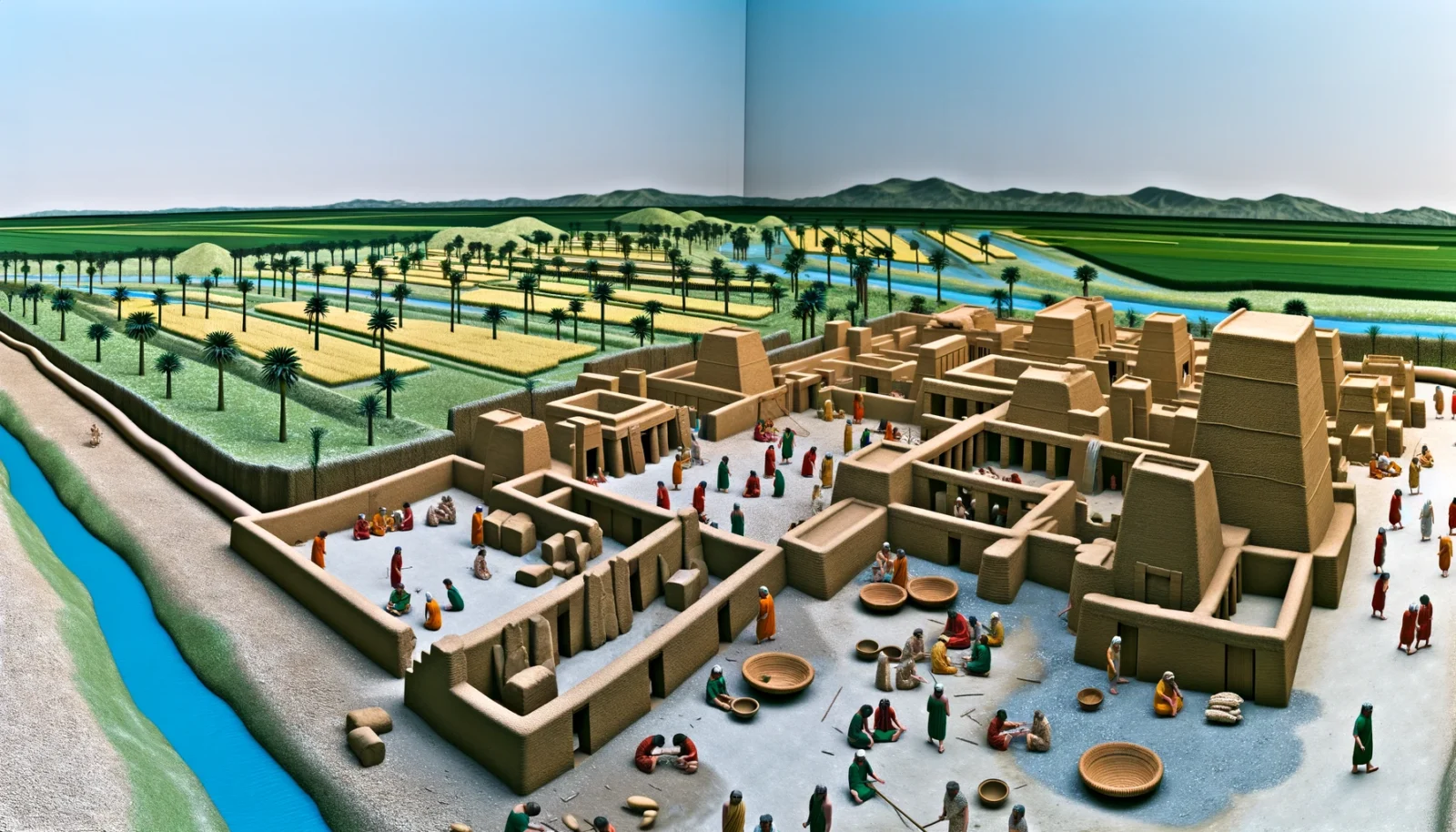
From 6500 to 4000 BCE, the Sumer civilization increased in social polarization. For example, central houses in the settlements became bigger. This early Sumer culture is characterized by large unwalled villages with multi-roomed rectangular mud-brick houses. The village featured public buildings including temples and centralized government. They had fine quality greenish colored pottery decorated with
Early Sumer Civilization Read More »
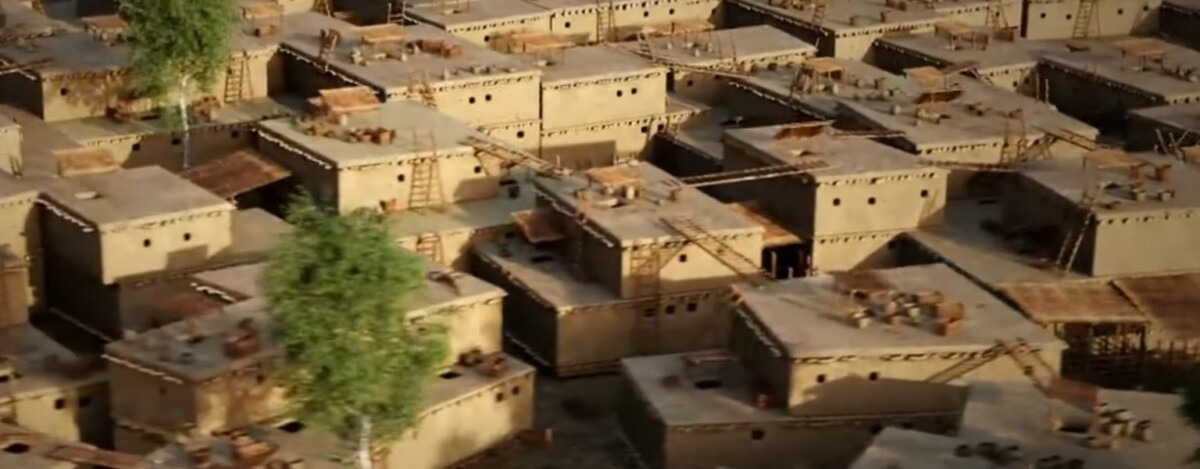
The city of Çatalhöyük was a very large Neolithic city in the southern Anatolia peninsula in modern day Turkey. The population of 5,000 to 10,000 lived in mudbrick buildings. Some of the larger buildings have ornate murals. A painting of the village, with the twin mountain peaks in the background is frequently cited as the
City of Catalhoyuk Read More »
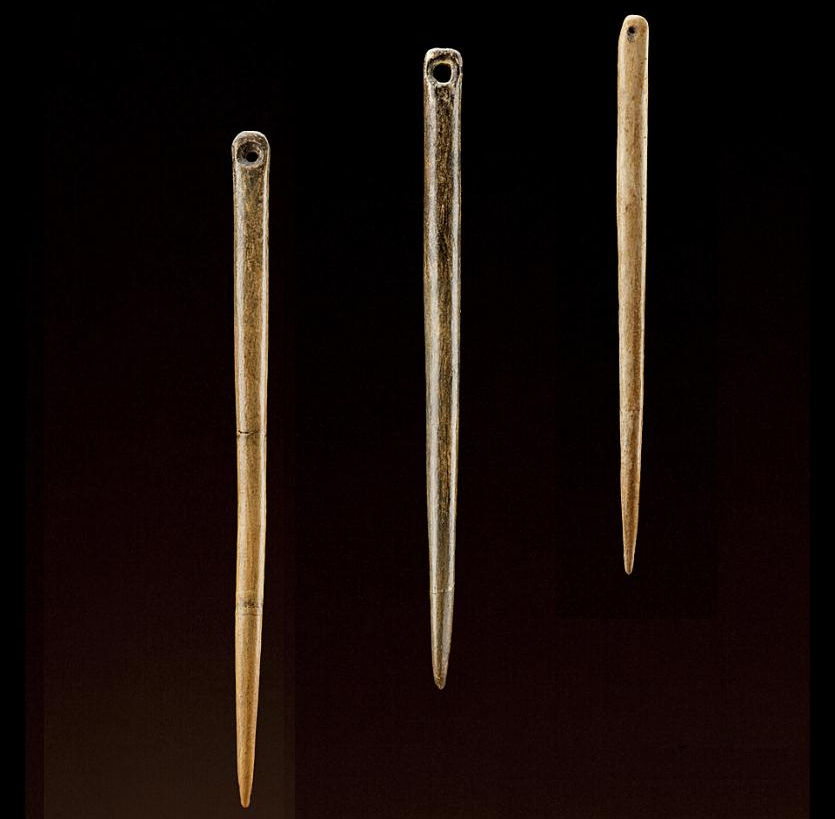
1,200 Generations Ago Humans used bone and ivory needles like these about 28,000 BCE to sew warm, closely fitted garments. These bone needles are from Xiaogushan, Liaoning Province, China, and are dated to about 28,000 to 21,000 BCE.
Advanced Sewing Needles Read More »
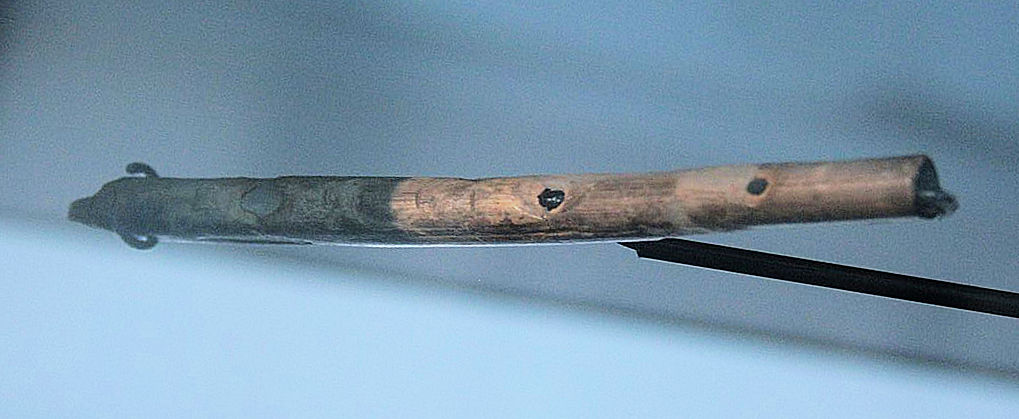
1,600 Generations Ago The oldest undisputed musical instrument is the Hohle Fels Flute discovered in the Hohle Fels cave in Germany’s Swabian Alb in 2008. The flute is made from a vulture’s wing bone perforated with five finger holes.
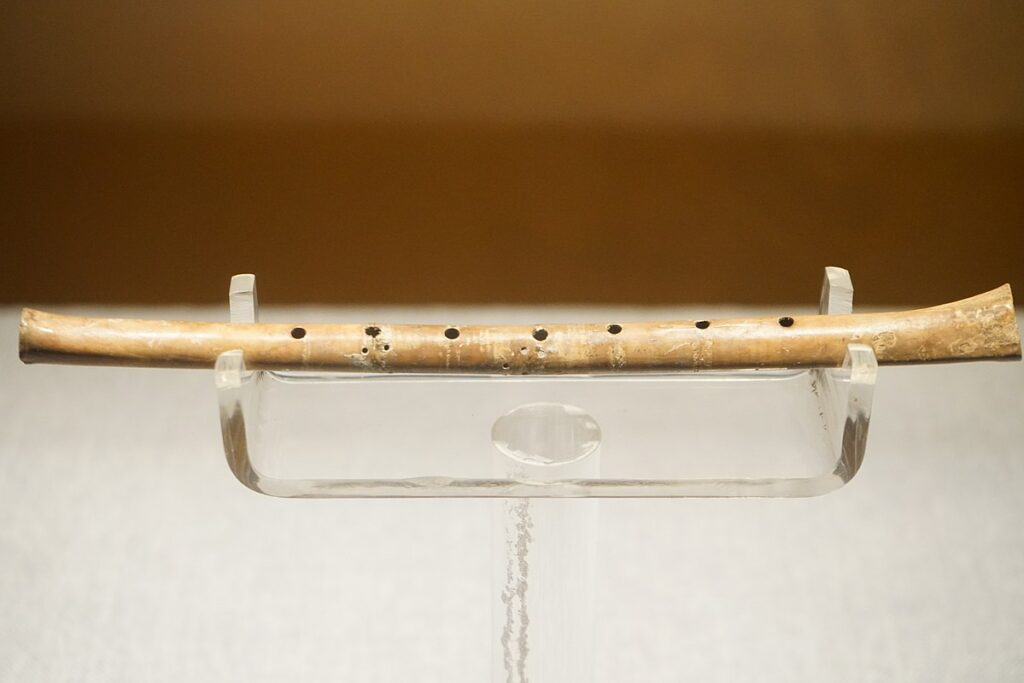
The Jiahu gudi is the oldest known musical instrument from China. This 8,000 year old flute dates back to circa 6,000 BCE. Gudi literally means “bone flute”.
Oldest Known Flute in China Read More »
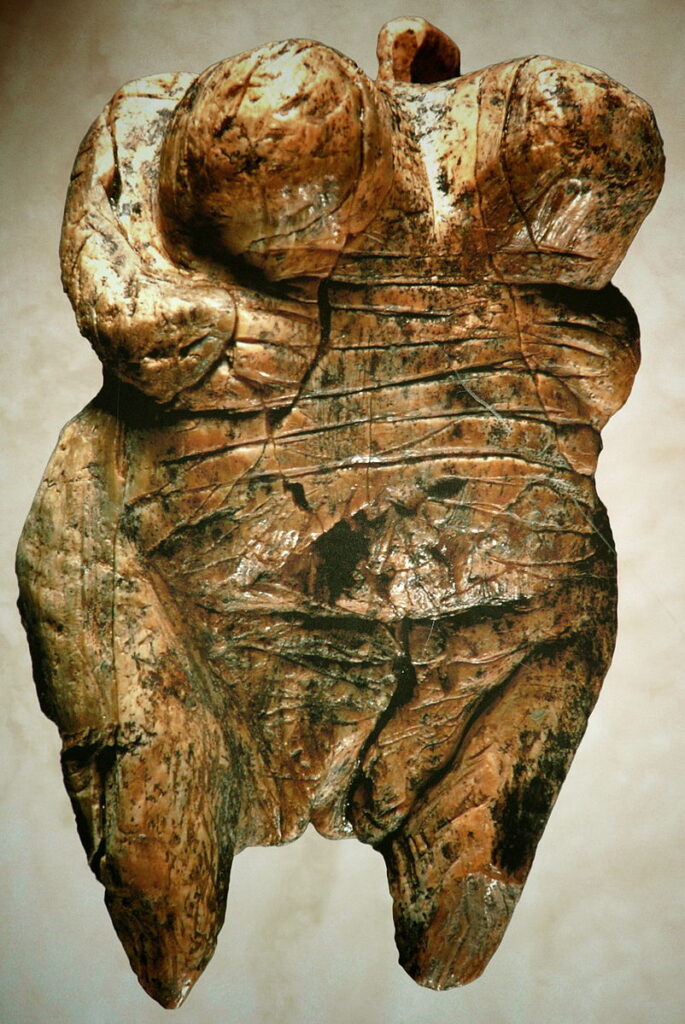
The Venus of Hohle Fels is a 2.4″ figurine made of wooly mammoth ivory that was unearthed in 2008 in Hohle Fels, a cave near Schelklingen, Germany. It was pieced together from six pieces found in a cluster, about 10 feet below ground, and about 60 feet from the cave entrance. The left arm and
Venus of Hohle Fels Read More »

468 Generations Ago (from 2020 CE) The Neolithic Revolution is the earliest known Agricultural Revolution. It is very likely that humans practiced forms of agriculture earlier. How much earlier? Well, without evidence, we are guessing. For convenience, anthropologists label humans as hunter-gatherers prior to the Neolithic Revolution. The fact is that the current theory states
Neolithic Revolution Read More »

240 Generations Ago Interpreting the date God created the Earth by reading and interpreting the Bible is very difficult. You can put dates on events, time between events, etc. then convert it to the modern Julian calendar. One popular interpretation is Sunday, October 23, 4004 BCE. Generating this date, and similar, rely on the Ussher
4004 BCE, The Bible’s Earth Creation Date Read More »
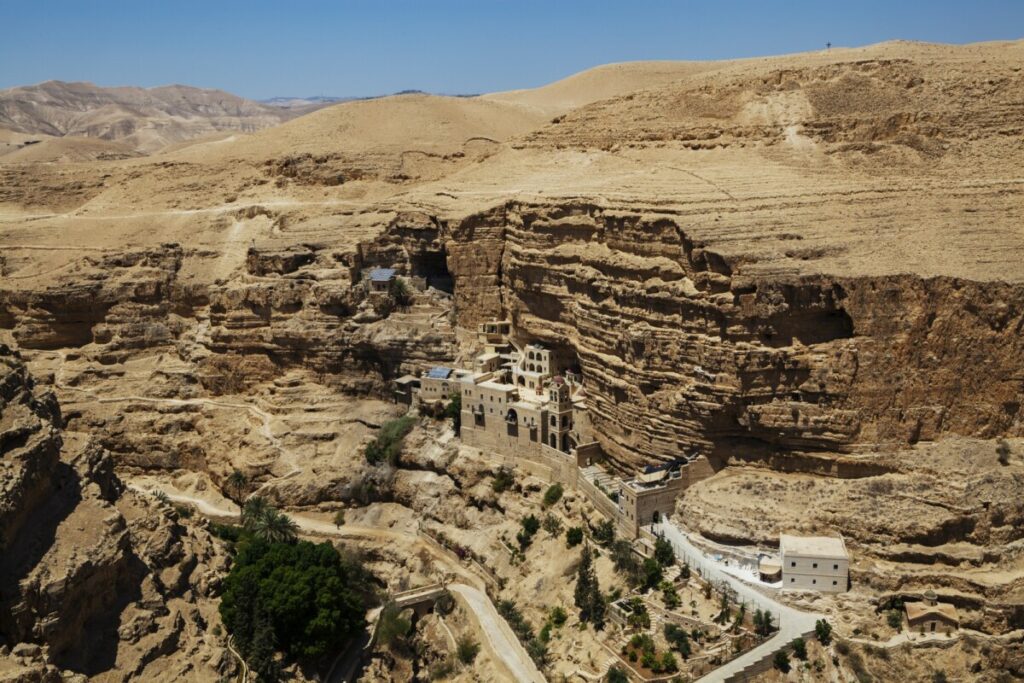
360 Generations Ago Earliest known permanent settlement in the Africa/Middle East zone. Jericho, located in the West Bank, Palestinian Territories, stands as one of the earliest known permanent settlements in the Africa/Middle East zone, with continuous habitation dating back to at least the 9th millennium BCE. Situated near an oasis in the Jordan Valley, Jericho’s