Weekly Insights for Thinkers

Science  Philosophy  Critical Thinking  History  Politics RW  AI  Physics  •  Evolution  Astronomy 30 Phil Book More…
Science  Phil  Cr. Think  Hist 

3-Symbolic Age

Symbolic Age (125,000 to 440,000 years ago): The time during which symbolic thought formed in the common ancestor to neanderthals and sapiens and then mixed through interbreeding into the global population.

Terra Amata Site, France

Discovered in the 1990s, this 400,000-year-old Homo heidelbergensis structure in France is believed to be a primitive hut or shelter made from wooden posts and branches. The structure is thought to have been built by Homo heidelbergensis. The shelter is estimated to be around 4-5 meters (13-16 feet) wide and 6-7 meters (20-23 feet) long. […]

Terra Amata Site, France Read More »

Homo rhodesiensis: A Hybrid Lesson

Homo rhodesiensis, often regarded as Africa’s counterpart to Europe’s Homo heidelbergensis, represents a pivotal species. Discovered in Kabwe, Zambia, the species exhibits a mix of robust and modern traits with a large brain size and advanced tool use, reflecting significant cognitive capabilities. Interbreeding Analysis: The evolutionary journey of Homo rhodesiensis might highlight well the complex

Homo rhodesiensis: A Hybrid Lesson Read More »

Homo longi: Rewriting Human Migration Narratives

In the lush landscapes of northeastern China, the discovery of the Homo longi skull has opened new chapters in our understanding of human evolution. This skull, dating back to approximately 146,000 years ago, represents a pivotal moment in prehistory. Homo longi, also nicknamed “Dragon Man,” showcases a unique blend of archaic and modern traits—marked by

Homo longi: Rewriting Human Migration Narratives Read More »

Neanderthal-Sapien LCA

NSLCA: The Neanderthal-Sapien Last Common Ancestor was likely Homo heidelbergensis or Homo antecessor. Analysis: Before the discovery of Homo antecessor in the 1990s, Homo heidelbergensis was considered the primary candidate for the NSLCA due to its chronological and morphological position in the human lineage. The discovery of Homo antecessor, with its more modern-looking facial features, has

Neanderthal-Sapien LCA Read More »

Homo naledi: A Likely Hybrid

Speculative branch of humans. Maybe a long lost hybrid: In the evolving tapestry of human history, the emergence of Homo naledi represents a captivating mystery that challenges traditional narratives of linear progression. Positioned within the intricate web of human evolution, Homo naledi could exemplify a complex branch woven from ancient threads. Imagine a scenario where

Homo naledi: A Likely Hybrid Read More »

Extinction: Homo naledi

Discovered in 2013 and first dated in 2017, Homo naledi and humans coexisted in South and East Africa from our emergence around 315,000 years ago until their extinction about 236,000 years ago. It is possible that we share a common ancestor with them, but research is pending. Homo naledi lived in South Africa from 335,000 to

Extinction: Homo naledi Read More »

Hominin World Population: 2 Million (maybe)

When Homo sapiens first emerged, their population in Africa was likely just a few hundred thousand, while the total hominin population, including other species like Neanderthals and Homo heidelbergensis, may have ranged from 1.1 to 2.1 million. During this period, Homo sapiens were primarily found in Africa, while other hominins occupied broader ranges across Eurasia,

Hominin World Population: 2 Million (maybe) Read More »

Seasonal Settlements at Klasies River Caves

Earliest known seasonal settlement in the Africa/Middle East zone: In the diverse and rich landscapes of what is now South Africa, the Klasies River Caves served as a vital seasonal haven for early modern humans. Positioned strategically along the coast, these caves were revisited across generations, suggesting a shared understanding among different groups about the

Seasonal Settlements at Klasies River Caves Read More »

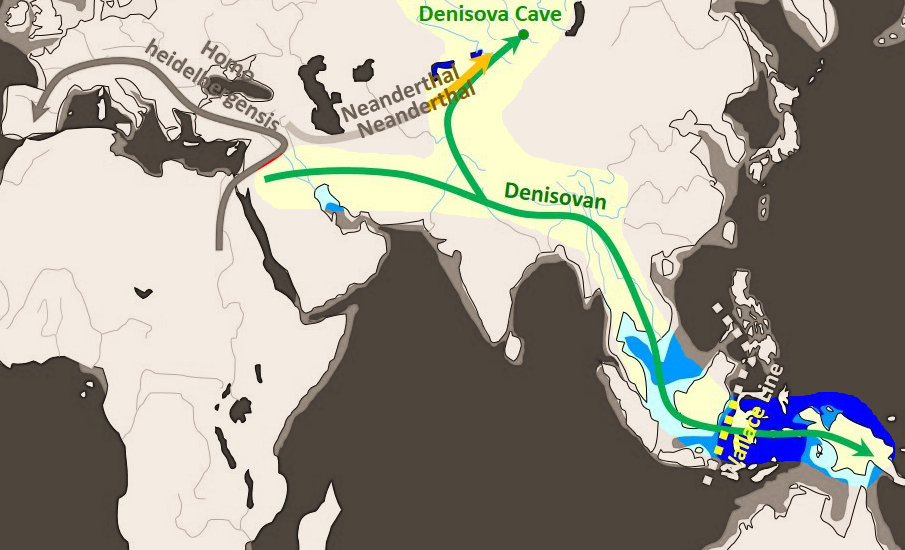
https://commons.wikimedia.org/wiki/File:Spread_and_Evolution_of_Denisovans.jpg

Neanderthal-Denisovan Split

12,000 Generations Ago Neanderthals and denisovans in the genus Homo had a common ancestor about 370,000 BCE (current estimates range from 250,000 to 500,000 BCE). Though neanderthals, denisovans, and sapiens share a common ancestor, they didn’t evolve directly from each other. That common ancestor from which all three evolved from was likely a later Homo

Neanderthal-Denisovan Split Read More »

Eve: Haplogroup L

7,000 Generations Ago All humans today share a single grandma, circa 175,000 BCE. We know this because all humans alive today share our ancestor’s haplogroup L genes — from our X chromosome. She was one of many thousands of women living in eastern Africa. Many maternal lines survived for many generations but ultimately over time

Eve: Haplogroup L Read More »

Adam: Haplogroup A

11,000 Generations Ago All humans today share a single grandpa, circa 275,000 BCE. We know this because all humans alive today share our ancestor’s haplogroup A genes — from our Y chromosome. He was one of many thousands of men living in eastern Africa. Many paternal lines survived for many generations but ultimately over time

Adam: Haplogroup A Read More »

Oldest Surviving Spear

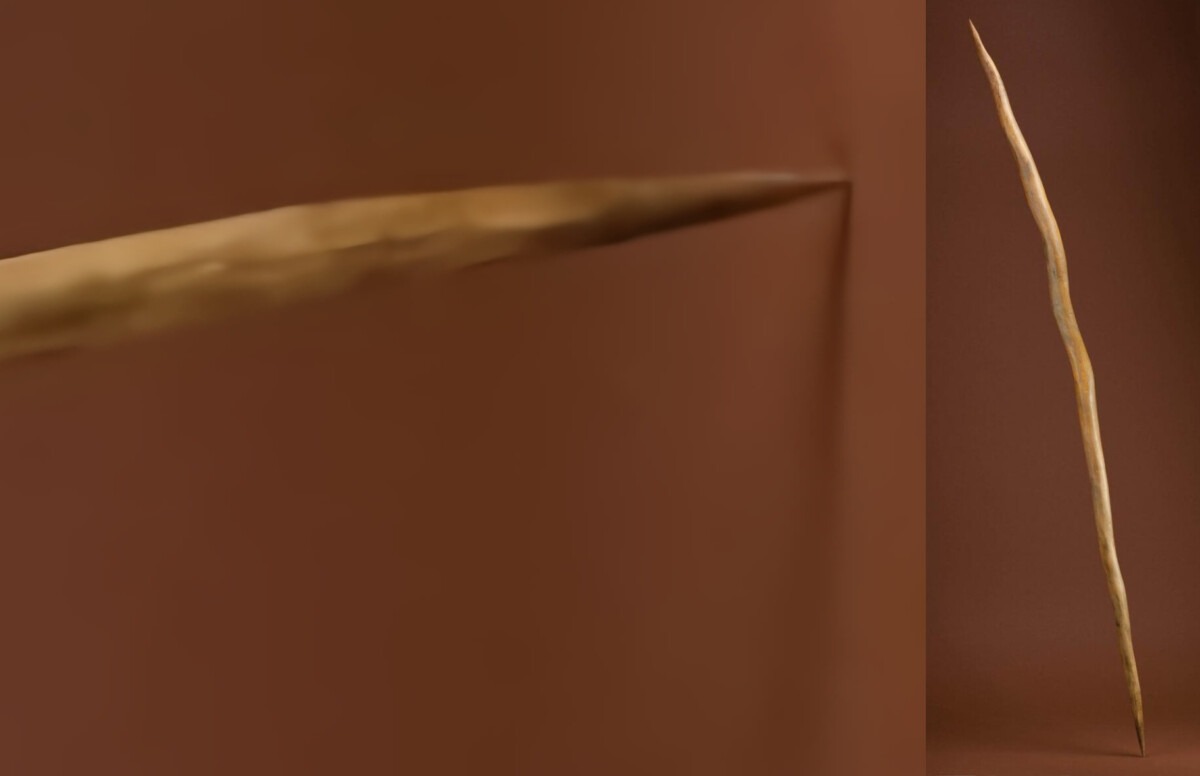
14,000 Generations Ago Homo heidelbergensis: Long spears made hunting large animals more safe. The oldest wooden spears found so far were found in Germany and dates to circa 400,000 BCE. In fact, they are currently the oldest known wooden artifacts. The find included 3 wooden spears, stone tools, and the butchered remains of more than

Oldest Surviving Spear Read More »

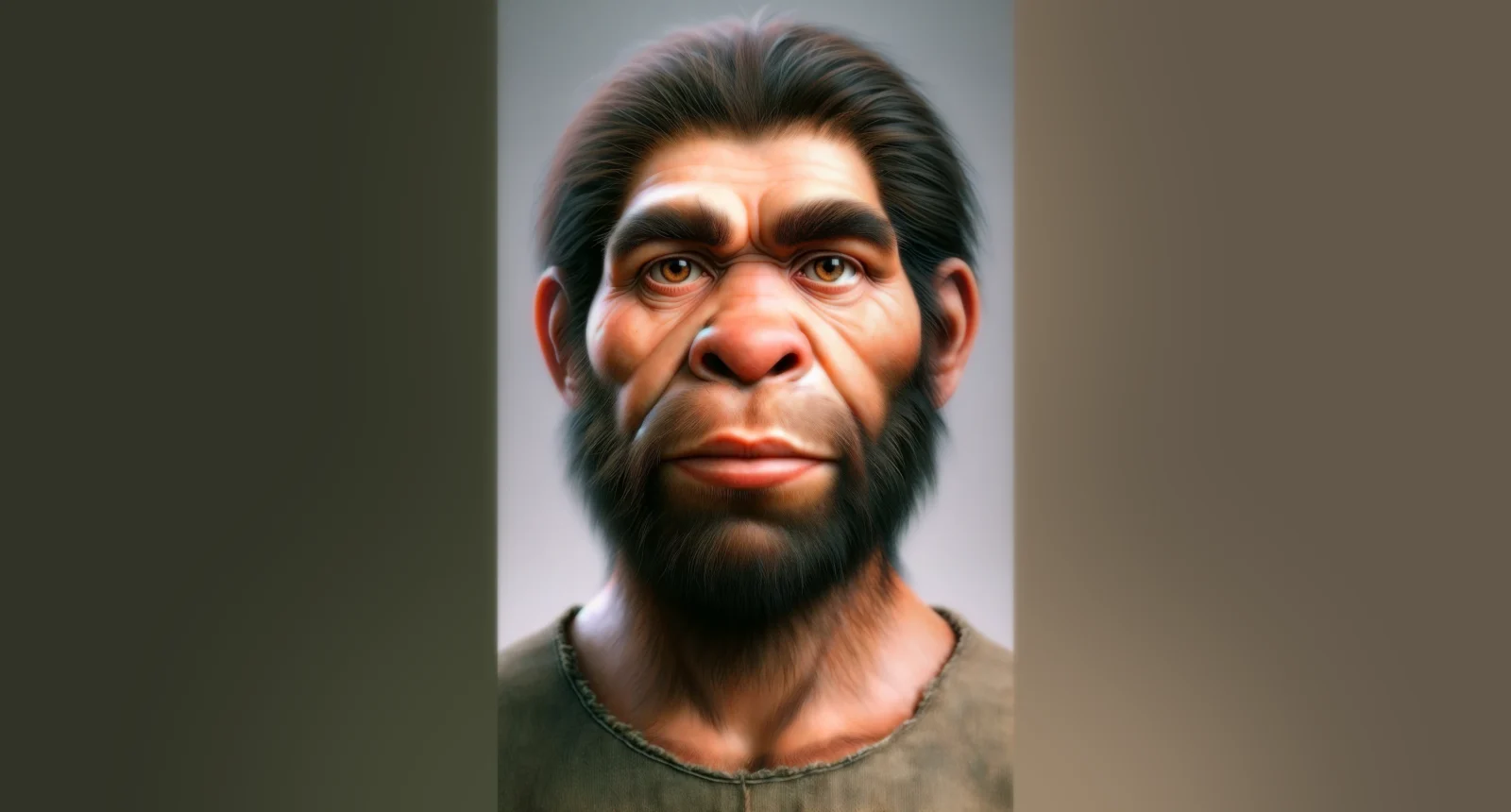
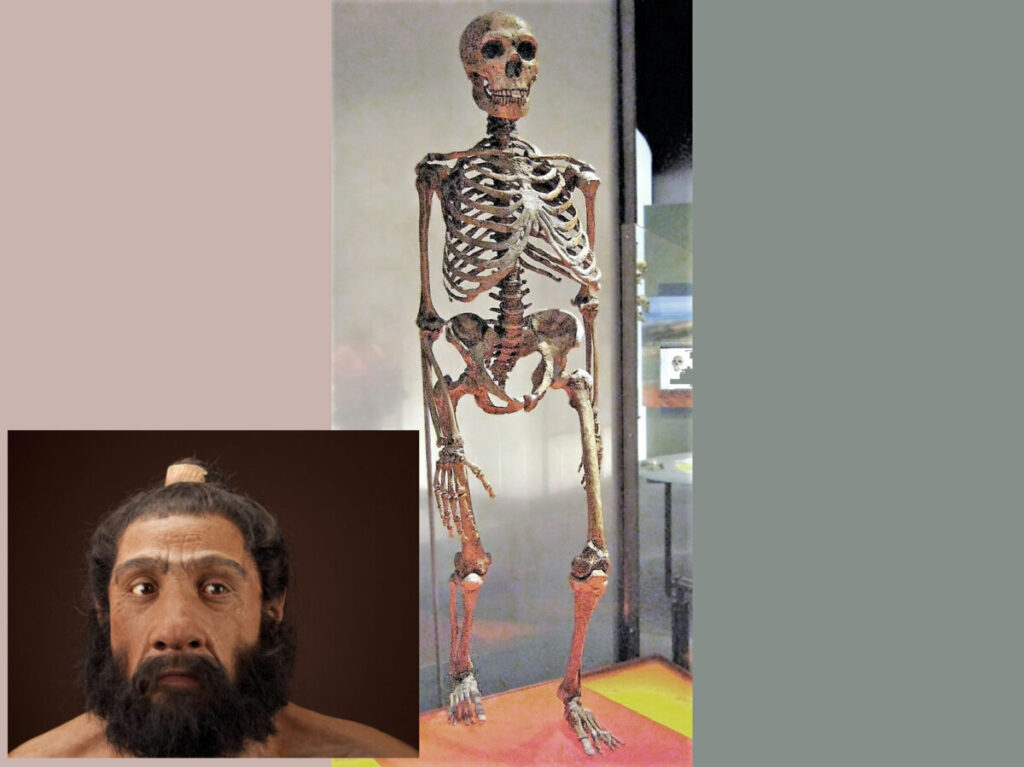
Homo neanderthalensis: Verified True Symbolic Thought

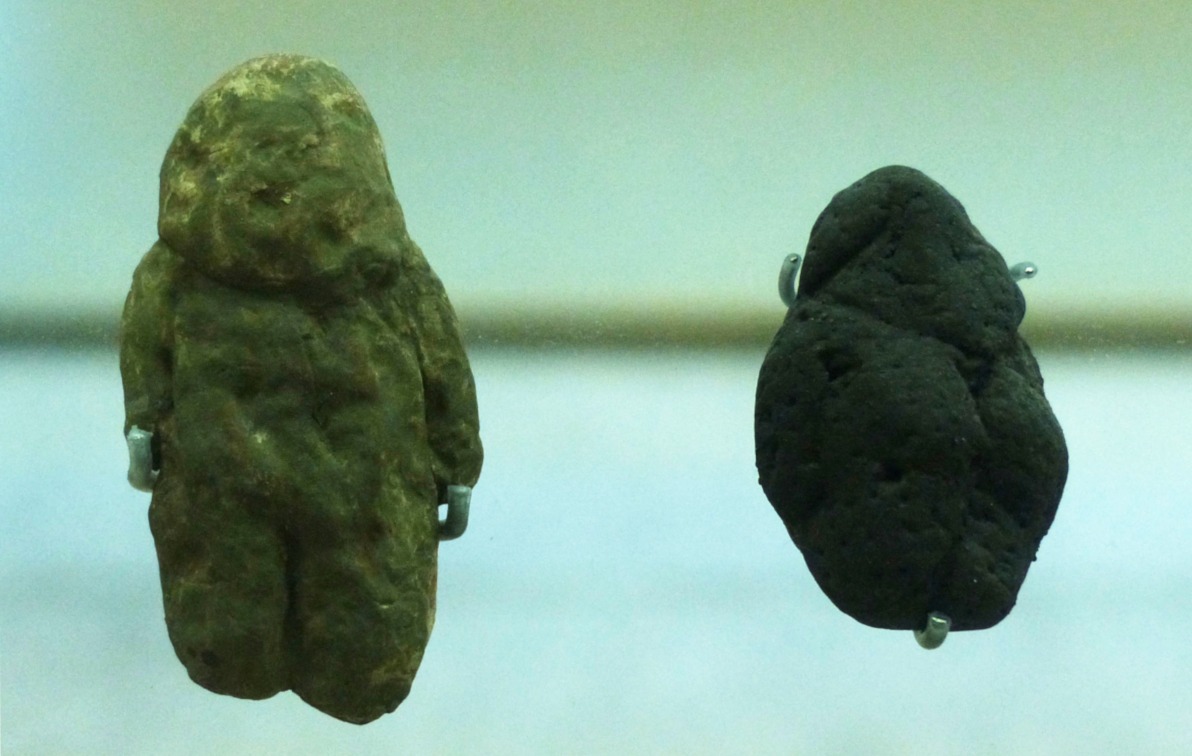
16,000 Generations Ago True symbolic thought emerges before 430,000 BCE: The discovery in 2018 of Neanderthal art dating back to 68,000 years ago, proved symbolic thought in Neanderthals. It also indicates strongly that symbolic thought evolved in or before our common ancestor about 430,000 years ago. This must be true unless either they evolved it

Homo neanderthalensis: Verified True Symbolic Thought Read More »

Scroll to Top