
Ethical Roadmap
Group ethics guides. Personal morality chooses. Act with good intent. Weigh the result. Adjust.


Group ethics guides. Personal morality chooses. Act with good intent. Weigh the result. Adjust.

Understanding the reasons why punishment is justified allows you to transition at a fundamental level from fear-based ethics to understanding the intrinsic value of morality.

30 Phil, Chapter 27: In this new look at Hume’s idea of impressions and its relation to innate knowledge, I position instincts as innate knowledge with three types: basic, developmental, and situational.
Modern Innate Knowledge Read More »

30 Phil, Chapter 27, Hume, Touchstone 71: Hume’s Fork. Hume’s Fork is a philosophical tool that categorizes meaningful statements into two distinct types: relations of ideas and matters of fact. It offers a clear demarcation between different kinds of truths. Relations of ideas are statements that are necessarily true, such as “all bachelors are unmarried.”

30 Phil, Chapter 27, Hume, Touchstone 70: The Problem of Induction. The logic behind induction is inherently circular, hence, the problem of induction. We expect future events to be like past events because this has generally been true in the past. This justification itself is inductive, making the whole process circular and self-referential. Although induction
The Problem of Induction Read More »

30 Phil, Chapter 27, Hume, Touchstone 69: Skeptical Empiricism. Skeptical Empiricism challenges the idea of innate knowledge, asserting all we know stems from our experiences.
Skeptical Empiricism Read More »
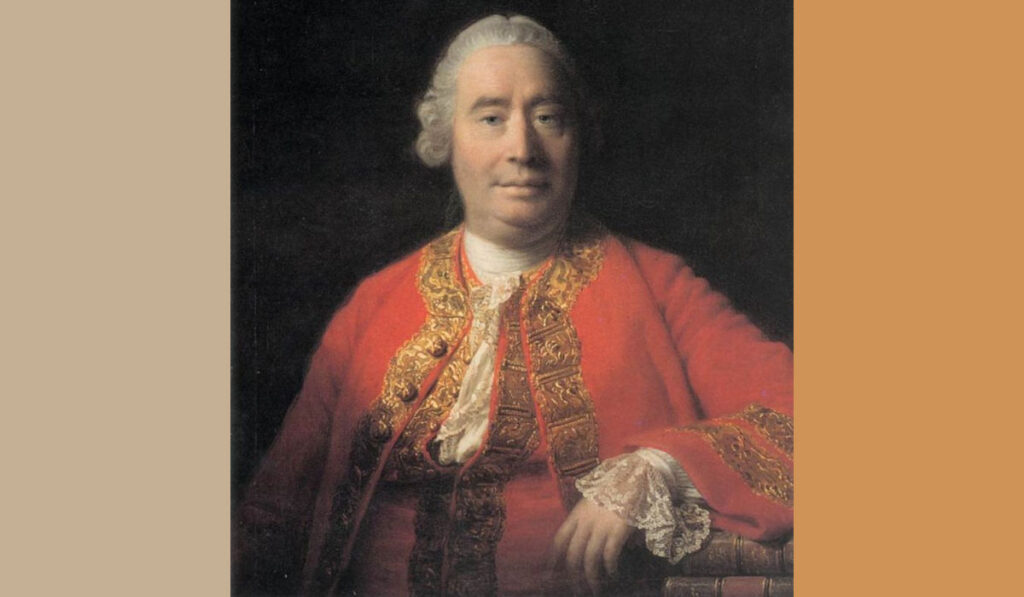
Hume is important to history because he taught us that belief should be earned. Let confidence rise with evidence, logic, testing, and lived experience.