Weekly Insights for Thinkers

Science  Philosophy  Critical Thinking  History  Politics RW  AI  Physics  •  Evolution  Astronomy 30 Phil Book More…
Science  Phil  Cr. Think  Hist 

ch31

Søren Aabye Kierkegaard

Kierkegaard explored themes of anxiety, freedom, and the burden of choice. Living before psychology was a formal discipline, he wrote about angst, an existential anxiety arising from human freedom. His concept of the leap of faith emphasized making decisions authentically, even when faced with uncertainty. For Kierkegaard, anxiety wasn’t to be feared but embraced, as […]

Søren Aabye Kierkegaard Read More »

Final Word

A Final Word This book is a wild ride through humanity, spotlighting fourscore of touchstone ideas. A worthy “similar” book to my original intent a quarter century ago and a worthy dedication to my dad. There are many paths one can take through the minds of our great thinkers; I hope you will enjoy the

Final Word Read More »

Leap of Faith

30 Phil, Chapter 31: In this new look at Kierkegaard’s notion of the “leap of faith” I transform it from a religious leap to a secular leap. While his leap is about belief in God, and more broadly a commitment to a set of values, with an OVM new look, I define a generic “leap

Leap of Faith Read More »

Heidegger’s Existentialism

Heidegger’s existentialism centers on the concept of “being-there” (Dasein), which refers to the unique way humans exist and relate to the world. Heidegger explores the nature of being and emphasizes the importance of understanding one’s own existence within the context of time and space. His philosophy delves into the idea of being authentic by confronting

Heidegger’s Existentialism Read More »

Sartre’s Existentialism

Sartre’s existentialism emphasizes individual freedom, choice, and responsibility. It posits that existence precedes essence, meaning that individuals are not defined by any preexisting essence but instead create their own essence through actions and decisions. Sartre’s philosophy focuses on the concept of “bad faith,” where people deny their freedom by conforming to societal expectations, and encourages

Sartre’s Existentialism Read More »

Bad Faith

30 Phil, Chapter 31, Sartre, Touchstone 80: Bad Faith. Bad faith is the idea of living a lie; it is the act of denying your inherent freedom and responsibility associated with self-awareness. When you go along to get along, you are not yourself, you are being a rock, you are a “being-in-itself.” To live for

Bad Faith Read More »

Consciousness

30 Phil, Chapter 31, Sartre, Touchstone 79: Consciousness. Consciousness is a continuous, self-aware state of existence, an incessant ebb and flow of perceptions, ideas, and emotions. Consciousness is part of your worldview with two basic states: awake and asleep. It’s a complex spectrum of levels while awake, and stages while asleep.

Consciousness Read More »

Anxiety “Angst”

30 Phil, Chapter 31, Sartre, Touchstone 78: Anxiety. The birth of modern psychology: In existentialism, anxiety is the result of confronting the inherent freedoms and responsibilities of human existence. It is not necessarily about fearing specific outcomes or events but rather the realization of the vast possibilities and choices one faces in life, and the

Anxiety “Angst” Read More »

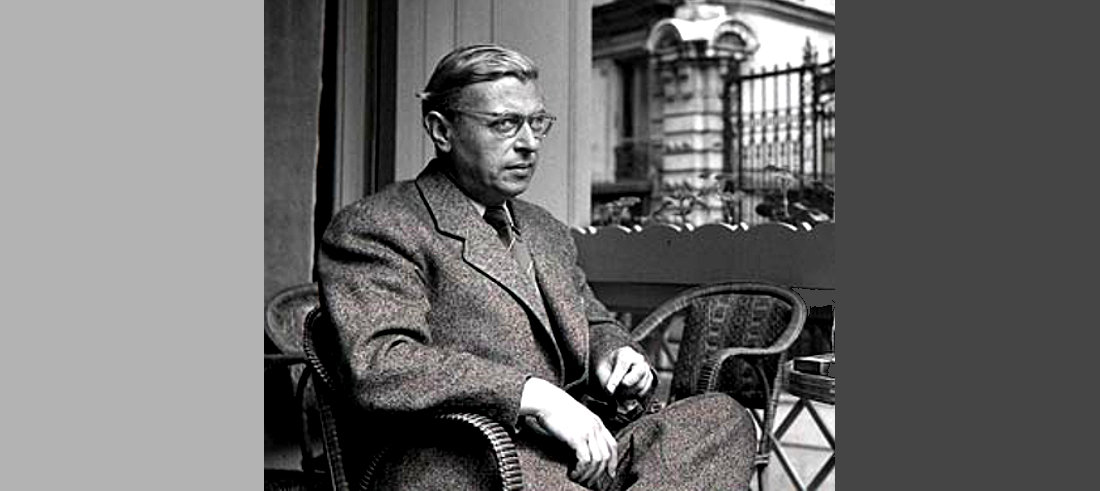
Jean-Paul Sartre

5 Generations Ago 30 Phil, Chapter 31: Sartre and Existentialism Jean-Paul Sartre arrived in the Material World on June 21, 1905. Born in Paris to a modest family. Sartre, the chain-smoking existentialist who frequented Parisian cafes, is most remembered as an activist writer and for his idea of “bad faith.” 

Jean-Paul Sartre Read More »

Socrates (469 – 399 BCE)

99 Generations Ago Socrates was a Greek philosopher and is frequently credited as the founder of Western philosophy. He left no writings, but his student Plato documented his philosophy. Some of my favorite translated sayings attributed to Socrates: Enjoy yourself — it’s later than you think. He who is not content with what they have

Socrates (469 – 399 BCE) Read More »

Scroll to Top