Weekly Insights for Thinkers

Science  Philosophy  Critical Thinking  History  Politics RW  AI  Physics  •  Evolution  Astronomy 30 Phil Book More…
Science  Phil  Cr. Think  Hist 

Africa/Middle East

Gilgamesh, circa 2700 BCE

Gilgamesh is the legendary figure whose exploits are immortalized in the “Epic of Gilgamesh.” Gilgamesh’s reign as king is shrouded in myth and history. The epic describes his journey from a tyrannical ruler to a wise and beloved king, highlighting his quest for immortality and the profound friendship with Enkidu, a wild man created by

Gilgamesh, circa 2700 BCE Read More »

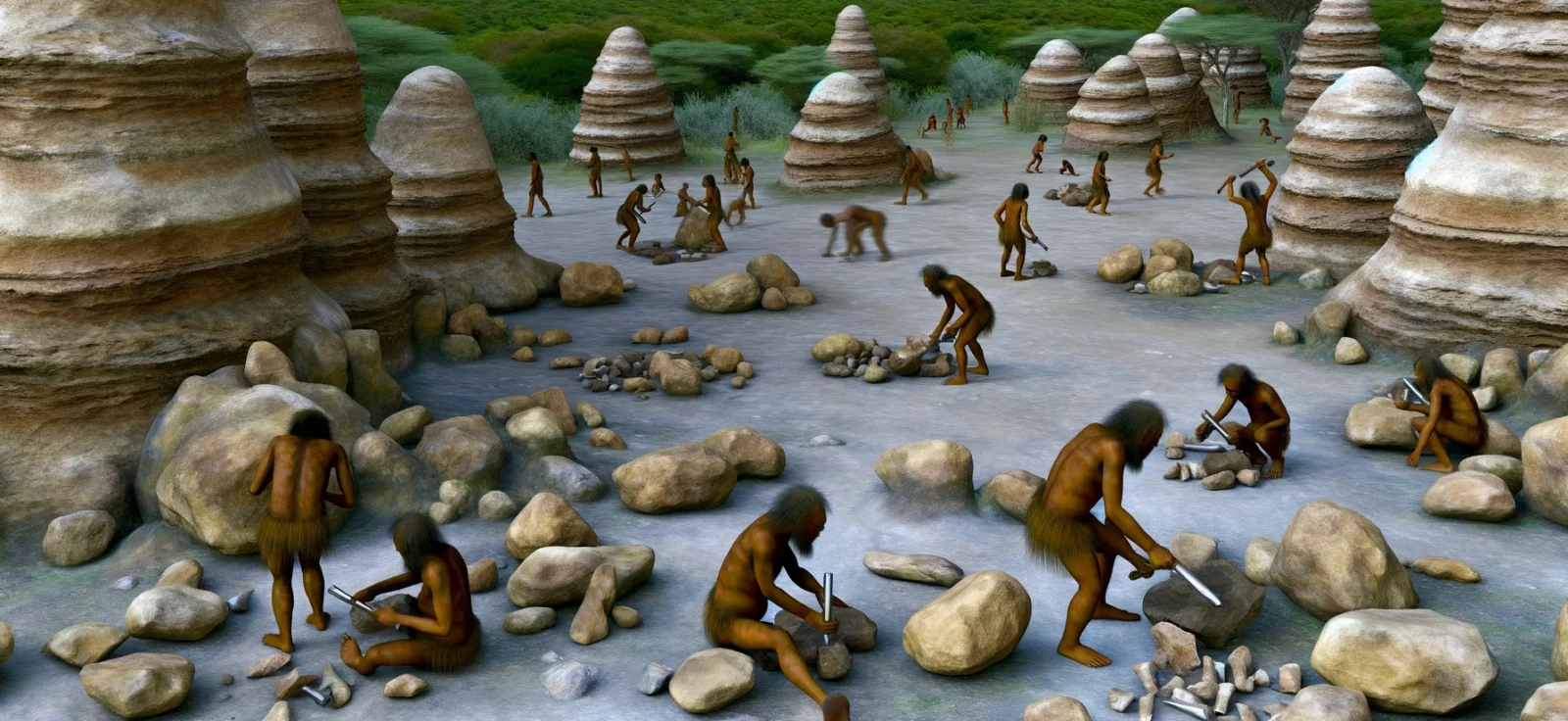
Olduvai Gorge Site: A Glimpse into Early Organizational Behavior

The Olduvai Gorge in Tanzania stands as a testament to early human ingenuity and foresight, illustrating a rudimentary form of organizational behavior that predates modern civilization. Utilized extensively over two million years, the site functioned akin to a “factory,” where early humans systematically crafted a variety of stone tools. They strategically selected specific locations that

Olduvai Gorge Site: A Glimpse into Early Organizational Behavior Read More »

Early Wood tools

Simple wood tools starting with picking up a stick to poke at some out of reach fruit likely paralleled the use of stone tools. Wood tools for the most part did not survive the test of time. The earliest so far include advanced javelins from 400,000 years ago and a digging tool from 780,000 years

Early Wood tools Read More »

Emergence of Early Hominin Shelters

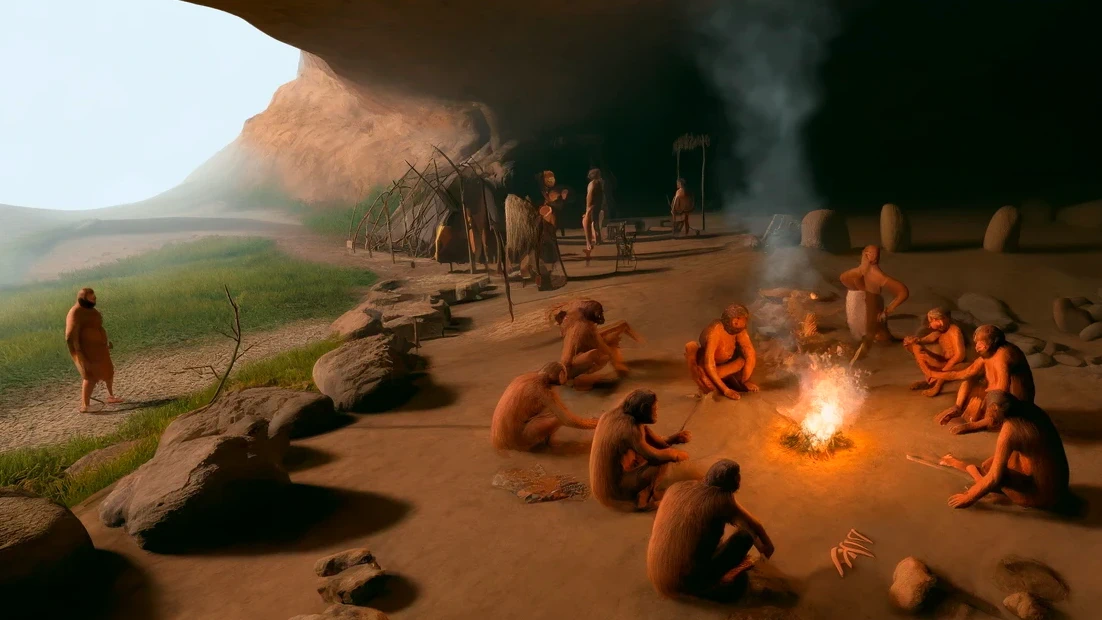
The origins of tent-like structures in human history remain shrouded in mystery, primarily due to the perishable materials involved and the lack of direct archaeological evidence. However, as Homo erectus appeared and spread into varied climates, their enhanced tool-making skills and control of fire likely necessitated and enabled the construction of more complex shelters. This

Emergence of Early Hominin Shelters Read More »

First Proto-Containers

The earliest containers were likely simple natural resources that early hominins stumbled upon and adapted for use. Starting possibly with Homo habilis around 2.0 million years ago, these early humans may have utilized large leaves, shells, or naturally hollowed-out pieces of wood as rudimentary containers. This usage marks an innovative step in early human technology,

First Proto-Containers Read More »

Collective Learning Emerges

The dawn of collective learning can be traced back the oldest known stone tools, discovered at Lomekwi 3 in Kenya. The creation of these tools required more than just individual innovation; it involved the rudimentary form of collective learning, where knowledge of toolmaking was shared within groups. This early transmission of skills not only enhanced

Collective Learning Emerges Read More »

Full Emotional Intelligence Emerges

Full emotional intelligence (EI) likely emerged around this time in species such as Homo antecessor and Homo heidelbergensis. EI heralds the dawn of a new era where emotional intelligence began to take a recognizable shape. Analysis: With indications of complex social structures, more potential for language, and advanced tool-making abilities, these species navigated their world

Full Emotional Intelligence Emerges Read More »

First Clothes: Proto-Clothing and the Advent of Garments

Proto-clothing, encompassing basic garments such as animal skins and possibly decorative natural materials, likely emerged among hominins around 600,000 years ago, with Homo heidelbergensis being a probable early adopter. This species, experiencing diverse and often colder climates across Europe and Africa, may have utilized simple clothing for survival. Before venturing into colder climates, modesty, jealousy,

First Clothes: Proto-Clothing and the Advent of Garments Read More »

Transition from Trees to Savannah Begins

Arboreal to Terrestrial: Beginning approximately 9 million years ago, our ancestors began an evolutionary change from forests to woodlands to savannahs. This gradual transition from primarily arboreal (tree-dwelling) lifestyles to increasingly terrestrial (ground-based) behaviors was very gradual with traits specific for walking around carrying things gradually accumulating. This evolutionary journey spanned roughly 7 million years,

Transition from Trees to Savannah Begins Read More »

Hominin World Population: 2 Million (speculative)

Other than humans, today’s smartest primates—chimpanzees, bonobos, gorillas, and orangutans—have a combined wild population of approximately 400,000 to 700,000. This number persists despite their near-complete inability to expand beyond their current ideal environments, a restriction not faced by any human species since before Homo habilis. Moreover, this is in spite of the extreme pressures exerted

Hominin World Population: 2 Million (speculative) Read More »

Hominin World Population: 2 Million (maybe)

When Homo sapiens first emerged, their population in Africa was likely just a few hundred thousand, while the total hominin population, including other species like Neanderthals and Homo heidelbergensis, may have ranged from 1.1 to 2.1 million. During this period, Homo sapiens were primarily found in Africa, while other hominins occupied broader ranges across Eurasia,

Hominin World Population: 2 Million (maybe) Read More »

World Population: 1.5 Million

Cognitive Revolution By 70,000 BCE. Population range: 500,000 to 2.5 million. Given the uncertainties and lack of direct data, the following are speculative estimates. Africa-Middle East: 50-60% or 600,000 to 1 million people Africa, being the origin of modern humans, likely had the highest population density at this time, particularly in Sub-Saharan regions which were

World Population: 1.5 Million Read More »

World Population: 15 Million

Stone Copper Age Chalcolithic Period: 3,000 BCE – 500 BCE. Africa-Middle East: 36% or 5 million people Early civilizations include Egypt and Mesopotamia with a relatively higher population density. Asia: 36% or 5 million people Early civilizations include Indus Valley and ancient China. They saw early urban development and agriculture which supported larger populations. Europe-Mediterranean:

World Population: 15 Million Read More »

Seasonal Settlements at Klasies River Caves

Earliest known seasonal settlement in the Africa/Middle East zone: In the diverse and rich landscapes of what is now South Africa, the Klasies River Caves served as a vital seasonal haven for early modern humans. Positioned strategically along the coast, these caves were revisited across generations, suggesting a shared understanding among different groups about the

Seasonal Settlements at Klasies River Caves Read More »

Scroll to Top