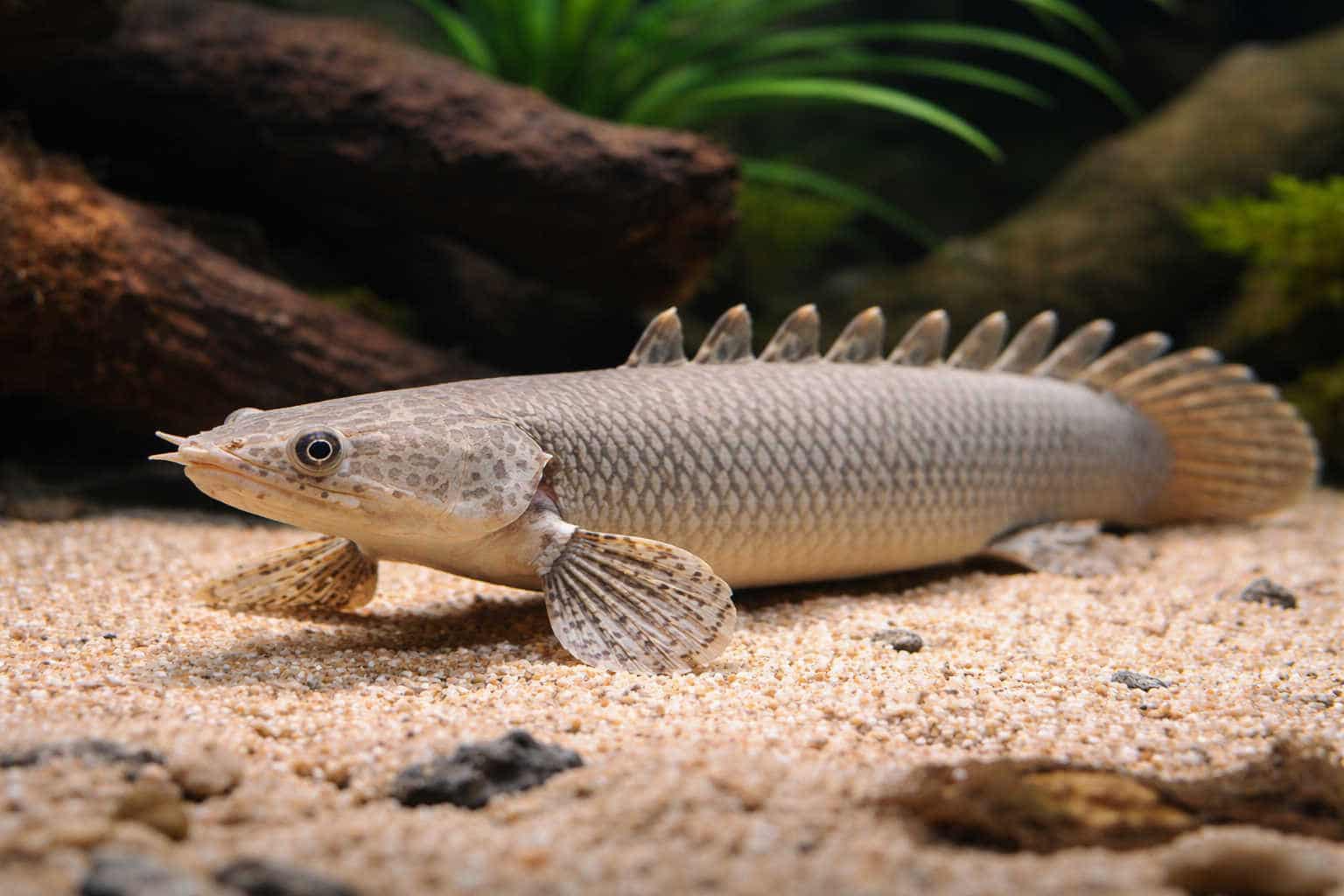
The Senegal Bichir: A Living Fossil
The Senegal bichir represents an early branch of ray-finned fish, preserving traits that trace back nearly 380 million years.
The Senegal Bichir: A Living Fossil Read More »


Fish evolved 530 million years ago. The lobe-finned fish are considered the ancestors of tetrapods (four-legged animals) and emerged around 400 million years ago.
The Senegal bichir represents an early branch of ray-finned fish, preserving traits that trace back nearly 380 million years.
The Senegal Bichir: A Living Fossil Read More »
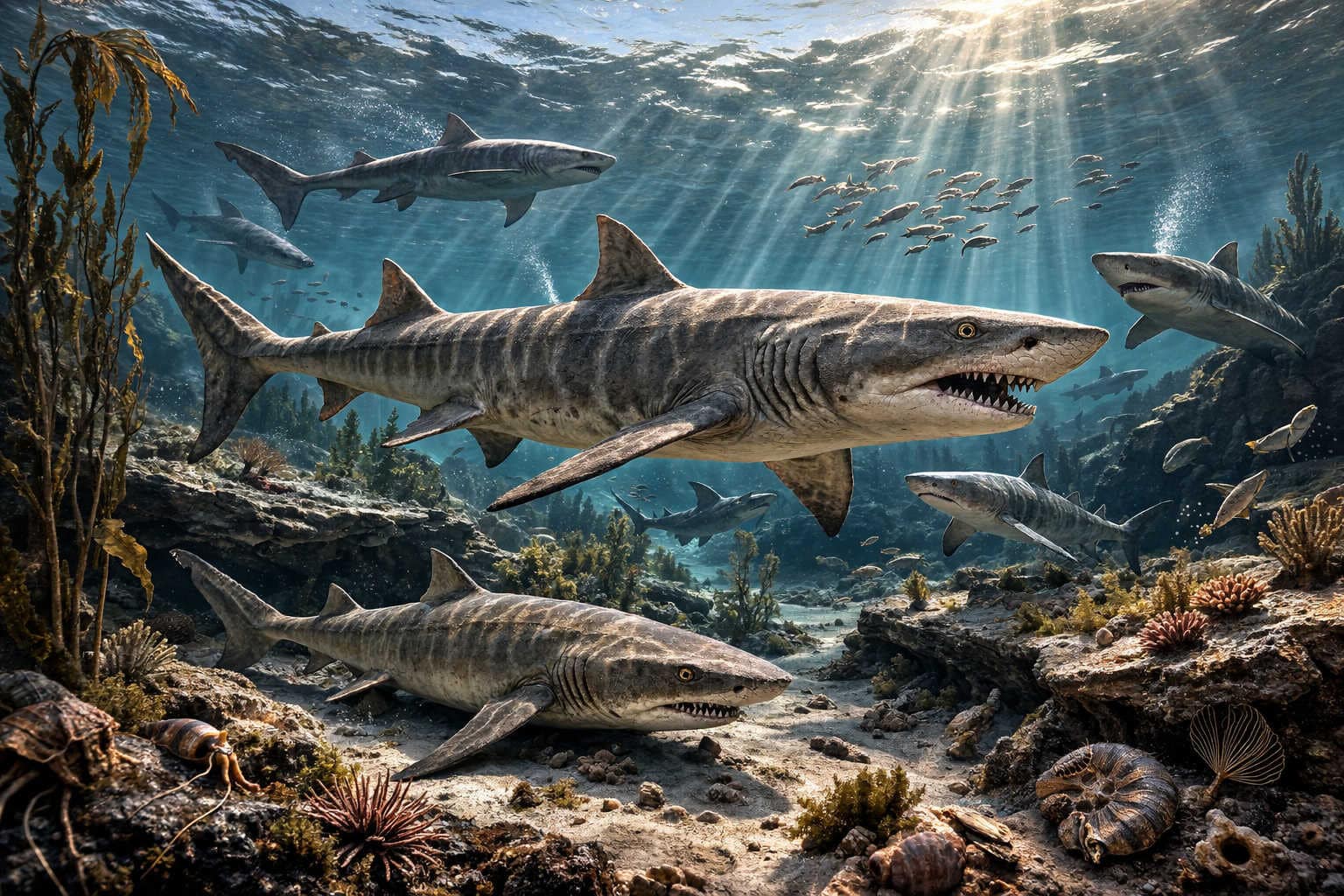
The shark body plan stabilized early. By 300 million years ago, the streamlined, hydrodynamic silhouette that defines sharks today was already established.
Stem Selachians: Modern Sharks LCA Read More »
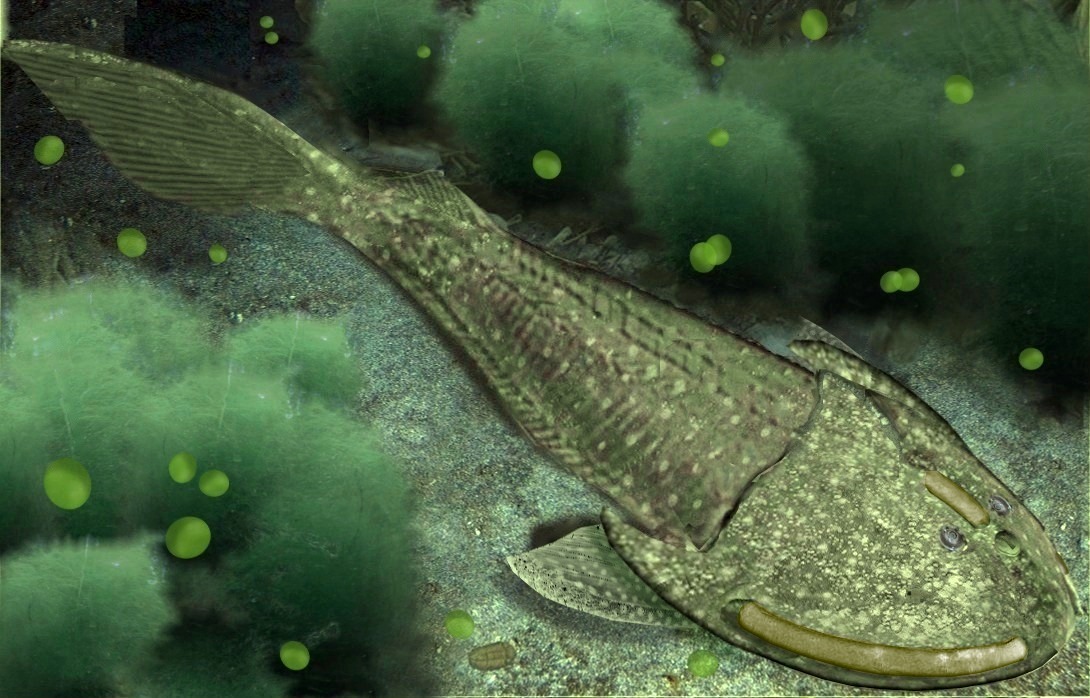
These early scales provided a vital protective layer, acting like underwater armor against predators, abrasions, and environmental threats. The keratin genes that led to scales are an interesting part of our story. When amphibians evolved onto land, scales near the tips of their evolving toes transformed into thicker protection and traction, eventually giving rise to
Keratin Genes & the Rise of Scales in Fish Read More »
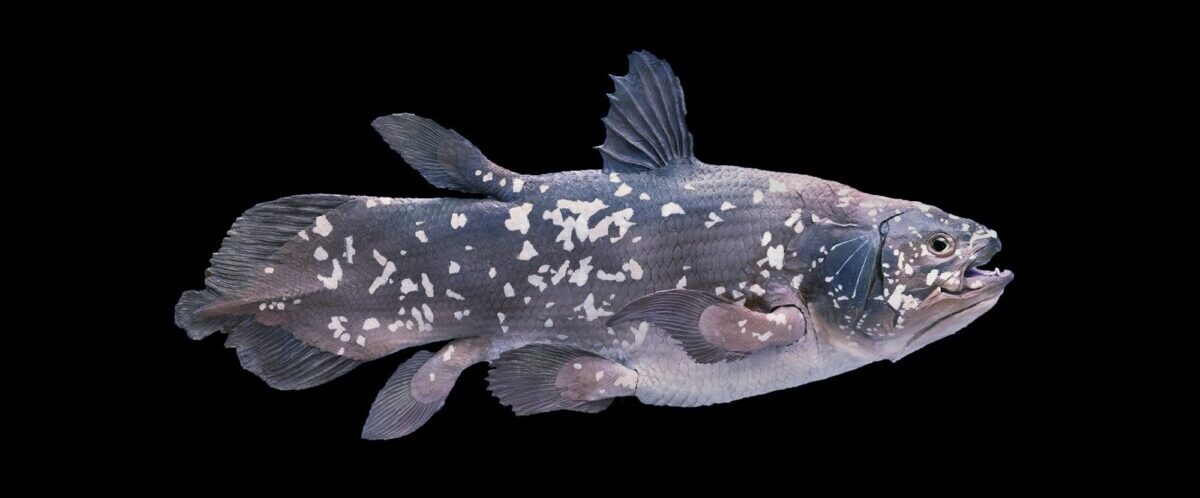
The Dawn of Lungs: In the oxygen-poor waters of the Devonian period, roughly 400 million years ago, or a bit earlier. It was a significant evolutionary leap. A group known as Sarcopterygii were presentd with a formidable challenge in ancient waters that were shallow and variable. It was here that the first lungs emerged. Evolving
Lungs Evolve: Lobe-Finned Fish and the Lungfish Ancestor Read More »
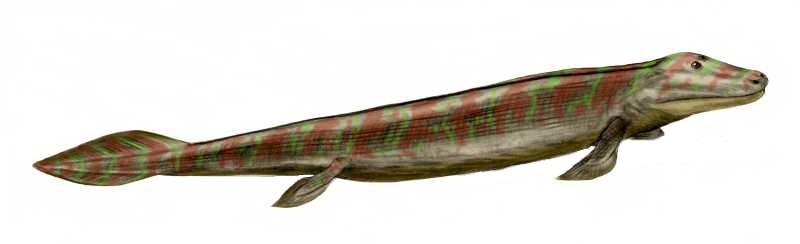
Long-Term Memory: By about 375 million years ago, the foundations for long-term memory were likely established among the more complex vertebrates, facilitating survival in increasingly varied and challenging environments. Tiktaalik is a prime example of this evolutionary milestone. It is an extraordinary creature that bridged the gap between aquatic fish and amphibians. With its forward-facing
Long-Term Memory Evolves: Tiktaalik Read More »
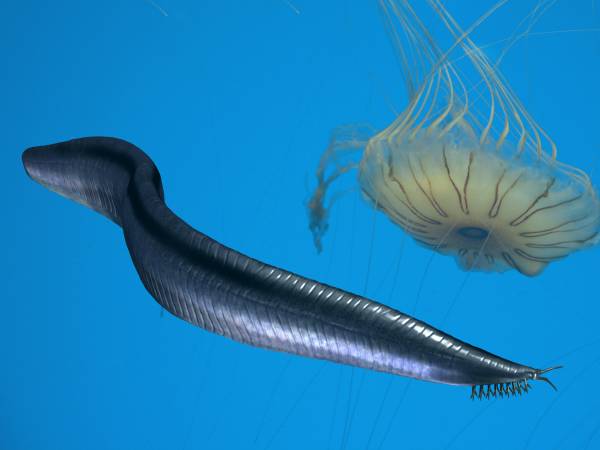
Vision evolved as early as 540 million years ago during the Cambrian explosion. The ability to see, alongside the development of hearing, provided organisms with the evolutionary advantage of sensing their environment from a distance. This sensory evolution necessitated the development of larger brains for the complex processing of visual data, marking a pivotal moment
Vision Emerges: The Pre-fish Chordates Read More »
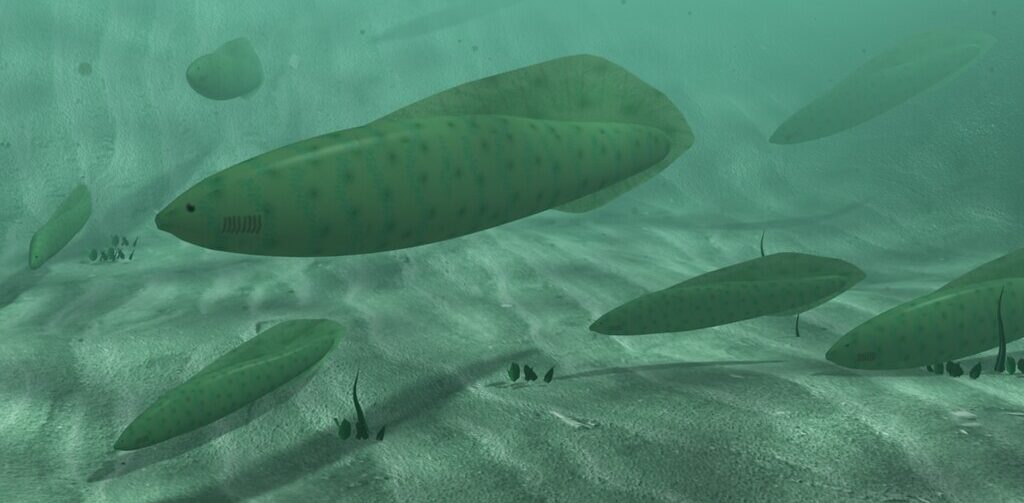
From no sentience or presentience to solidly “Simple Sentience,” early fish during this time represent our ancestral beings that started to suffer and feel the dichotomy of pleasure and pain. Haikouichthys (circa 520 Million Years Ago): Dwelling in the ancient seas of the Cambrian period, Haikouichthys is among the earliest forms of vertebrate life, showcasing fundamental advancements
Simple Sentience Settles: Haikouichthys Read More »