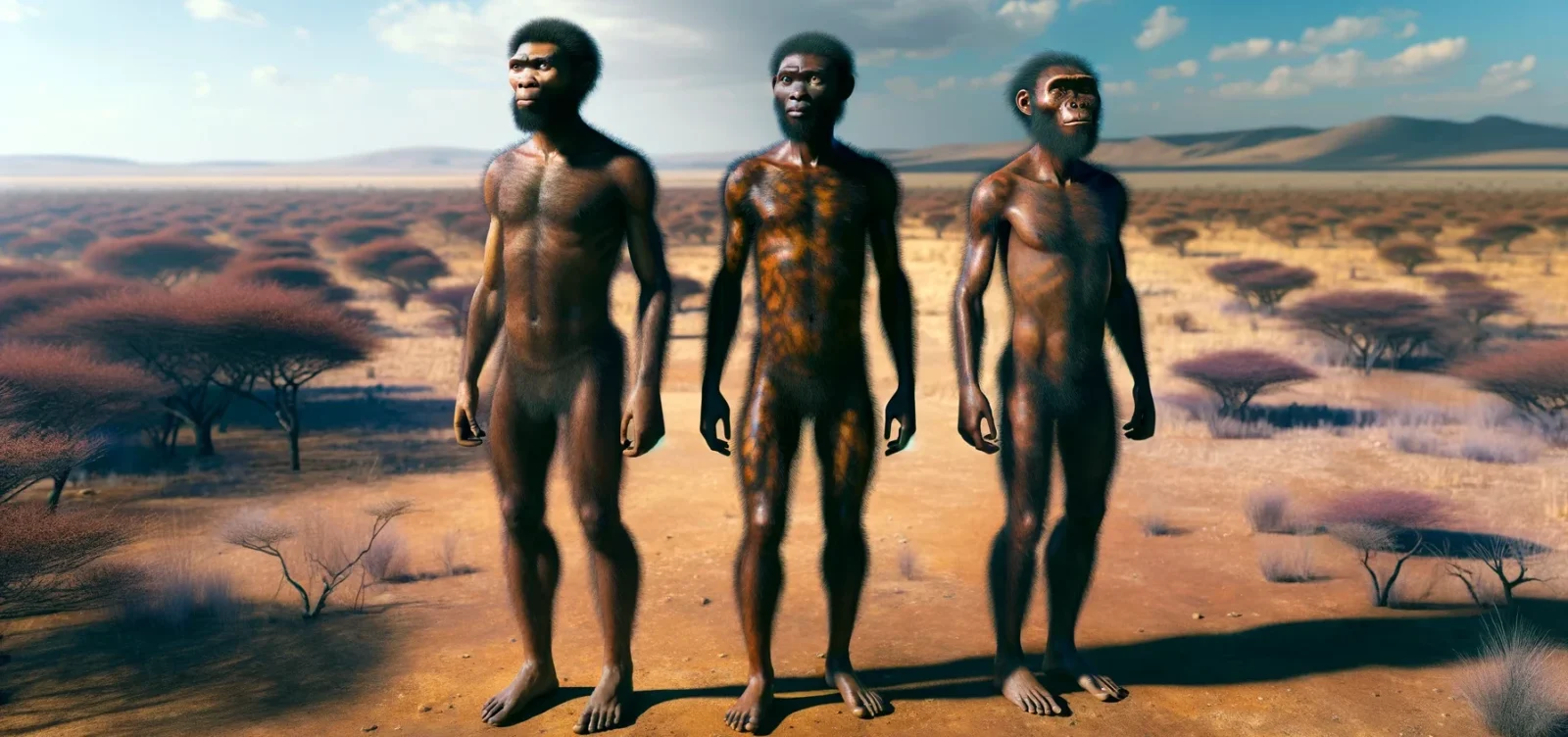
Less Body Hair Emerges in Homo erectus
Less visible body hair in Homo erectus reflects a shift in hair behavior, not hair loss, enabling endurance, sweating, and survival in open, hot landscapes.
Less Body Hair Emerges in Homo erectus Read More »


The Human Evolution Timeline
Primates includes all lemurs, monkeys, and apes, along with their extinct relatives. Traits: forward-facing eyes, large brains relative to body size, and opposable thumbs.
Less visible body hair in Homo erectus reflects a shift in hair behavior, not hair loss, enabling endurance, sweating, and survival in open, hot landscapes.
Less Body Hair Emerges in Homo erectus Read More »
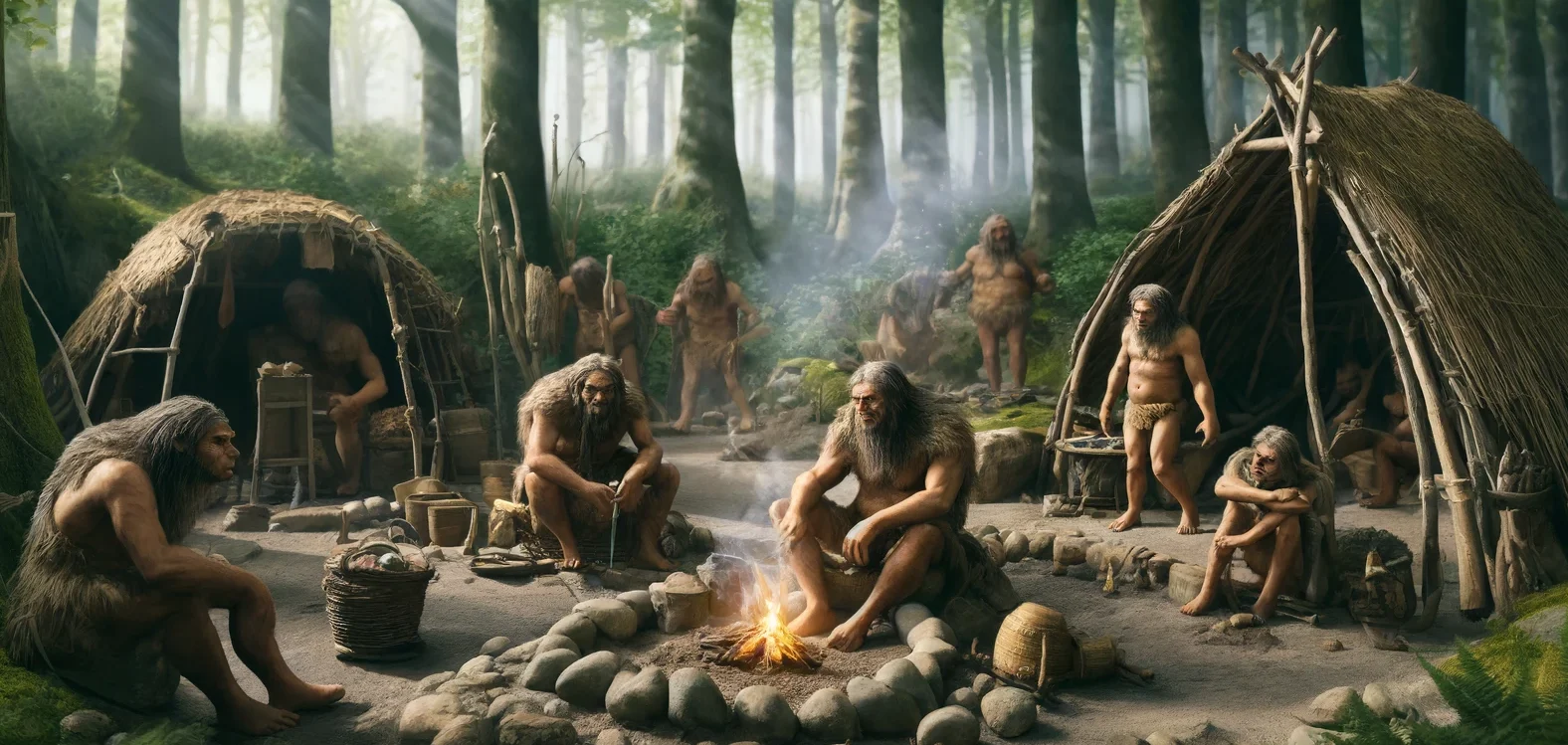
Homo heidelbergensis lived in Africa, Europe and Asia from 700,000 to 200,000 years ago. They coexisted with humans in Africa, Europe, and Asia from our emergence around 315,000 years ago until their extinction about 200,000 years ago. Imagined Image: A Homo heidelbergensis campsite a few thousand years before they went extinct, set in a lush European
Extinction: Homo heidelbergensis Read More »
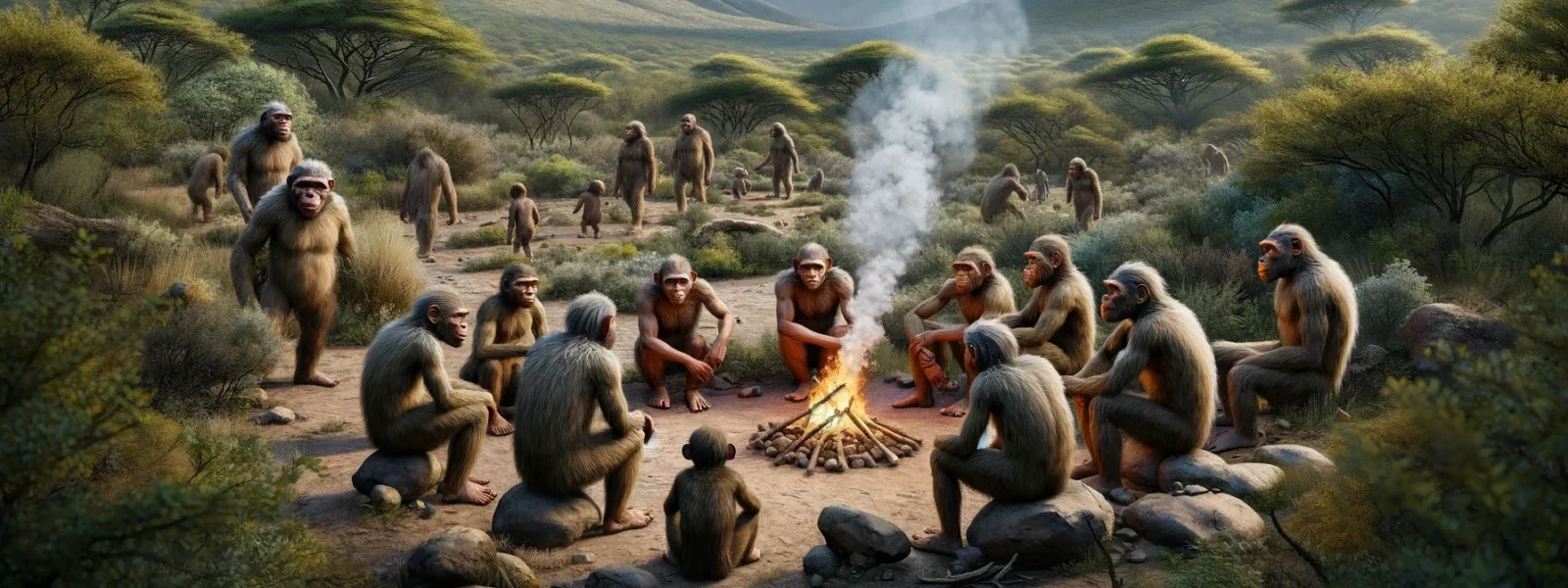
Discovered in 2013 and first dated in 2017, Homo naledi and humans coexisted in South and East Africa from our emergence around 315,000 years ago until their extinction about 236,000 years ago. It is possible that we share a common ancestor with them, but research is pending. Homo naledi lived in South Africa from 335,000 to
Extinction: Homo naledi Read More »
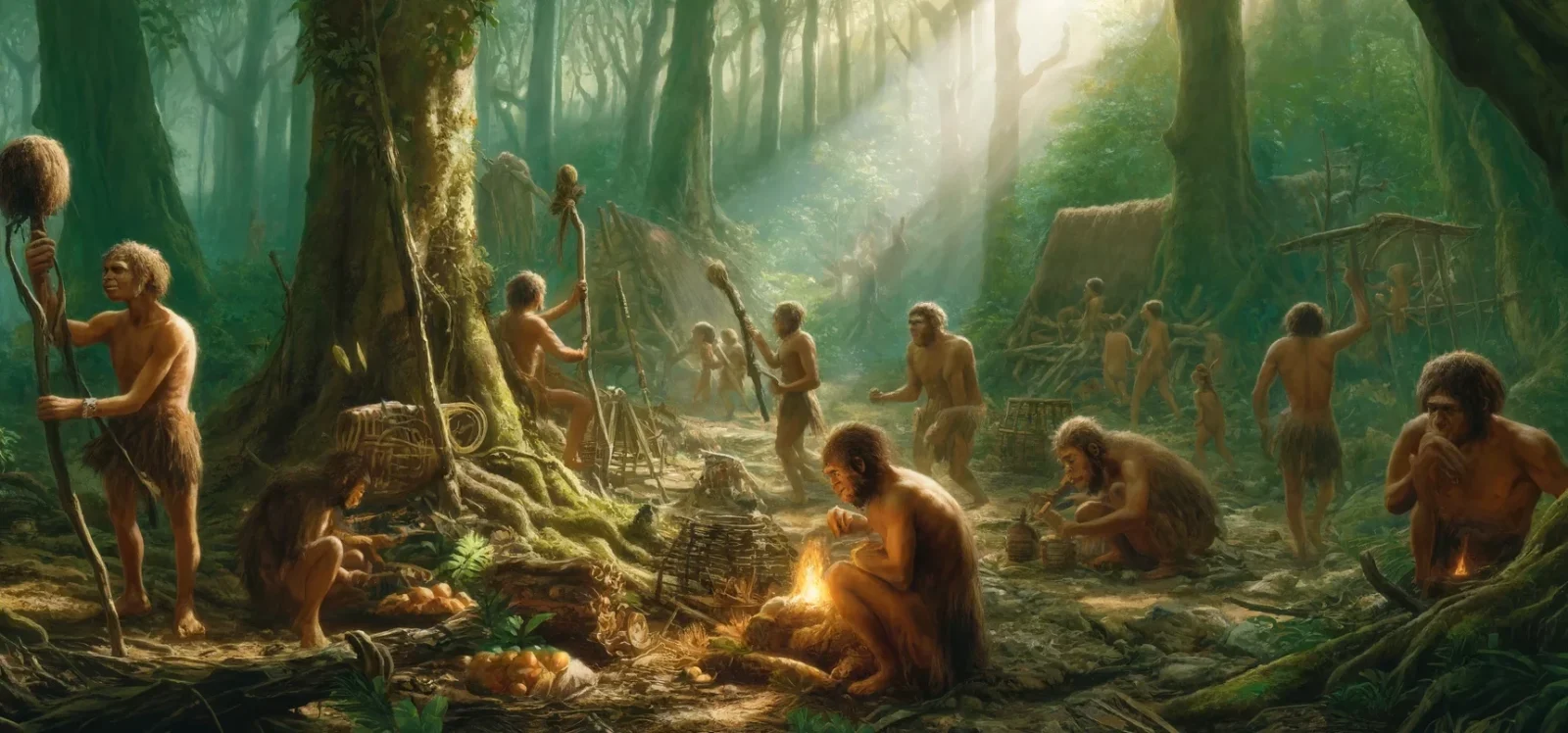
Discovered in 2019, Homo luzonensis inhabited the Luzon area north of Manila in the Philippines from at least about 67,000 to about 50,000 years ago. While current evidence suggests that Homo luzonensis may have become extinct before the documented arrival of Homo sapiens around 35,000 to 40,000 years ago, the exact timing of their extinction
Extinction: Homo luzonensis Read More »

Discovered in 2003, Homo floresiensis (also known as the “Hobbit”) inhabited the island of Flores in Indonesia from 190 to 50 thousand years ago. Humans arrived about 50,000 years ago and may be the reason for their extinction. Lineage: Most likely not a Homo heidelbergensis, but a descendant species from an earlier ancient human. Perhaps
Extinction: Homo floresiensis Read More »
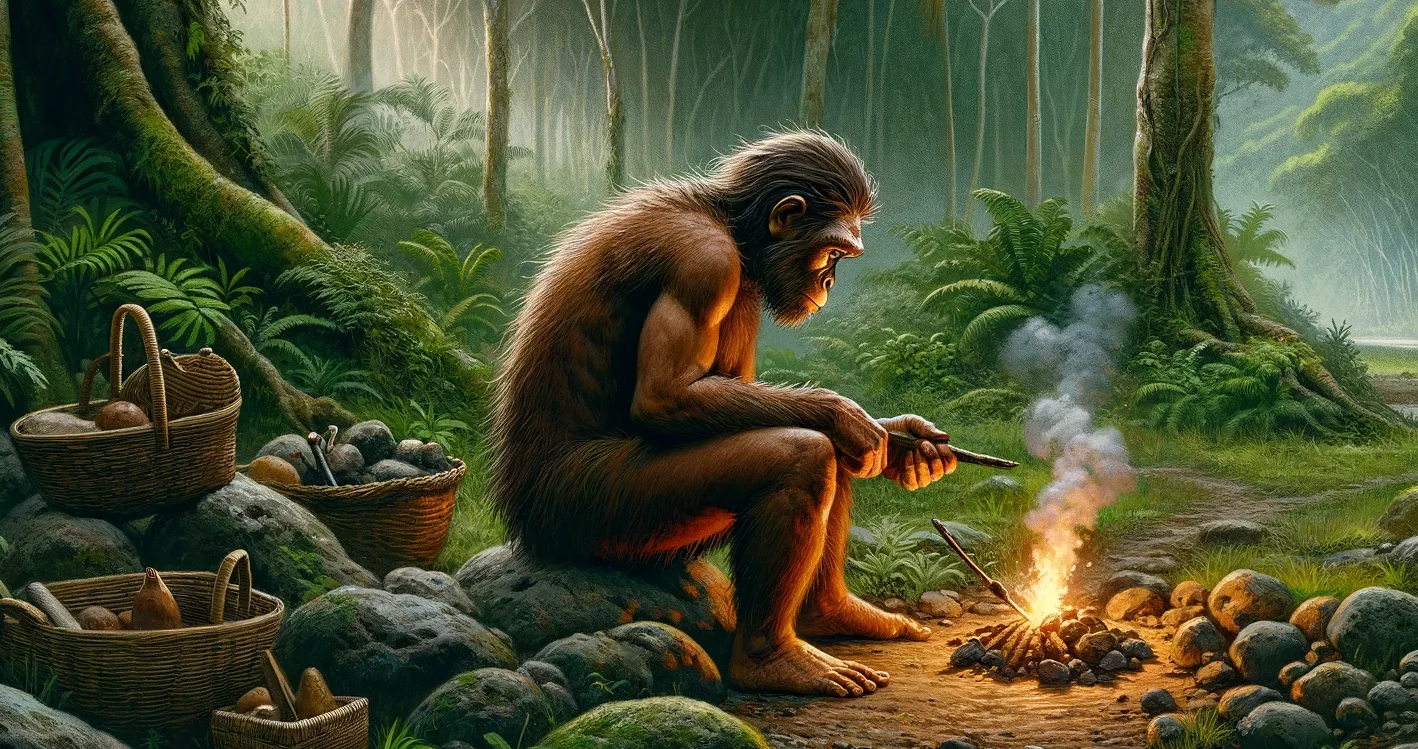
Homo erectus didn’t just come before us—they lasted so long that, in deep time, they almost shared space with modern humans in Java.
Extinction: Homo Erectus Read More »
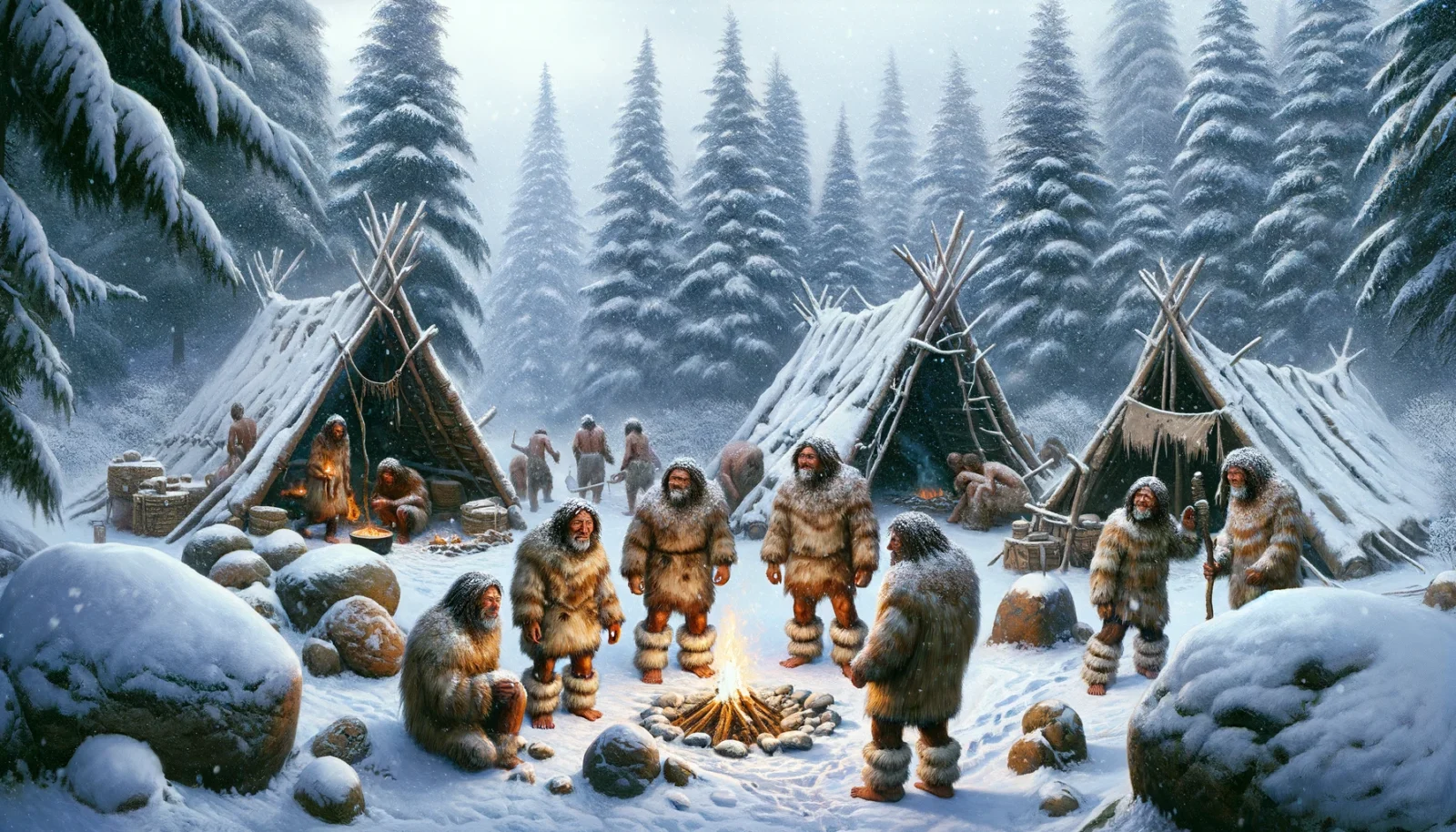
Denisovans and humans coexisted in Siberia from about 194,000 to around 40,000 years ago. While their exact cause of extinction remains debated, competition with modern humans and climate change are thought to be contributing factors. Imagined image: Set in Siberia around 45,000 years ago, a group of Denisovans is depicted in their winter camp, surrounded
Extinction: Denisovans Read More »
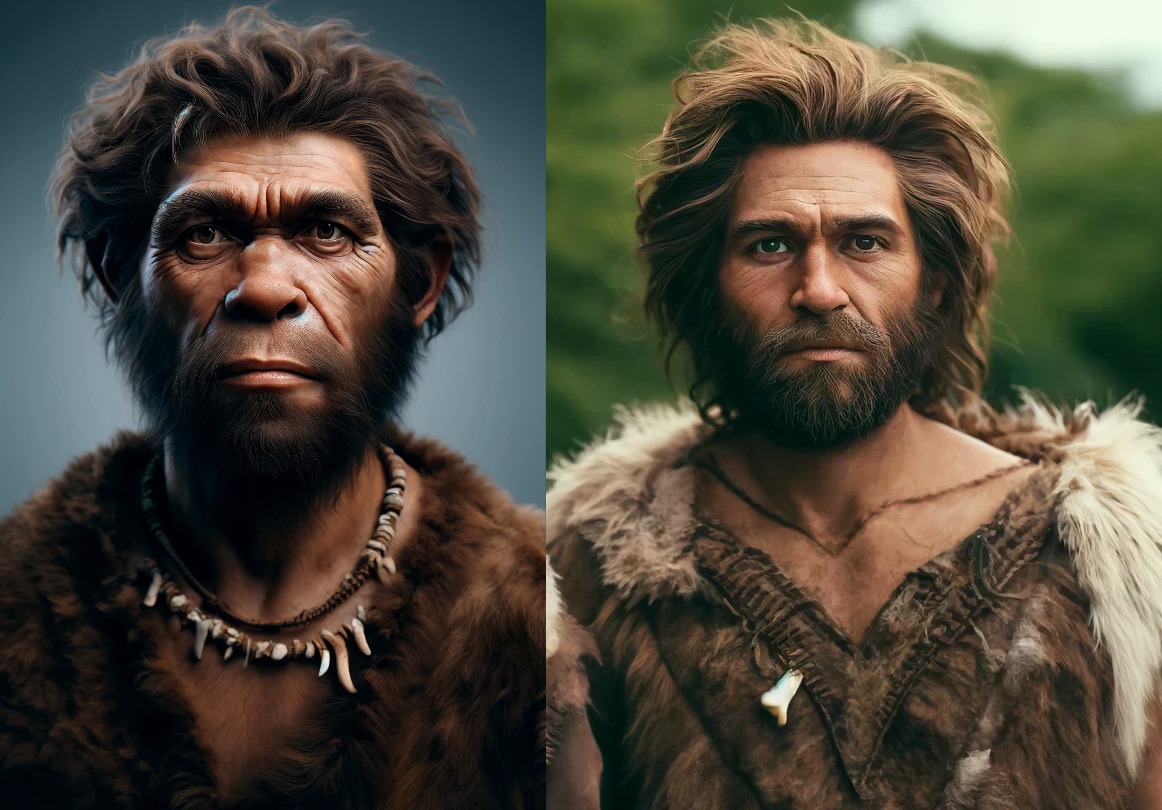
Homo neanderthalensis: Neanderthals and humans coexisted in Europe and Asia until around 40,000 years ago. While their exact cause of extinction remains debated, competition with modern humans and climate change are thought to be contributing factors. Imagined image: Left is a neanderthal, right a human. Just as human looks vary widely, Neanderthals did too. This
Extinction: Neanderthals Read More »
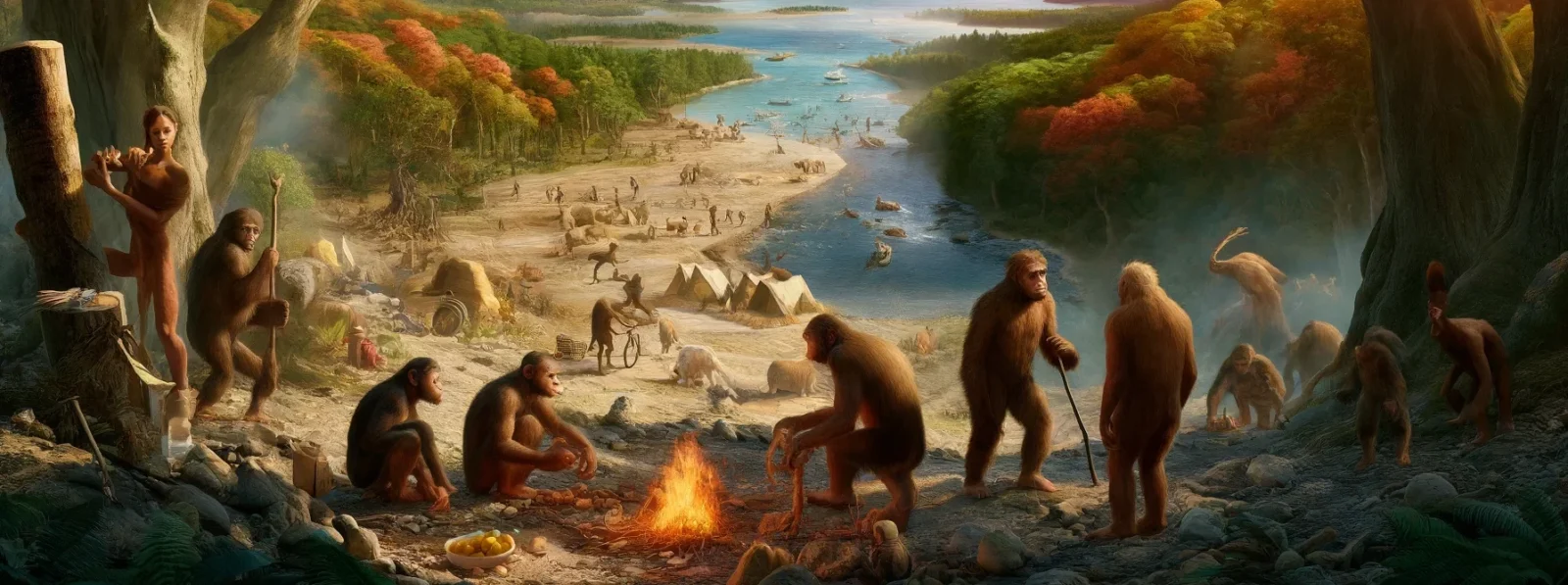
Other than humans, today’s smartest primates—chimpanzees, bonobos, gorillas, and orangutans—have a combined wild population of approximately 400,000 to 700,000. This number persists despite their near-complete inability to expand beyond their current ideal environments, a restriction not faced by any human species since before Homo habilis. Moreover, this is in spite of the extreme pressures exerted
Hominin World Population: 2 Million (speculative) Read More »
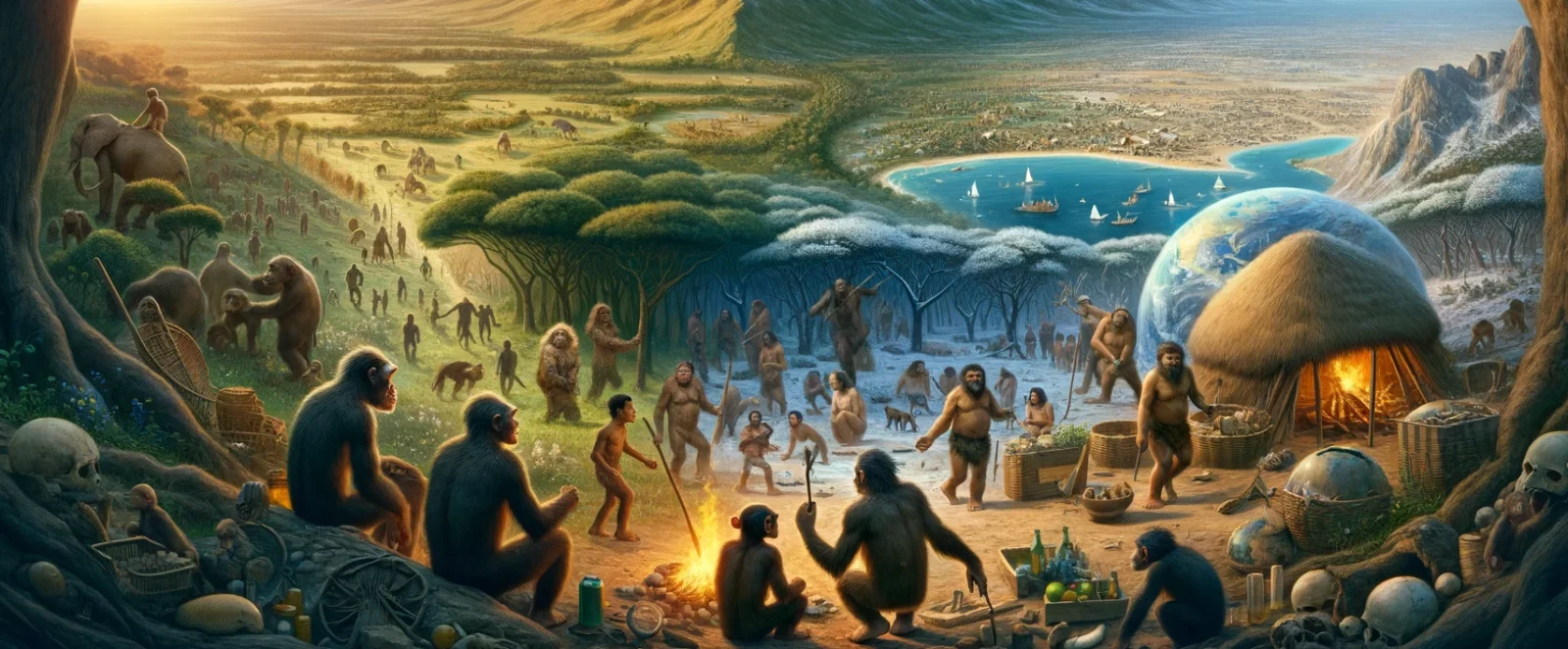
When Homo sapiens first emerged, their population in Africa was likely just a few hundred thousand, while the total hominin population, including other species like Neanderthals and Homo heidelbergensis, may have ranged from 1.1 to 2.1 million. During this period, Homo sapiens were primarily found in Africa, while other hominins occupied broader ranges across Eurasia,
Hominin World Population: 2 Million (maybe) Read More »
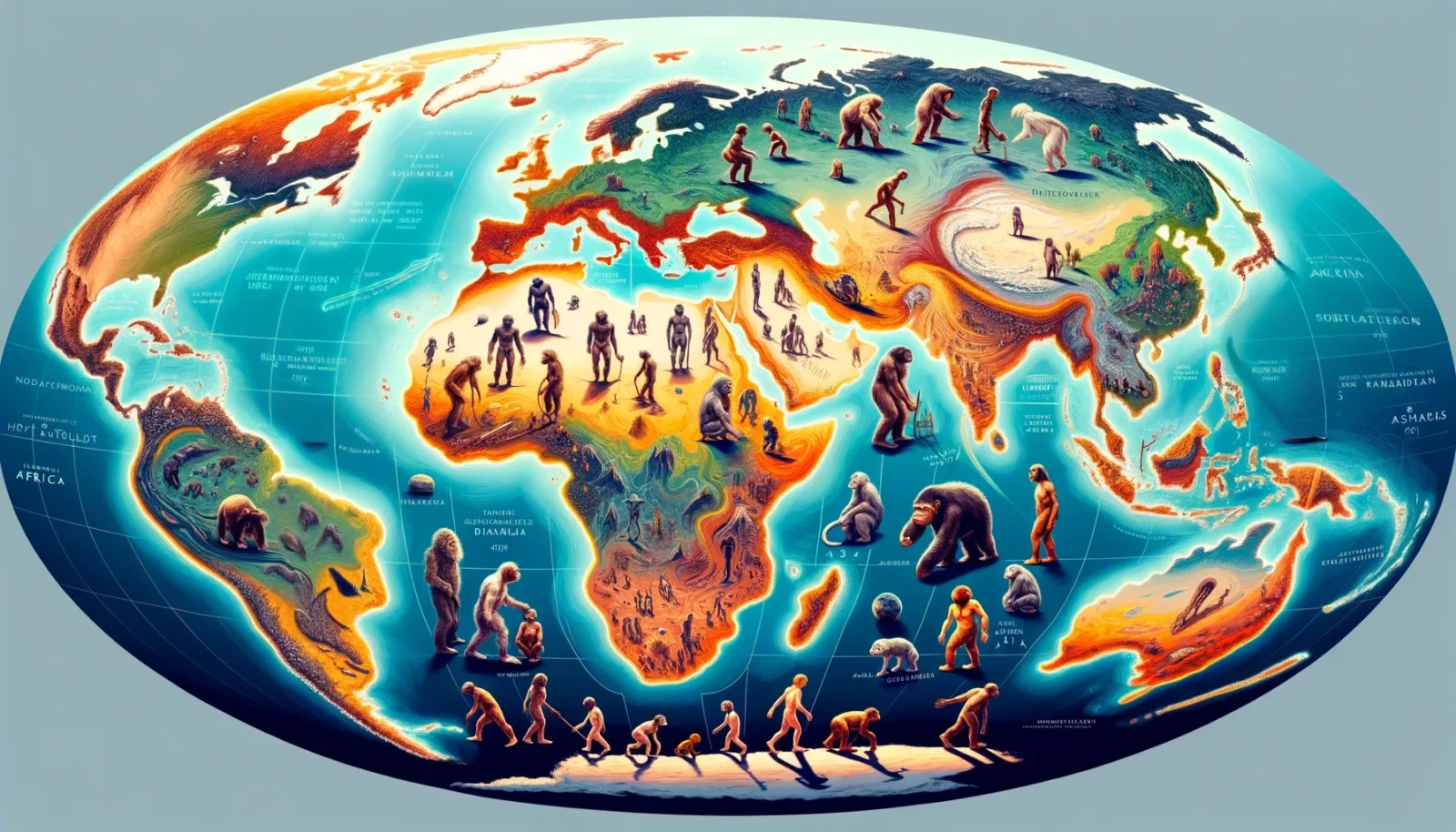
Cognitive Revolution By 70,000 BCE. Population range: 500,000 to 2.5 million. Given the uncertainties and lack of direct data, the following are speculative estimates. Africa-Middle East: 50-60% or 600,000 to 1 million people Africa, being the origin of modern humans, likely had the highest population density at this time, particularly in Sub-Saharan regions which were
World Population: 1.5 Million Read More »

The feature of the epicanthic fold, particularly prevalent among East Asian populations descended from Haplogroup A, is an adaptation to cold, windy, and bright environments encountered as humans migrated northward from Africa. This phenotype likely developed to protect the eyes from frostbite and snow blindness, showcasing how genetic diversity within human lineages adapted to specific
Phenotype Variation: Eye Shape and the Epicanthic Fold Read More »

As dairy farming became prevalent, particularly in Europe and some African communities, natural selection favored individuals who could digest lactose into adulthood. This genetic adaptation, known as lactase persistence, is a direct result of human cultural practices (dairying) and has had significant dietary implications.
Phenotype Variation: Lactose Tollerance Read More »
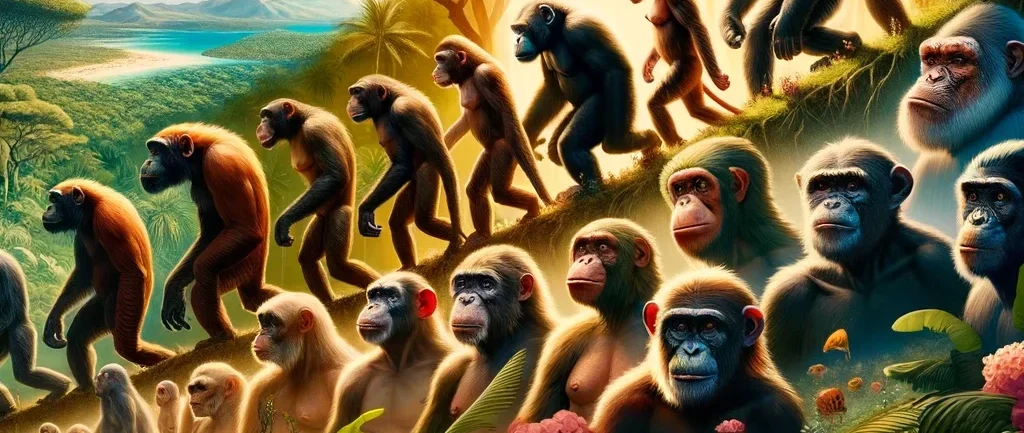
Skin color diversity is far older than humanity. Across many animals, pigmentation varied by species, population, body region, environment, and evolutionary history.
Skin Color Diversity Across and within Primate Species Read More »
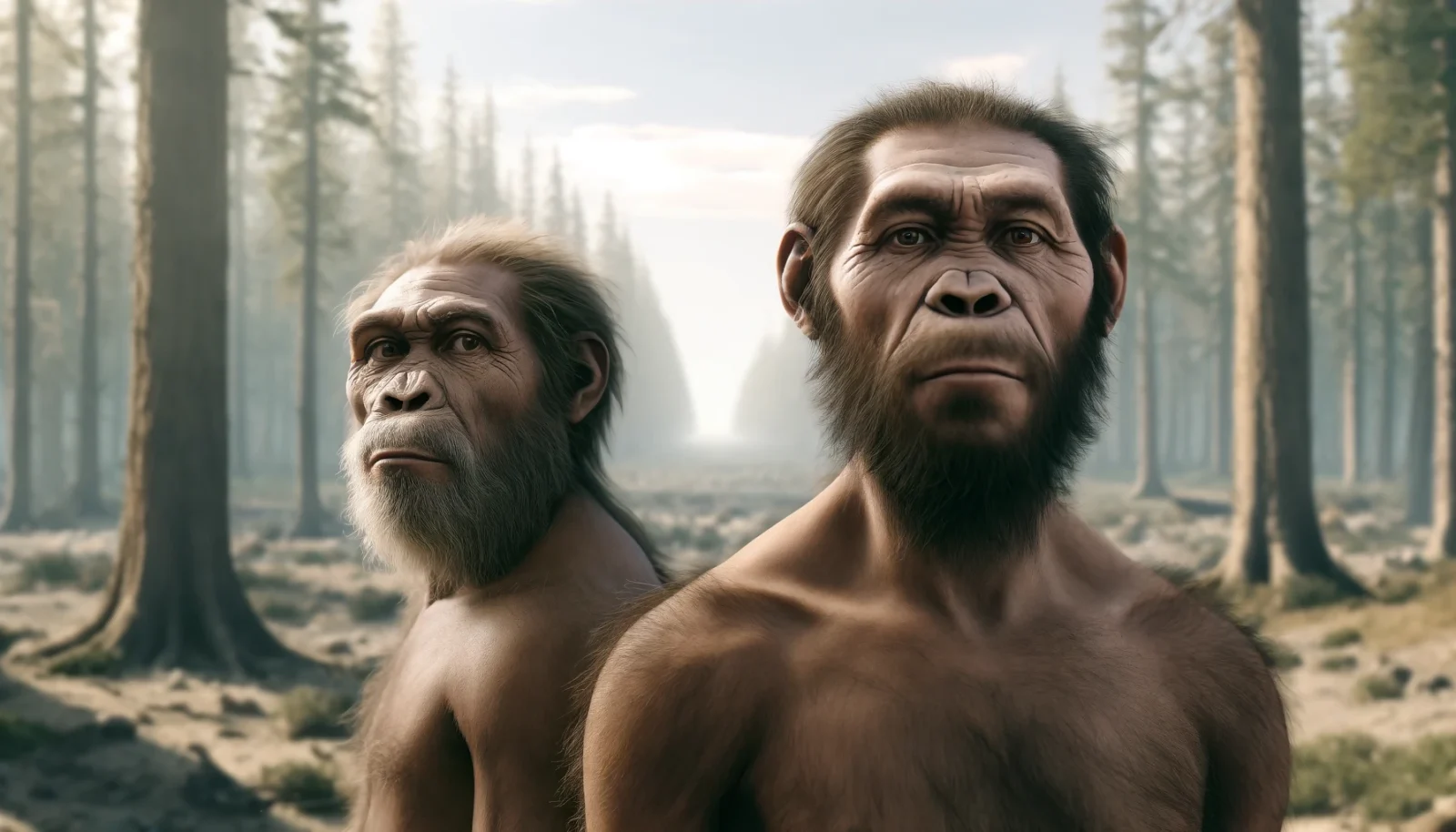
Homo heidelbergensis was the likely neanderthal-sapiens last common ancestor.
Homo heidelbergensis Read More »
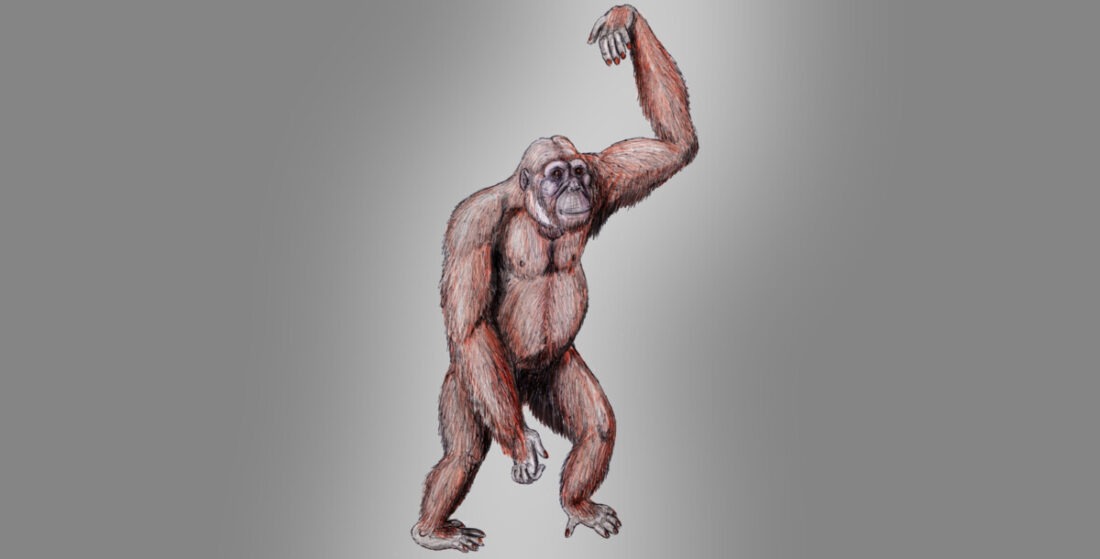
In early great apes like Dryopithecus, young apes learned survival behaviors by watching parents and group members. That’s cultural transmission. the passing of useful information.
Genus Dryopithecus: Cultural Transmission Emerges Read More »

Blue eyes emerging stands out as a striking example of a genetic mutation that spread across populations. Traced back to a single individual living between 6,000 and 8,000 BCE in the region near the Black Sea. The mutation involved is a specific change in the OCA2 gene, which alters the way melanin is produced in
Phenotype Variation: Blue Eyes Read More »
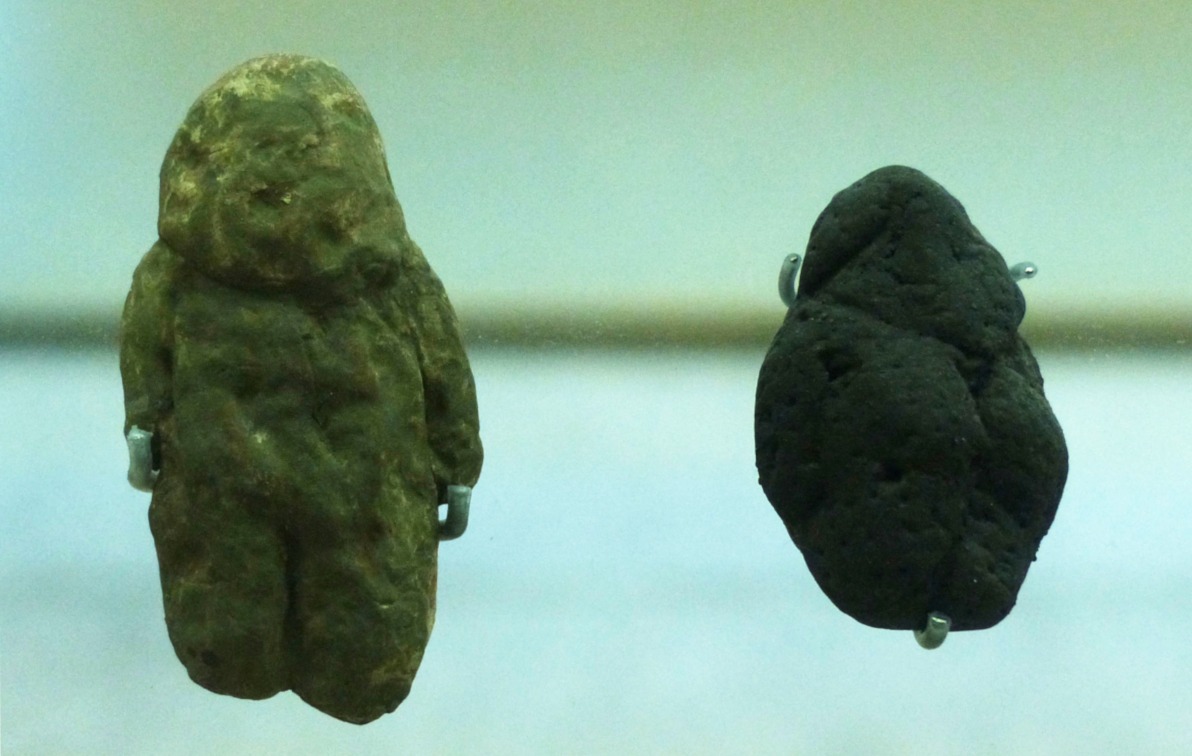
Found in Morocco, this natural pebble with human-like features is possibly the oldest known example of a figurine or representation of the human form.
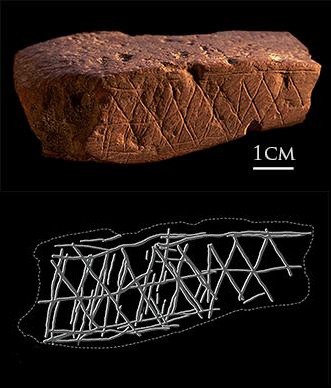
Earliest known symbol use in the Africa/Middle East zone. Located in South Africa, the cave contains engraved ochre pieces, which are among the earliest known forms of abstract art.
Blombos Cave Engravings Read More »

Found in central India, these cupules (circular hollows on rock surfaces) are among the earliest known forms of rock art. They were likely created by a species like Homo erectus or Homo heidelbergensis and not Homo sapiens. Homo sapiens are not known to be in India until around 40,000 years ago. Homo erectus is known
Bhimbetka Petroglyphs, Cupules Read More »