Weekly Insights for Thinkers

Philosophy

Natural philosophy includes dividing ideas into empirical, rational, and irrational as well as understanding their philosophical context. Philosophical context includes understanding the timing of discoveries and rediscoveries as well as the philosophers behind them and their publications.

Spiral strands of DNA on the dark background

“The” Human DNA

2,400 Generations Ago The modern human DNA evolved sometime between 71,000 and 51,000 BCE. Imagine that. A human baby born today, and a human baby born in 60,000 BCE have nearly indistinguishable DNA. There are differences but essentially humans are the same now as they were then. The popular website 23andme.com focuses on 23 changes in […]


“The” Human DNA Read More »

St Geaorge Monastery Desert

Jericho Founded

360 Generations Ago Earliest known permanent settlement in the Africa/Middle East zone.  Jericho, located in the West Bank, Palestinian Territories, stands as one of the earliest known permanent settlements in the Africa/Middle East zone, with continuous habitation dating back to at least the 9th millennium BCE. Situated near an oasis in the Jordan Valley, Jericho’s

Jericho Founded Read More »

Iodine 131(I-131)Radioactive isotopes used for hyperthyroidism treatment are stored in Lead boxes

Radiometric Dating

5 Generations Ago In 1905, radiometric dating was discovered. It is a method used to date rocks and other objects based on the known decay rate of radioactive isotopes. This technique is used to date rocks. Paleontologists regularly order discoveries in chronological order and estimate their age. Knowing the age of rocks allows paleontologists to assign known

Radiometric Dating Read More »

We all need a little CAFFEINE

Radiocarbon Dating

In 1946, Willard Libby created the method for dating organic materials by measuring their content of carbon-14, a newly discovered radioactive isotope of carbon. This dating technique provides objective age estimates within a few decades for carbon-based objects that originated from living organisms.

Radiocarbon Dating Read More »

English Bill of Rights

The 1689 English Bill of Rights was a precursor to our Bill of Rights and is referred to in our law. For example, it is referred to in Scalia’s Heller opinion.  The bill outlined specific constitutional and civil rights and ultimately gave Parliament power over the monarchy. The monarchy cannot rule without consent of the

English Bill of Rights Read More »

Constitution, Gavel and handcuffs

Bill of Rights

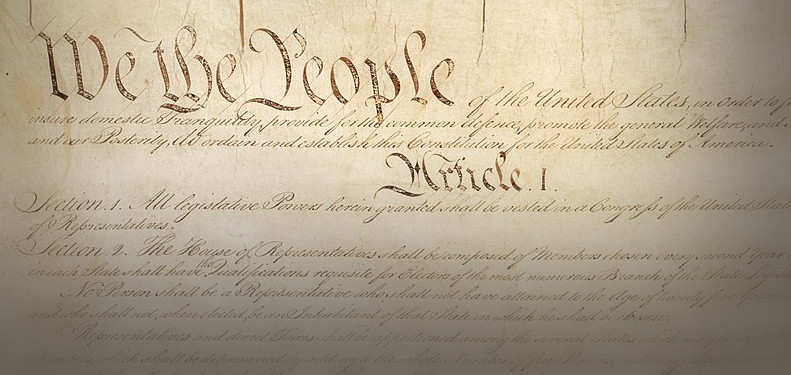
The Bill of Rights was written two years after the signing of the Constitution and ratified by three-fourths of the states in 1791. Massachusetts, Connecticut, and Georgia refused. In 1939, the three decliners symbolically sent their approvals to Congress. Amendments: 1st: Freedom of speech, press, of and from religion, assembly, and the right to petition

Bill of Rights Read More »

Magna Carta

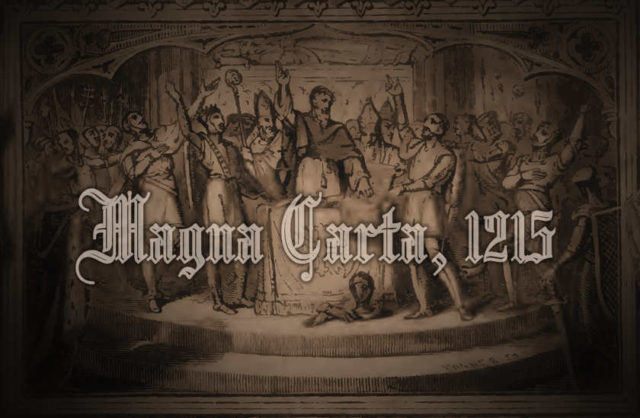
The Magna Carta in 1215 established the following principles: everyone is subject to the law, even the King, individuals have rights, everyone has the right to justice, and everyone has the right to a fair trial. The Magna Carta recognized individual responsibility in all, including the King, and it established that the law “should” be

Magna Carta Read More »

Founder, Colony of Rhode Island and Providence Plantations

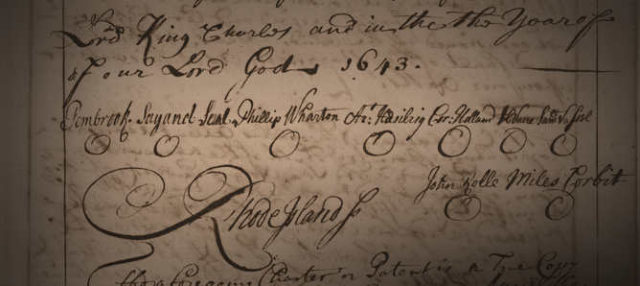
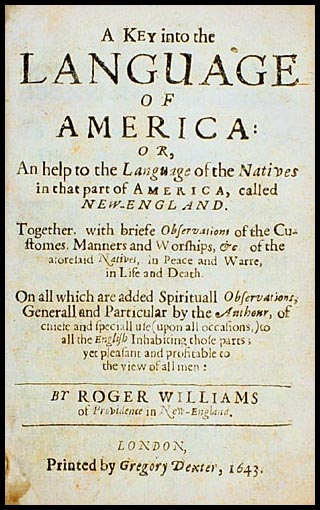
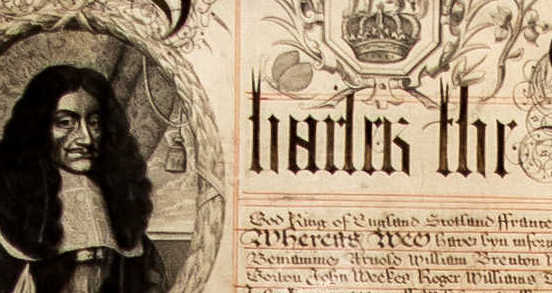
In July 1663, King Charles II granted a Royal Charter to the Colony of Rhode Island and Providence Plantations uniting Providence, Warwick, Newport and Portsmouth. It became the State of Rhode Island after the Revolutionary War. John Clarke, who stayed behind after Roger returned in 1654, worked hard and deserves much of the credit.

Founder, Colony of Rhode Island and Providence Plantations Read More »

Scroll to Top