

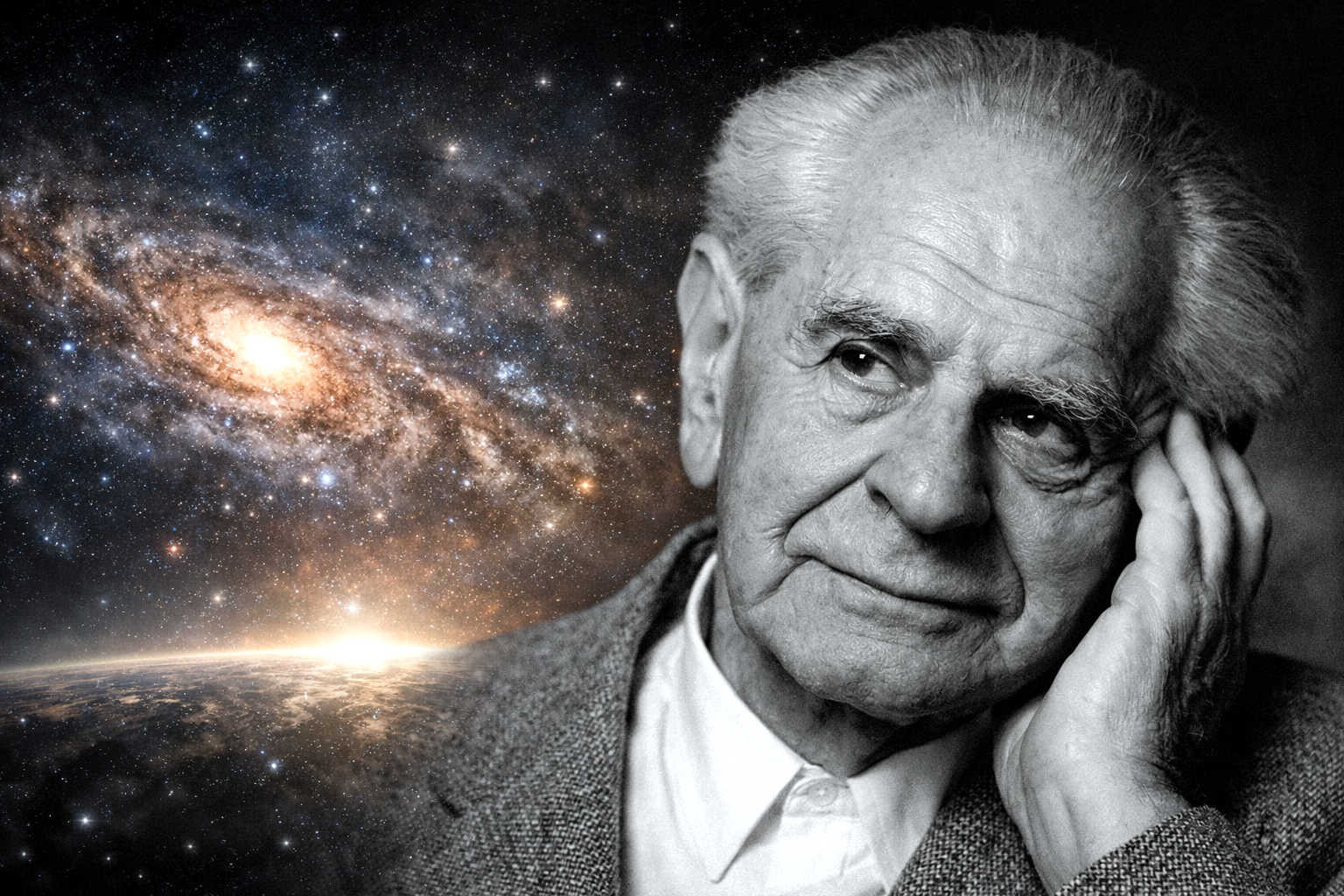
Karl Popper wrote something like this in his 1963 book Conjectures and Refutations. That line — a bit paraphrased — captures the heart of his philosophy. We learn. We refine. We improve our models. But the horizon of what we do not know never disappears. And that is not discouraging. It is clarifying.
Popper wasn’t attacking truth. He was attacking certainty. He was reminding us that knowledge grows through testing, correction, and revision — not through final declarations.
That insight sits right at the center of TST’s architecture. If our knowledge is always finite, then humility isn’t weakness. It’s rational. If ignorance is infinite, then calibration isn’t optional. It’s necessary. And that is why belief, in TST, is never binary. It is proportional. It earns confidence through alignment.
