

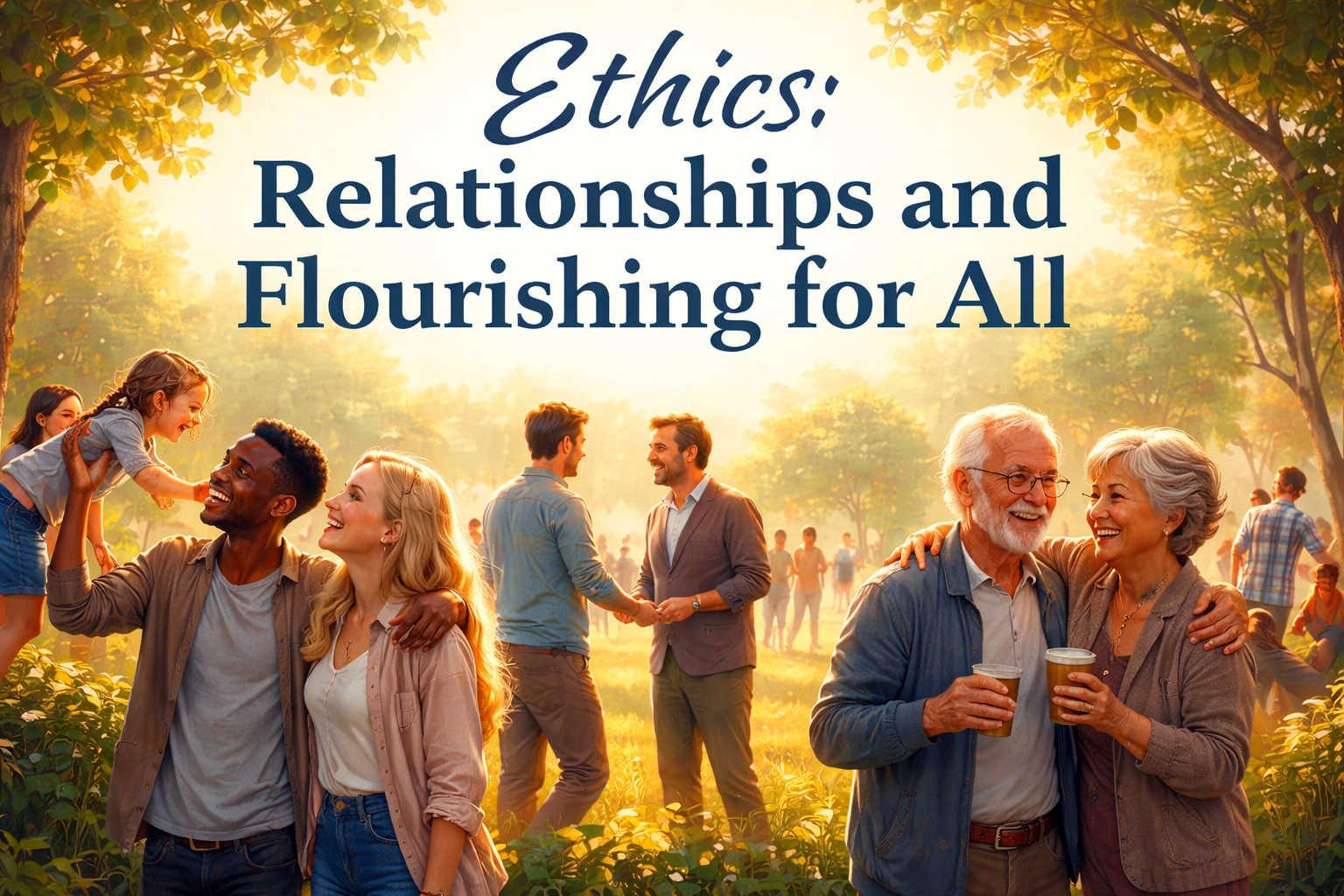
Understanding Ethics explores how we should live, both together and as individuals. Ethics divides naturally into Group Ethics and Personal Morality. Group Ethics is the study of justice, rights, and institutions, and how we build a fair society. Personal Morality is the art of living with truth, honor, and as little harm as possible. Together, they ask the central human question: how do we flourish without losing sight of others?
Column Thread
Understanding Ethics
Walking the journey of life.
By Michael Alan Prestwood
Author and Natural Philosopher
Mon 10 Aug 2026
Published 6 months ago.
Updated 2 months ago.
Thread
Understanding Ethics
By Michael Alan Prestwood
1 of 8
Ethics
Most ethical decisions do not need a complicated process. Start by asking what supports flourishing. When the answer is not clear, slow down. Listen to good guidance, question bad rules, separate what you control from what you merely influence, and take responsibility for the part of the decision that actually belongs to you.
2 of 8
Ethics
A better life is not built in isolation. When you remember the agency of others, especially in moments of anger or conflict, you respond with more wisdom, fairness, and restraint. Flourishing for all means living in ways that protect dignity, encourage growth, and help relationships become part of the good life.
3 of 8
Eternal Recurrence
This year’s resolution isn’t about doing more or becoming someone new. It’s about living deliberately. When you imagine repeating this life again and again, excuses fall away. Some habits lose their grip. Some dreams stop waiting. The Year of the Eternal Recurrence invites honest choices, made now, in real time.
4 of 8
Situational Ethics
Most ethics talks as if the right choice should feel good, pure, or at least clear. Situational ethics begins where that comfort ends. It asks what we do when every option carries harm. Augustine’s Just War thinking matters because it tries to limit evil in those moments rather than pretend it can always be avoided.
5 of 8
Scheduled
Philosophy
Essay
Scheduled!
Available November 1, 2026!
Ethical Living: Legal, Moral, and Fair
Moral Calibration
Law gives order, morality gives conscience, and fairness gives balance. None is enough alone. A legal action can still be wrong. A moral impulse can still be unfair. TST moral calibration helps you slow down, weigh the situation, and act with truth and honor.
6 of 8
Scheduled
Philosophy
Essay
Scheduled!
Available April 1, 2027!
The Ethics of Unavoidable Harm
Less Harm Theory
“Causing no harm” is an aspiration, not a fantasy. Life brings tradeoffs. Even good choices can carry costs. The ethical person does not pretend harm never happens; they notice it, reduce it, justify it when necessary, and stay willing to recalibrate.
7 of 8
Scheduled
Philosophy
Essay
Scheduled!
Available February 1, 2027!
The Person You Choose to Become
Personal Morality
Every choice trains the self. Over time, your actions shape your character, and your character shapes your future choices. Personal morality asks more than “What should I do right now?” It asks, “Who am I becoming, and am I becoming that person with truth and honor?”
8 of 8
Scheduled
Philosophy
Essay
Scheduled!
Available December 1, 2026!
When Groups Have Power
Group Ethics
A group is not ethical simply because its members feel loyal or mean well. Power increases responsibility. Ethical groups seek truth, act with honor, reduce harm, and build systems that help people flourish rather than merely protecting the group itself.