
Weekly Insights for Thinkers

Science  Philosophy  Critical Thinking  History  Politics RW  AI  Physics  •  Evolution  Astronomy 30 Phil Book More…
Science  Phil  Cr. Think  Hist 

STORY

Genus: Australopithecus

By Michael Alan Prestwood

Tue 2 Apr 2024
Published 2 years ago.
Updated 1 year ago.
Share :

Genus: Australopithecus

2.9 Million BCI
Hominin, Us, From 4.2 to 2 MYA
116,000 Generations Ago

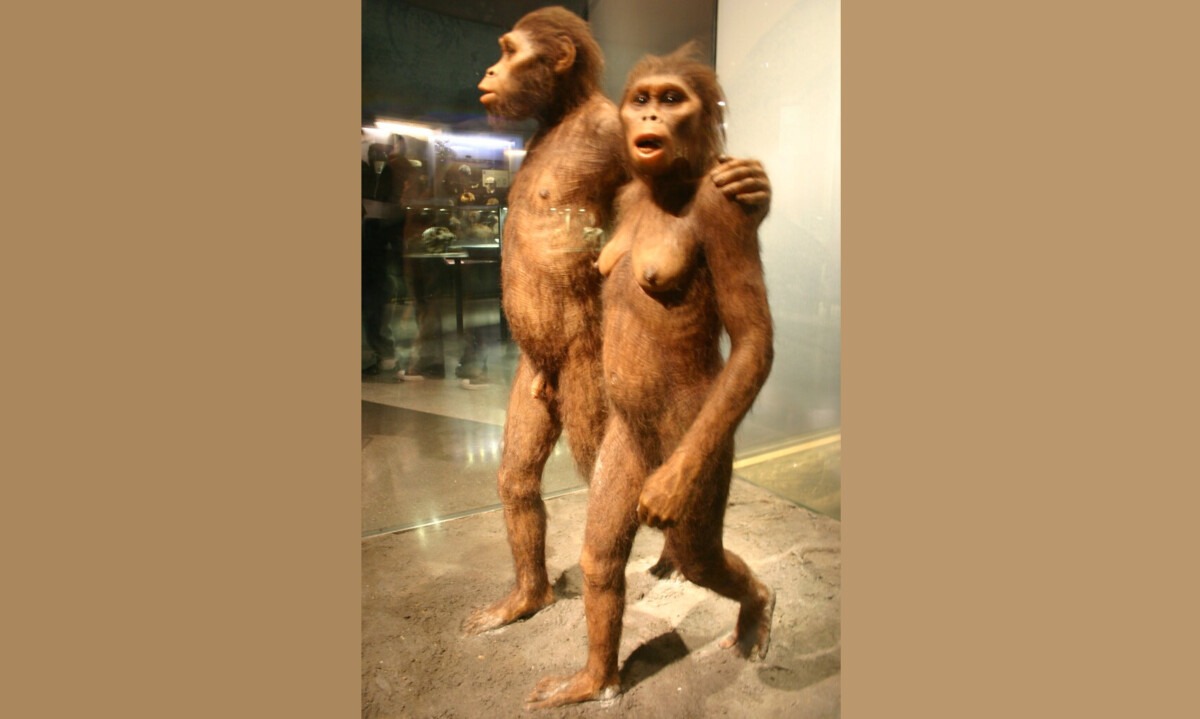
This genus is more directly ancestral to humans and includes several species, such as Australopithecus afarensis (famously represented by “Lucy”), Australopithecus africanus, and others. Australopithecines show a greater commitment to bipedalism and have features more closely resembling modern humans, although they still retained some adaptations for climbing.

This genus is known for their true bipedalism, enhanced predator awareness, and facilitated tool use by freeing the hands. These hominins exhibited significant dental evolution, with smaller, less pronounced canines indicative of dietary changes and reduced aggression, suggesting more complex social interactions. Their brains, though only modestly larger than those of great apes, showed gradual increases in size, hinting at evolving cognitive abilities.

Survival: From about 4.2 to 2 MYA in Eastern and Southern Africa (in woodlands and grasslands)
Size:
3’6″ to 4’6″ (a bit taller than modern chimpanzees)
Brain Size
: around 350 to 550 cm³ (speculative)

Brain to Body EQ: 2.5 to 3.5 (humans=7.4 to 7.8)
Species: Australopithecus anamensis (around 4.2 to 3.9 million years ago), Australopithecus afarensis (famous for the “Lucy” specimen, around 3.9 to 2.9 million years ago), and others. 

Primary Timeline…

— map / TST —

Michael Alan Prestwood
Author & Natural Philosopher
Prestwood writes on science-first philosophy, with particular attention to the convergence of disciplines. Drawing on his TST Framework, his work emphasizes rational inquiry grounded in empirical observation while engaging questions at the edges of established knowledge. With TouchstoneTruth positioned as a living touchstone, this work aims to contribute reliable, evolving analysis in an emerging AI era where the credibility of information is increasingly contested.
This Week
February 4, 2026
»Edition Archive
WWB Research….
1. Story of the Week
Max Planck
2. Quote of the Week
“It was an act of despair, to sacrifice physics for the sake of finding an explanation.”
3. Science FAQ »
Why is Planck time important?
4. Philosophy FAQ »
Did talking our way through life drive a million years of brain growth?
5. Critical Thinking FAQ »
Why do we struggle to recognize the limits of our own thinking?
6. History FAQ!
Has Planck’s Constant been updated?
Bonus Deep-Dive Article
Empty Space: A Dive into Particle Physics
Scroll to Top