

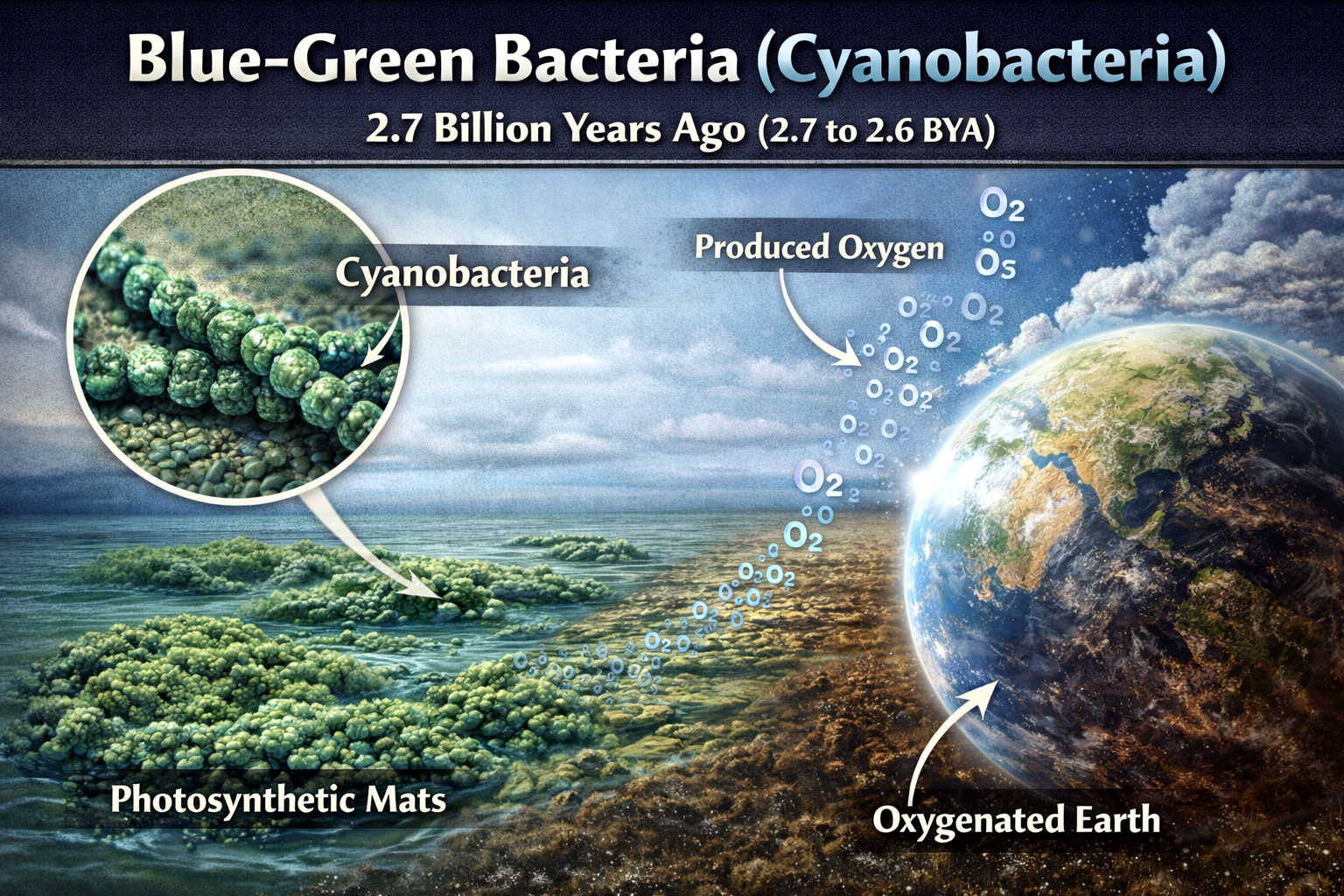
Blue-green algae are not true algae at all. They are cyanobacteria — ancient, photosynthetic bacteria. Because they use sunlight and often look algae-like in ponds, lakes, and wet places, the old label stuck. You still see it today on pool supplies and warning signs, even though the scientific term is cyanobacteria. They are not plants, and they are not true algae. They are bacteria.
These tiny organisms were world-changers. Over immense stretches of time, they helped drive the oxygenation of Earth, slowly transforming the oceans and atmosphere. The Great Oxidation Event is usually dated to about 2.4 billion years ago, but cyanobacteria likely appeared earlier, which is why your 2.7 to 2.6 BYA range works well as a timeline marker for their rise. In that sense, they were not just another bacteria. They were among Earth’s earliest great planetary engineers.
They also matter for another reason. Much later, the ancestors of chloroplasts — the structures plants and algae use for photosynthesis — likely came from cyanobacteria through endosymbiosis. So even though blue-green algae are not true algae, they helped make later algae and plants possible. That gives them an even bigger place in the story of life.
