
Phil • Cr. Think • Science • Hist • …
TST PRACTICE

The Philosophy Website

FAQ

What is the history of debate?

☐ Read
☑ Read
You’ve read this 0 times.
You’ve listened to this 0 times.
Thu 1 Oct 2026
Published 1 hour ago.
Updated 3 days ago.
Related FAQs
Is cause and effect certain?
Can a fat, out of shape person give valid nutritional advice?
Did Pythagoras coin the word philosophy?
Is Philo’s interpretation related to the split in the Idea of Ideas?
What is the Updated History of Earth?
Is it logical to vote for a candidate based on just one issue?
Share :
Email
Print

What is the history of debate?

Known debate goes back to at least ancient Greece, where citizens argued cases in courts and policies in assemblies. That created a market for teachers of persuasion, especially the Sophists. Originally, sophist meant something closer to a wise or skilled teacher, not a deceiver. But Plato drew a sharp distinction between philosophy and what he saw as empty rhetoric: the philosopher should care about truth and even welcome being proven wrong. Over time, that criticism helped turn sophistry into our modern word for clever but misleading argument.

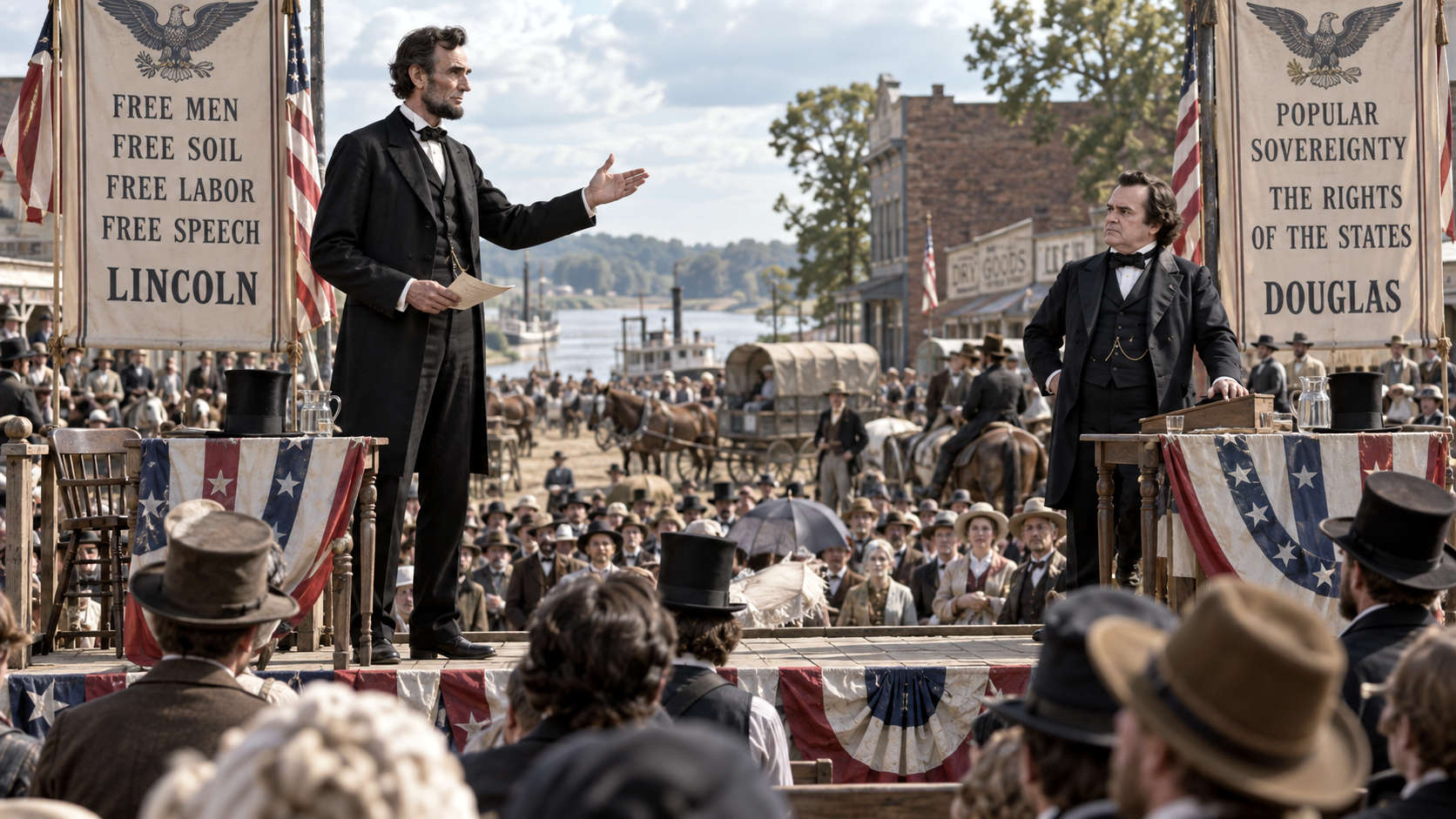
Debate continued evolving. The Lincoln-Douglas debates of 1858 are a useful example of good debate. Lincoln and Stephen Douglas debated seven times while campaigning for an Illinois Senate seat, mostly over slavery and its expansion. These were not polite philosophy seminars, but they were substantial: one candidate spoke for an hour, the other for ninety minutes, followed by a thirty-minute rebuttal. Three hours gave both sides room to develop arguments, answer criticism, and let the public hear real differences in their positions.

Modern presidential debates are very different. Television added performance and winning back into the mix. The famous Kennedy and Nixon debate of 1960 started it all. Today the format gives voters some useful information, but it also rewards sophistry. It rewards quick answers, attacks, and meme-like content. Presidential debates can tell us something about communication under pressure and command of issues, but that is only a small part of the actual job of governing.
— map / TST —

TST Tracker
✓ Reading recorded.
The Lincoln-Douglas debates stand as good debates. Good debate is not just two people trying to win. It is a form of Idea Evaluation. Listen carefully, challenge claims, defend your own reasoning, and be willing to update when the evidence demands it. Think well by using disagreement to improve ideas, including your own.
Michael Alan Prestwood
Author & Natural Philosopher
Prestwood writes on science-first philosophy, with particular attention to the convergence of disciplines. Drawing on his TST Framework, his work emphasizes rational inquiry grounded in empirical observation while engaging questions at the edges of established knowledge. With TouchstoneTruth positioned as a living touchstone, this work aims to contribute reliable, evolving analysis in an emerging AI era where the credibility of information is increasingly contested.
The Prestwood Column
Menu
October 2026
Column Research….
1. Timeline Story
The Great Quaker Debates!
2. Linked Quote
“All men are prone to differ. It is no new thing in all former ages, in all parts. Each party is most right in his own eyes.”
3. Science FAQ »
Do facts actually change minds?
4. Philosophy FAQ »
When does persuasion become manipulation?
5. Critical Thinking FAQ »
How can you tell when a debate has stopped being productive?
6. History FAQ!
What is the history of debate?
Bonus Deep-Dive Article
Roger Williams Biography and Dedication to the Freedom of Conscience

Comments

Join the Conversation! Currently logged out.
NEW BOOK! NOW AVAILABLE!!

30 Philosophers: A New Look at Timeless Ideas

by Michael Alan Prestwood
The story of the history of our best ideas!
Scroll to Top