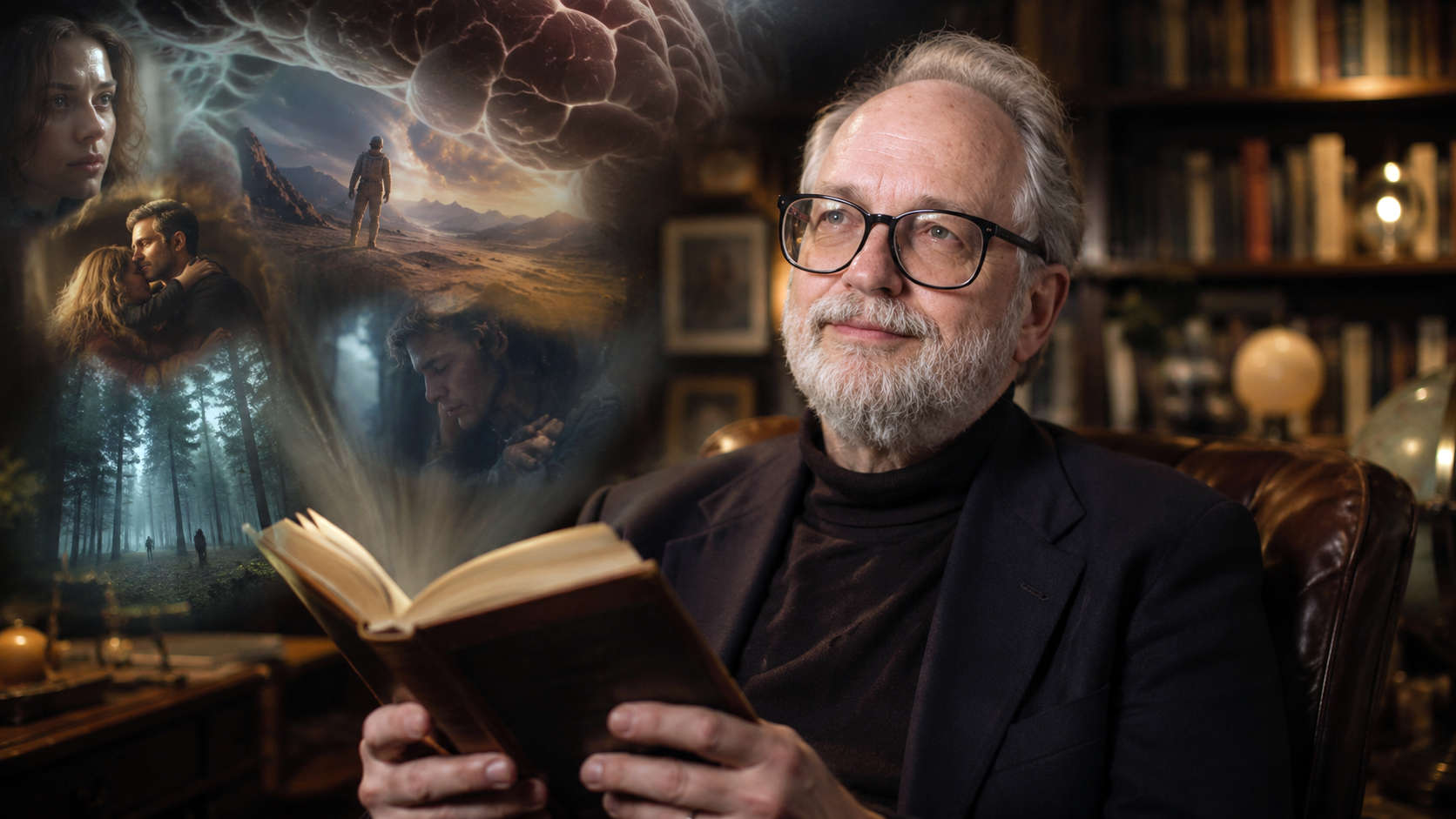
It’s interesting that humans engage with fiction. The mind can enter structured make-believe to explore aspects of true things for many reasons from entertainment to preparation for real events.
Children do this with toys, adults do it with novels, films, theater, games, myths, and even social roles. Fiction becomes a guided imagination system. It lets the brain simulate danger, relationship, fear, grief, courage, betrayal, temptation, and identity without needing the event to happen.
Kendall Walton helps explain why fiction can feel emotionally real without being factually real. A novel, film, or play does not merely present fake events. It guides the imagination. The reader enters a structured game of make-believe, where fear, grief, hope, and empathy can become real experiences in the mind. The monster is not real. The feeling is.
Fiction feels so real because it gives the mind props for make-believe. The body and emotions can respond to imagined situations even when the person knows the story is invented.
Fiction traces are real as artifacts and experiences. The dragon did not exist, but the fear, attention, empathy, and memory can be real.