
Phil • Cr. Think • Science • Hist •

The Philosophy Website

FAQ

What is the history of philosophy of fiction?

Wed 1 Jul 2026
Published 2 months ago.
Updated 4 weeks ago.
Related FAQs
What is cognitive dissonance?
How do you prevent yourself from overreacting?
Is Philo’s interpretation related to the split in the Idea of Ideas?
Did Copernicus prove that Earth moves around the Sun?
What is the difference between reason and logic?
If evolution is true, why haven’t humans evolved in 50,000 years?
Share :
Email
Print

What is the history of philosophy of fiction?

The earliest philosophy of fiction begins before anyone called it that. Ancient myths, epics, and dramas were already using invented stories to explore such topics as gods, fate, and moral failure. Fiction as a philosophy started the first time someone asked, “Is that really true?”

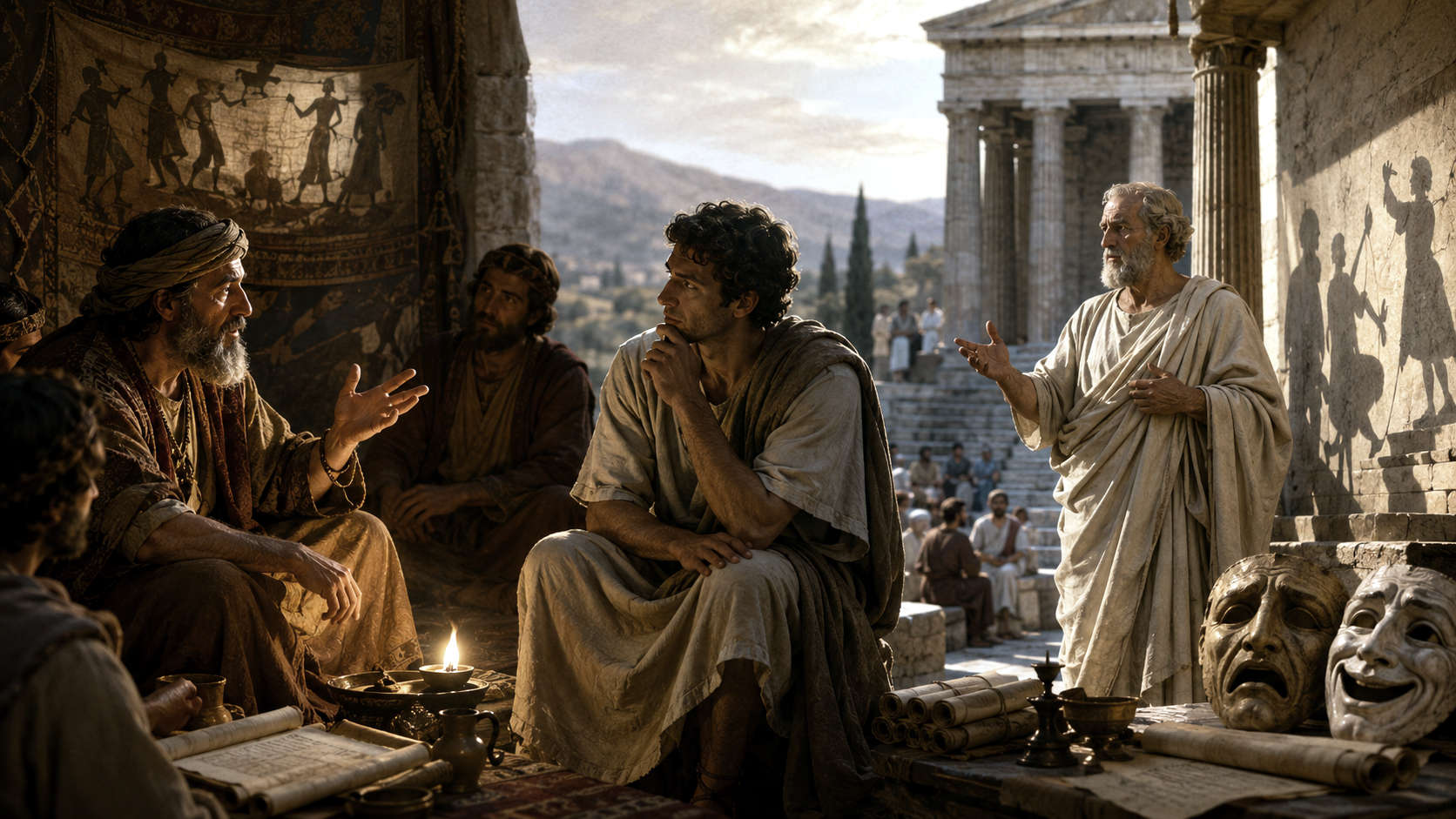
In the East, fiction was used to explore concepts in wisdom literature. In the West, the clearest philosophical turn comes in ancient Greece with the idea of mimesis, or imitation. Plato worried that poetry and drama could mislead the mind. For him, fiction had a danger: it could stir emotion, deepen illusion, and make shadows feel like reality.

Aristotle answered with a more generous view. In the Poetics, he argued that poetry can be more philosophical than history because history tells what happened, while poetry shows what could happen according to probability, character, and consequence. That is the classic starting point.

In the medieval worlds, myth, scripture, and the like often blended together. Stories were often used as vehicles toward another aim including teaching wisdom, theology, and virtue. Allegorical interpretation became especially important. A story could be read beyond its literal surface meaning. This set in stone the idea that a story does not have to be factually literal to carry some truth.

In the modern period, the rise of history, science, and journalism sharpened the distinction between fact and fiction. Fiction became more clearly understood as invented narrative. At the same time, novelists and philosophers kept noticing that fiction could reveal human nature in ways bare facts often could not. 

In contemporary philosophy, the discussion becomes more technical: fictional worlds, fictional truth, possible worlds, narrative identity, propaganda, and the ethics of representation. TST enters this story with Imaginative Realism: fiction is not reality denied, but reality recombined.
— map / TST —

Annotated References:

  • Plato. Republic, circa 375 BCE, Book X: imitation can distance audiences from reality, stir emotion, and make appearances feel true.
  • Aristotle. Poetics, circa 335 BCE, Chapters 4 and 9: representation is natural to human beings, and fiction can express universal patterns rather than merely report particular events.
  • Lewis, David K. “Truth in Fiction.” American Philosophical Quarterly 15, no. 1 (1978): 37–46: modern analytic philosophy asks what makes statements true within fictional worlds.
  • Prestwood, Michael Alan. 30 Philosophers. 2024. Chapter 18, “The Illusion of Creation: Fiction” and “Determining Truth from Lies”: Imaginative Realism treats fiction as the recombination of reality-derived ideas and distinguishes truths borrowed from reality from speculative additions.
Long before fiction had a name, myths, epics, parables, and dramas were already exploring gods, fate, suffering, courage, and moral failure. The philosophical turn came when people asked whether stories reveal truth or deepen illusion. Plato warned that fiction can mislead; Aristotle saw that it can reveal patterns.
Michael Alan Prestwood
Author & Natural Philosopher
Prestwood writes on science-first philosophy, with particular attention to the convergence of disciplines. Drawing on his TST Framework, his work emphasizes rational inquiry grounded in empirical observation while engaging questions at the edges of established knowledge. With TouchstoneTruth positioned as a living touchstone, this work aims to contribute reliable, evolving analysis in an emerging AI era where the credibility of information is increasingly contested.
The Prestwood Column
Menu
August 2026
»COLUMN ARCHIVE
--COLUMN--
Column Research….
1. Timeline Story
Ethical Roadmap
2. Linked Quote
“The greatest weapon against stress is our ability to choose one thought over another.”
3. Science FAQ »
Did morality evolve?
4. Philosophy FAQ »
Is the Me Too movement consistent with TST Ethics?
5. Critical Thinking FAQ »
When should you stop following the crowd?
6. History FAQ!
What did the Nuremberg Trials clarify about moral agents?
Bonus Deep-Dive Article
TST Ethical Roadmap: A Process Model for Ethical Guidance and Moral Choice

Comments

Join the Conversation! Currently logged out.
NEW BOOK! NOW AVAILABLE!!

30 Philosophers: A New Look at Timeless Ideas

by Michael Alan Prestwood
The story of the history of our best ideas!
Scroll to Top