
Explore Natural Philosophy

Phil • Cr. Think • Science • Hist •

FAQ

Who was Friedreich Nietzsche?

Wed 6 Nov 2024
Published 2 years ago.
Updated 7 months ago.
Related FAQs
Did Albert Einstein really have a daughter whose existence remained a mystery until 1986?
Was Roger Williams a Separatist?
Who is famous for questioning cause and effect?
What is the “Parable of the Ship?”
Were evangelicals and catholics a part of the first 100 years of the United States?
Why was Galileo’s 1610 book so important?
Share :
Email
Print

Who was Friedreich Nietzsche?

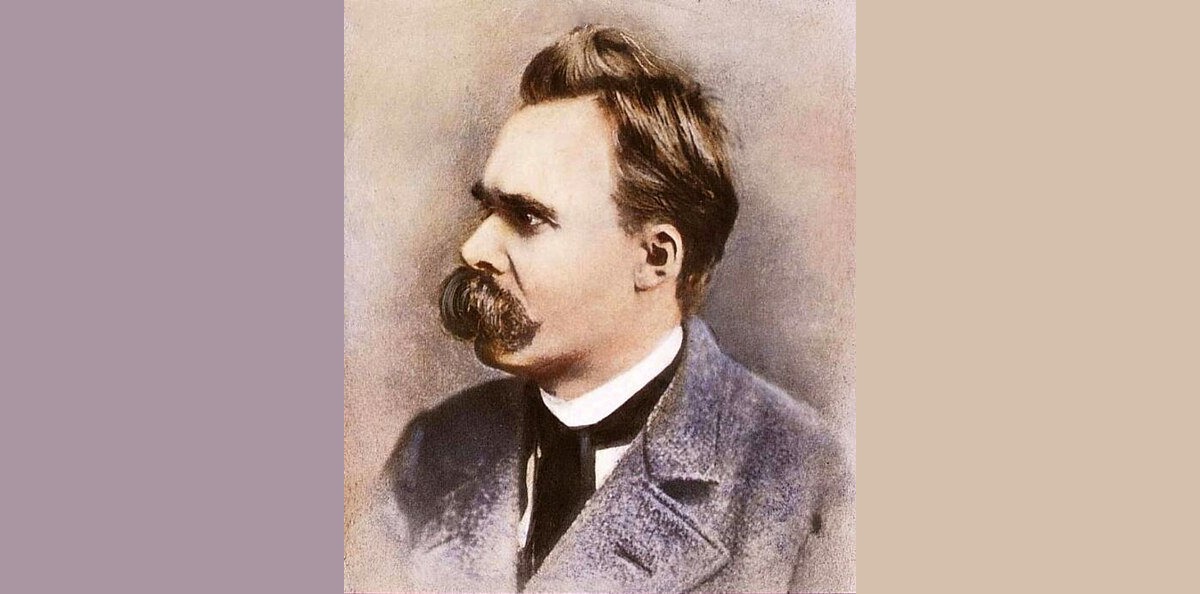
Friedrich Nietzsche spent 55 years on Earth before his existence was annihilated and his atoms returned to the universe. He challenged traditional morality and opened the door to a postmodern understanding. Today Nietzsche is most famous for declaring “God is dead,” but do you understand he was trying to provoke a wake-up call?

The mustachioed-musician-philosopher was a lover of life, his feared Nihilism was less about promoting a life devoid of meaning, and more about shattering illusions to build a more authentic existence.

He was born in 1844, on the 49th birthday of the Prussian King, after whom he was named. Five years later, his father dies from a brain ailment. This foreshadowed tough times for Friedrich at a similar age. As a young man, he immersed himself in the study of the great philosophers and philology—the study of language. At the age of 24, Nietzsche was appointed the professor of philology at the University of Basel in Switzerland.

To get a feel for his complex later years, let’s pick up in 1889. In January, Nietzsche broke down in what is now known as “The Umbrella Incident.” As he took one of his regular walks, a horse was being whipped by its driver, its eyes filled with a pain Friedrich could not bear. As a man who had long explored suffering, he dropped his umbrella and threw his arms around the horse. Some say this broke him because in his desire to live authentically in his Eternal Recurrence, he could not live in such a world.

As Nietzsche’s health failed, he was transferred to a clinic. Like his father, Nietzsche died of brain issues. He breathed his last on August 25, 1900. His umbrella incident from 11 years earlier remains a haunting episode in the annals of philosophy. 
— map / TST —

Chapter 30 in "30 Philosophers" explores Nietzsche's story and philosophy.
Michael Alan Prestwood
Author & Natural Philosopher
Prestwood writes on science-first philosophy, with particular attention to the convergence of disciplines. Drawing on his TST Framework, his work emphasizes rational inquiry grounded in empirical observation while engaging questions at the edges of established knowledge. With TouchstoneTruth positioned as a living touchstone, this work aims to contribute reliable, evolving analysis in an emerging AI era where the credibility of information is increasingly contested.
The Prestwood Column
Menu
July 2026
»COLUMN ARCHIVE
--COLUMN--
Column Research….
1. Timeline Story
The famous Lewis “Truth in Fiction” Paper
2. Linked Quote
“Truth is stranger than fiction…[which] is obliged to stick to possibilities;”
3. Science FAQ »
Why does fiction feel real?
4. Philosophy FAQ »
Can authors create fiction beyond our universe?
5. Critical Thinking FAQ »
How do we know what is true in a fictional world?
6. History FAQ!
What is the history of philosophy of fiction?
Bonus Deep-Dive Article
TST Philosophy of Fiction: Imaginative Realism

Comments

Join the Conversation! Currently logged out.
NEW BOOK! NOW AVAILABLE!!

30 Philosophers: A New Look at Timeless Ideas

by Michael Alan Prestwood
The story of the history of our best ideas!
Scroll to Top