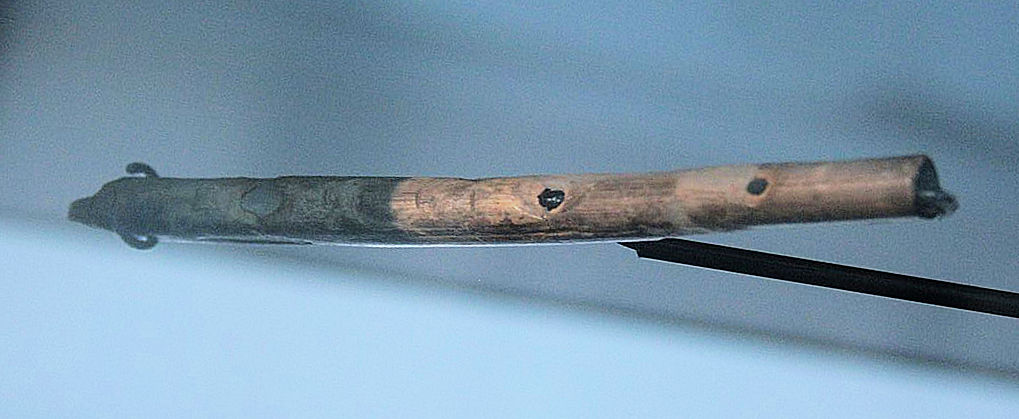
Bone Flute
1,600 Generations Ago The oldest undisputed musical instrument is the Hohle Fels Flute discovered in the Hohle Fels cave in Germany’s Swabian Alb in 2008. The flute is made from a vulture’s wing bone perforated with five finger holes.


Master Timeline
1,600 Generations Ago The oldest undisputed musical instrument is the Hohle Fels Flute discovered in the Hohle Fels cave in Germany’s Swabian Alb in 2008. The flute is made from a vulture’s wing bone perforated with five finger holes.

The Rigveda, Sanskrit for “praise knowledge”, is a collection of sacred texts of Hinduism first written down between 1700 and 1100 BCE. The sounds and texts of Rigveda have been orally transmitted since at least circa 2000 BCE. It discusses cosmology, praises deities, and covers philosophical questions including… 1.164.34: “What is the ultimate limit of
Rigveda Samhita, Veda Book 1 of 4 Read More »
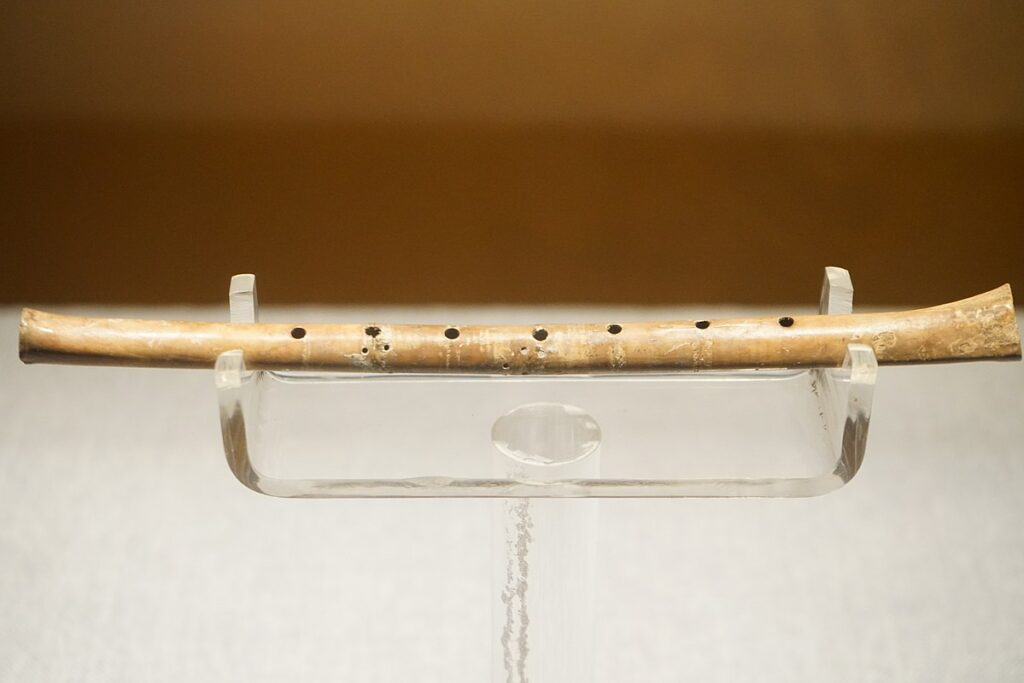
The Jiahu gudi is the oldest known musical instrument from China. This 8,000 year old flute dates back to circa 6,000 BCE. Gudi literally means “bone flute”.
Oldest Known Flute in China Read More »
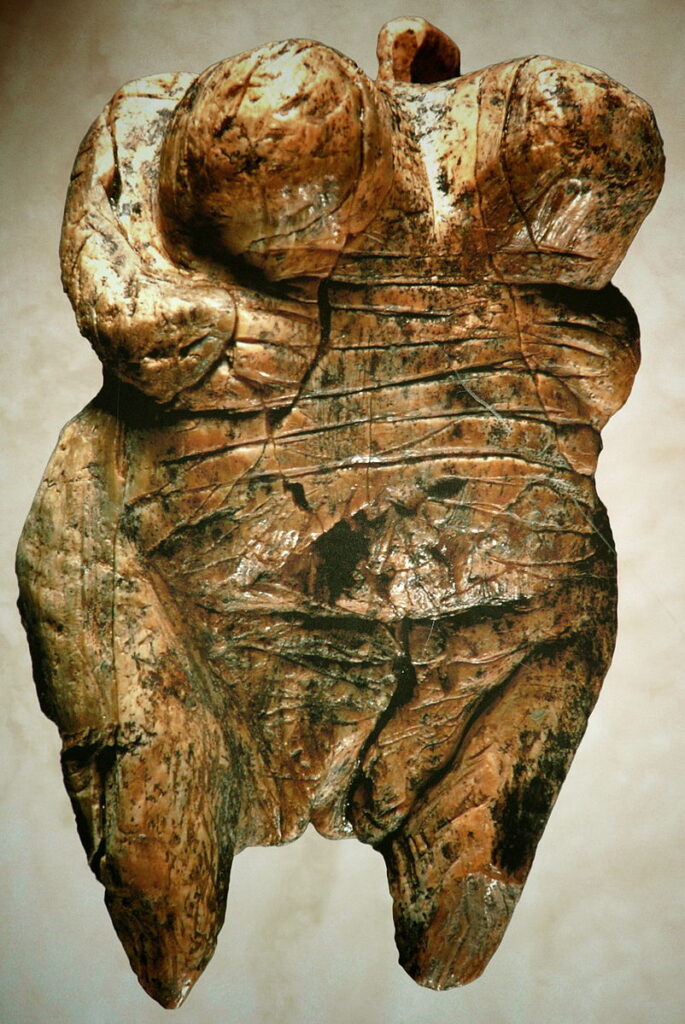
The Venus of Hohle Fels is a 2.4″ figurine made of wooly mammoth ivory that was unearthed in 2008 in Hohle Fels, a cave near Schelklingen, Germany. It was pieced together from six pieces found in a cluster, about 10 feet below ground, and about 60 feet from the cave entrance. The left arm and
Venus of Hohle Fels Read More »
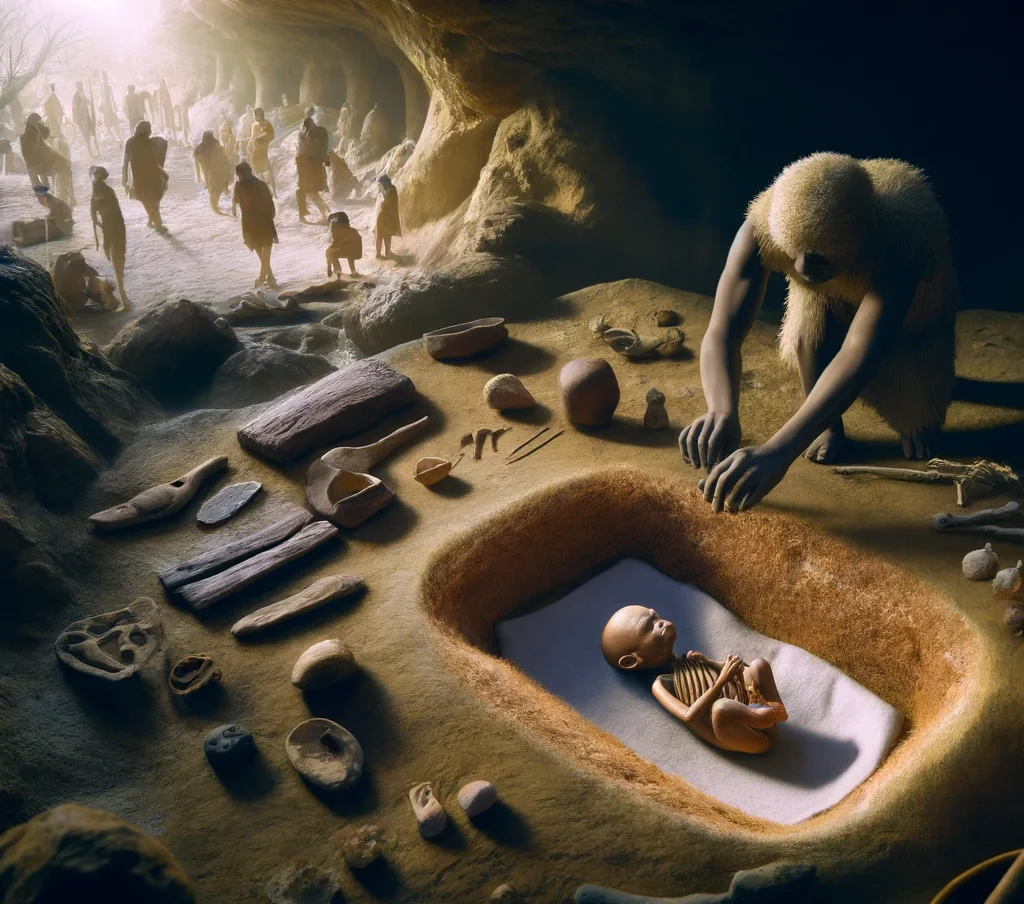
By 76,000 BCE our cognitive ability meets emotional intelligence. Is this when we started believing in one story?
Earliest Known Prepared Burial, “Mtoto” Read More »

Skara Brae is a stone-built Neolithic settlement, located on the Bay of Skaill on the west coast of the largest island of Scotland. It consists of ten houses made of flagstones within earthen dams that provided support for the walls; the houses included stone hearths, beds, and cupboards. A primitive sewer system, with “toilets” and
Skara Brae Scottish Village Read More »

468 Generations Ago (from 2020 CE) The Neolithic Revolution is the earliest known Agricultural Revolution. It is very likely that humans practiced forms of agriculture earlier. How much earlier? Well, without evidence, we are guessing. For convenience, anthropologists label humans as hunter-gatherers prior to the Neolithic Revolution. The fact is that the current theory states
Neolithic Revolution Read More »
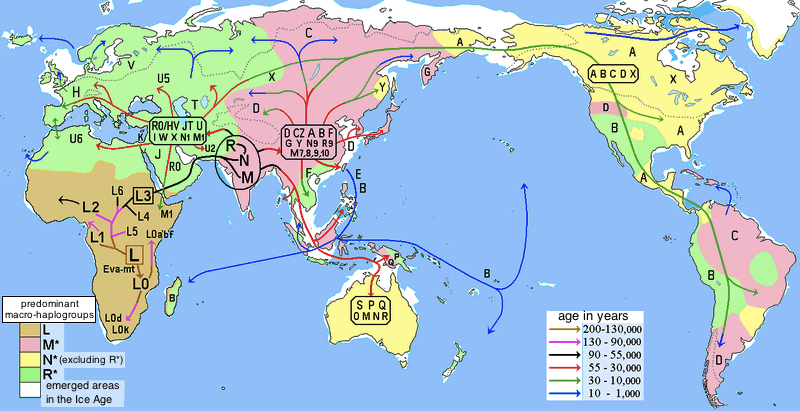
Through minor DNA changes, we know which early humans have descendants alive today. This successful “out of Africa” migration, the Southern Dispersal, took place around 70,000 to 50,000 BCE. Our ancestors proceeded to colonize all the continents and larger islands, arriving in… Eurasia circa 60,000 BCE Australia circa 65,000 BCE South America circa 30,000 BCE
Successful Out of Africa Migration Read More »
Over millions of years, the modern-day South America and Africa separated during the breakup of the supercontinent Pangaea.
South America Splits from Africa Read More »

North America splits from Europe causing diverging evolutionary lines. Over millions of years, the modern-day Europe (Eurasian plate) and North America (North American Plate) separated during the final breakup of Pangaea in the early Cenozoic Era. This split is a later part of that breakup and created the North Atlantic Ocean.
Opening of the North Atlantic Ocean Read More »
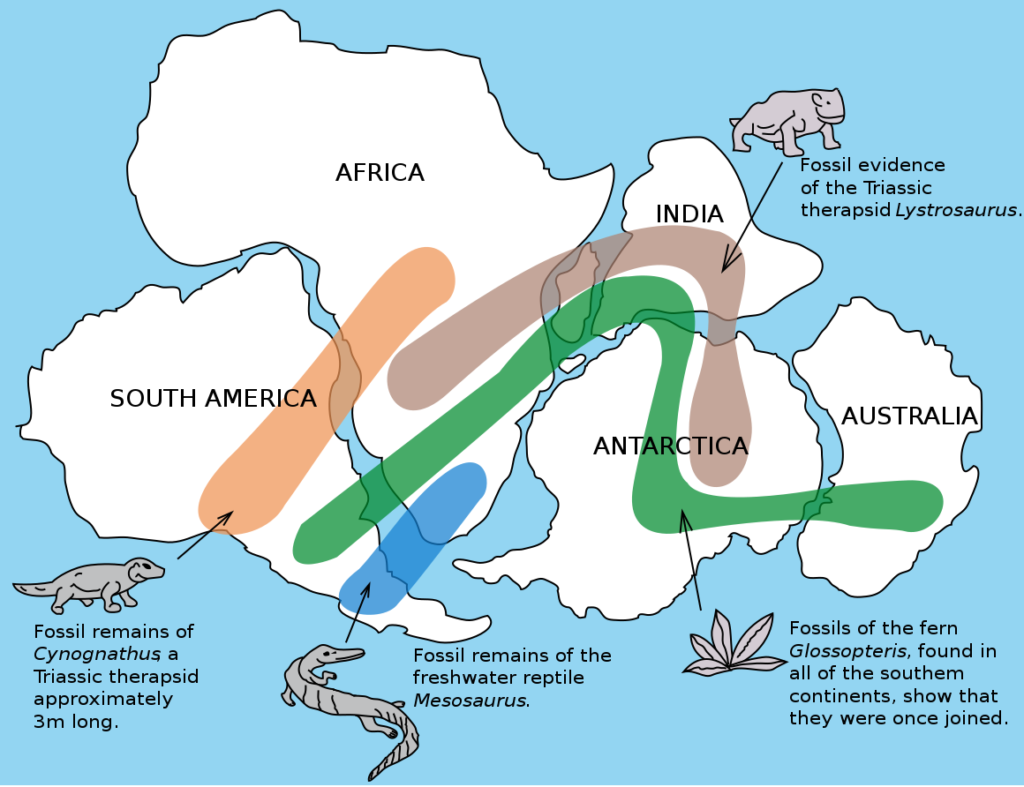
By dating rocks and fossils scientists can document the movement of the continents over time. To confirm and refine this science, geologists study rocks, paleontologists study fossils, and anthropologists study human societies, cultures, and relics. The location and dating of rocks, fossils, and relics allow us to understand the distant past. Cynognathus, circa 242 million

The breakup of Pangaea did not just reshape geography. It reshaped evolution by isolating populations, limiting movement, and allowing different branches of life to follow different paths.
Pangaea Splitting Starts Splitting Evolution Read More »
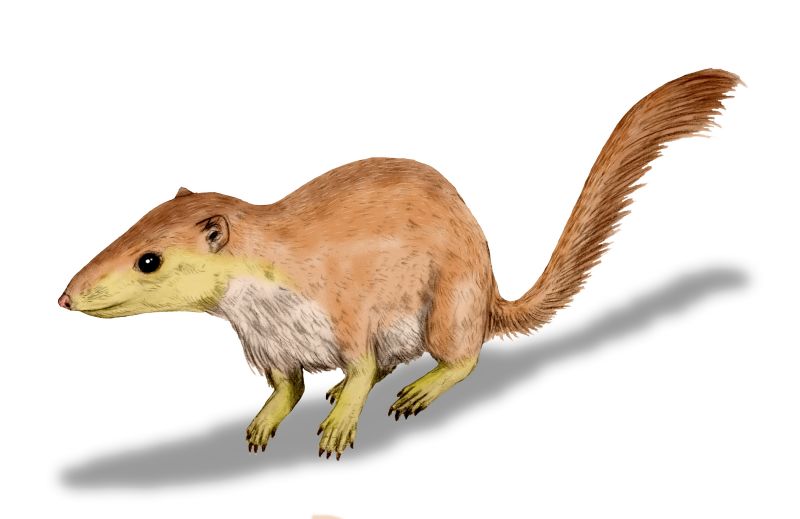
Within mammals, only primates have binocular vision, grasping hands, and flat nails–instead of claws. Purgatorius might have had all three earning it the earliest known proto-primate label. It lived in Eastern Montana about 66 million years ago during the very last years of the Cretaceous period. It lived through the K-T extinction event and the extinction
Purgatorius — Earliest known proto-primate. Read More »

2,400 Generations Ago The modern human DNA evolved sometime between 71,000 and 51,000 BCE. Imagine that. A human baby born today, and a human baby born in 60,000 BCE have nearly indistinguishable DNA. There are differences but essentially humans are the same now as they were then. The popular website 23andme.com focuses on 23 changes in
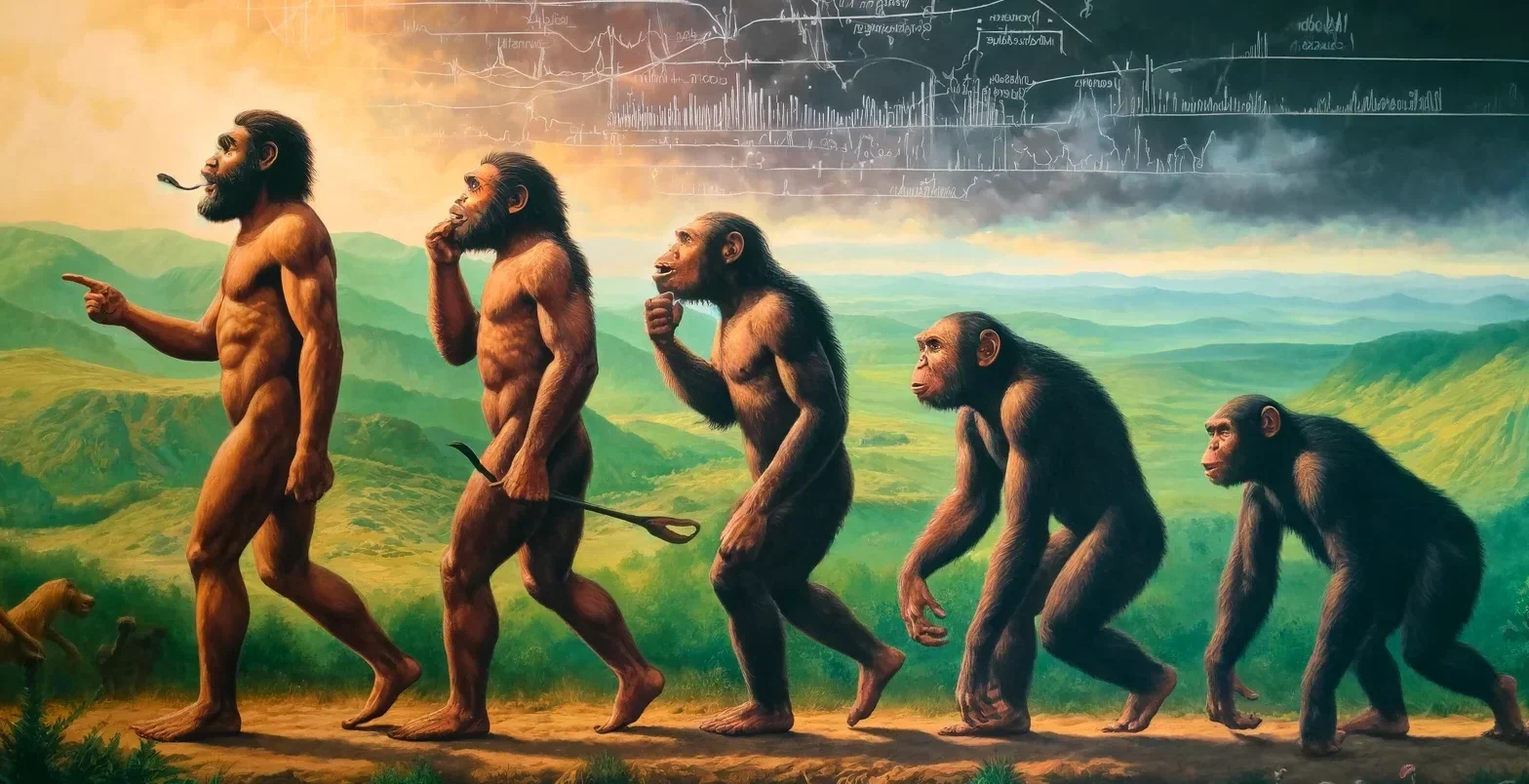
Around 700,000 years ago, the development of a human-like hyoid bone suggests early hominins may have begun transitioning from simple vocalizations to more structured speech. This period marks a critical evolutionary point for Homo heidelbergensis, whose anatomical adaptations for speech, coupled with advanced tool use and complex social structures, indicate possible use of rudimentary language.
Hyoid Bone: Speach Emerges Read More »
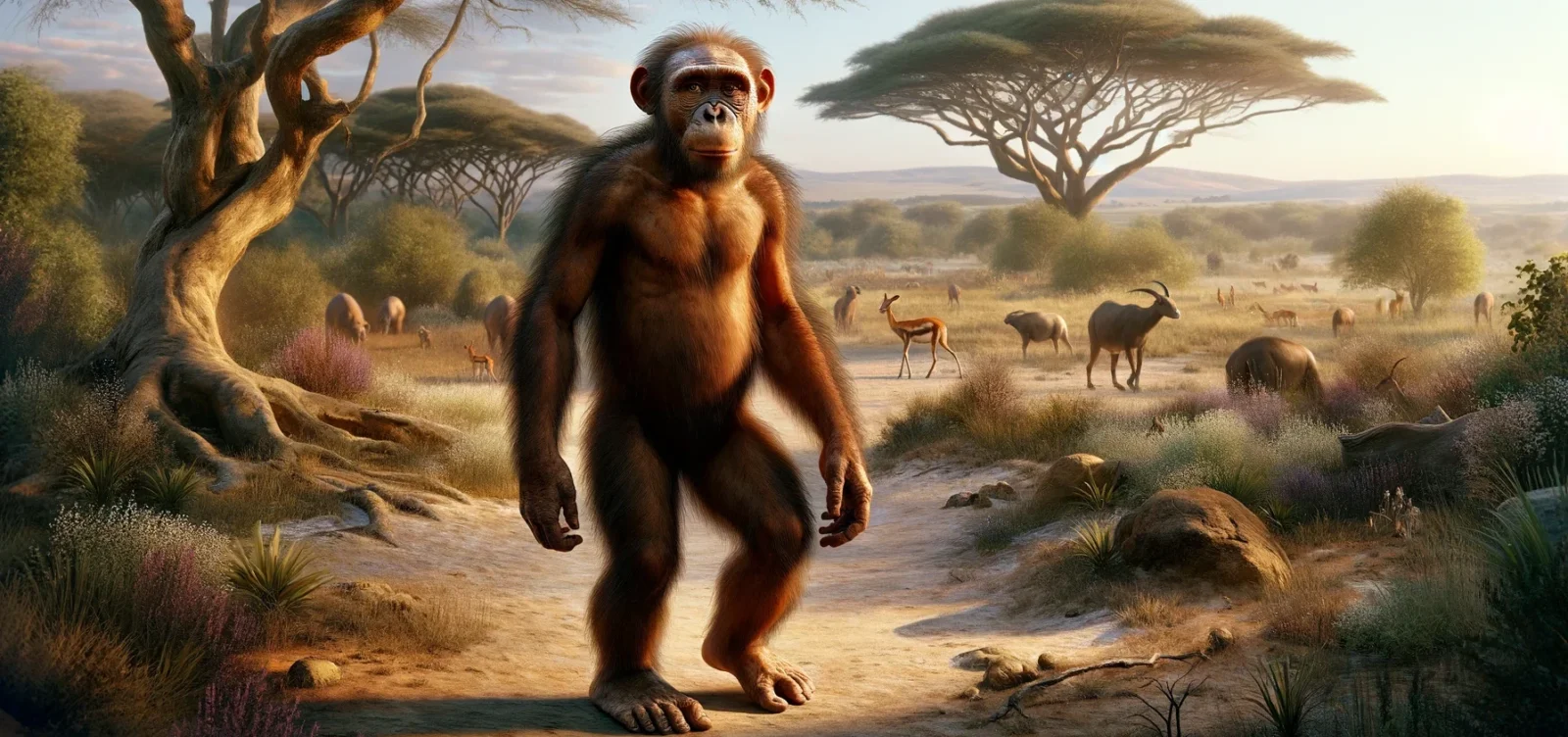
Homo habilis marks an early Philosophy of Mind turning point: intelligence was no longer just reaction, but planning. With toolmaking, foresight, and environmental manipulation, the mind began reaching beyond the present moment into imagined futures.
Homo habilis: Our Intelligence Settles. Read More »

240 Generations Ago Interpreting the date God created the Earth by reading and interpreting the Bible is very difficult. You can put dates on events, time between events, etc. then convert it to the modern Julian calendar. One popular interpretation is Sunday, October 23, 4004 BCE. Generating this date, and similar, rely on the Ussher
4004 BCE, The Bible’s Earth Creation Date Read More »
16,000 Generations Ago True symbolic thought emerges before 430,000 BCE: The discovery in 2018 of Neanderthal art dating back to 68,000 years ago, proved symbolic thought in Neanderthals. It also indicates strongly that symbolic thought evolved in or before our common ancestor about 430,000 years ago. This must be true unless either they evolved it
Homo neanderthalensis: Verified True Symbolic Thought Read More »
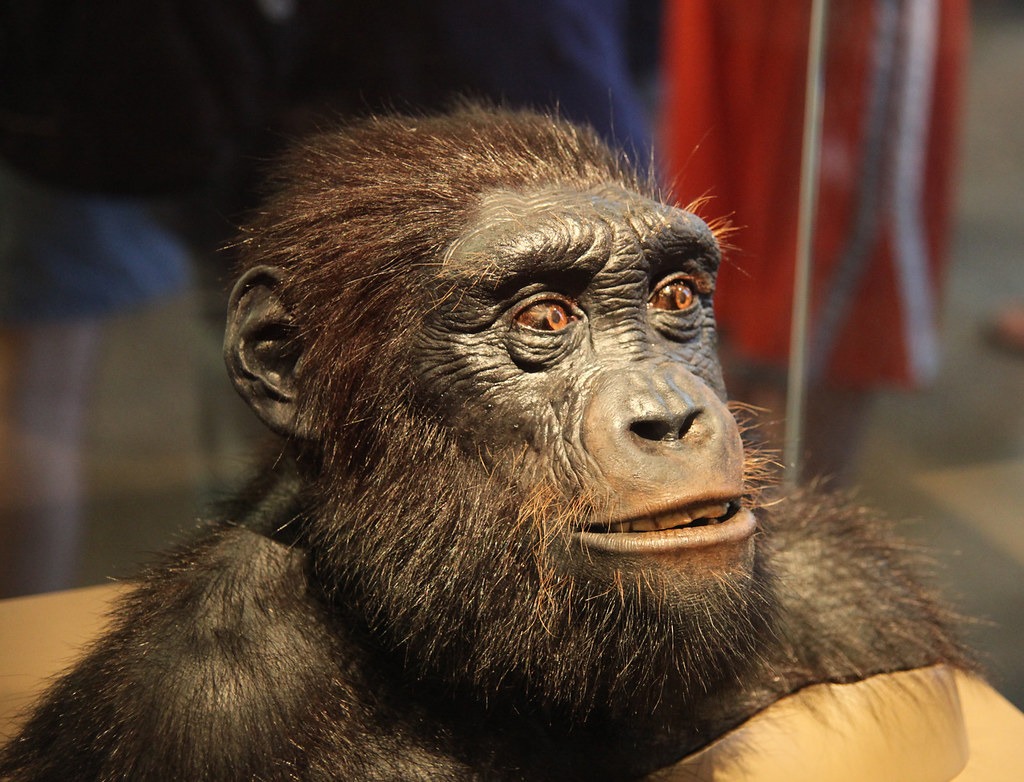
Humans did not evolve from chimpanzees. Humans, chimpanzees, and bonobos all descend from an earlier African ape whose lineage split around 7.5 million years ago.
Chimpanzees Branch Off (CHLCA) Read More »

360 Generations Ago Earliest known permanent settlement in the Africa/Middle East zone. Jericho, located in the West Bank, Palestinian Territories, stands as one of the earliest known permanent settlements in the Africa/Middle East zone, with continuous habitation dating back to at least the 9th millennium BCE. Situated near an oasis in the Jordan Valley, Jericho’s