Weekly Insights for Thinkers

Human Ancestors

Pre-hominid human evolution all the way back to LUCA.

Terra Amata Site, France

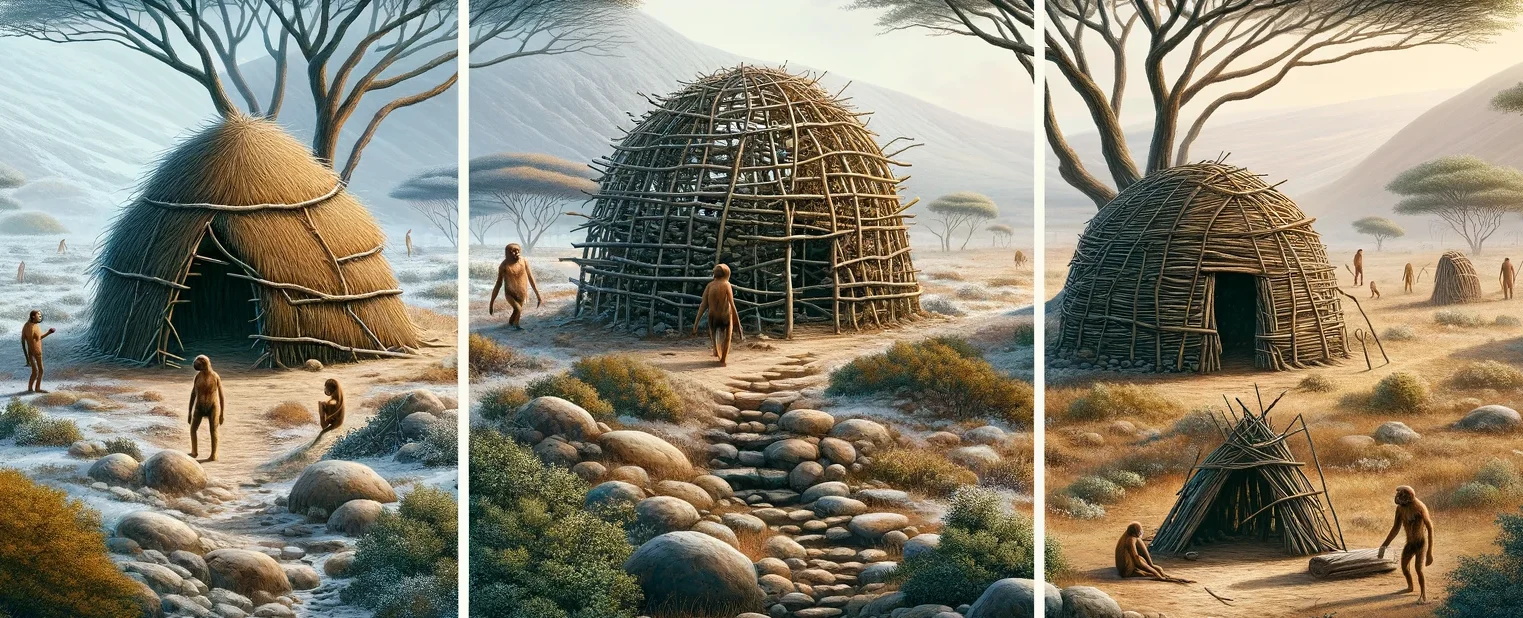
Discovered in the 1990s, this 400,000-year-old Homo heidelbergensis structure in France is believed to be a primitive hut or shelter made from wooden posts and branches. The structure is thought to have been built by Homo heidelbergensis. The shelter is estimated to be around 4-5 meters (13-16 feet) wide and 6-7 meters (20-23 feet) long. […]

Terra Amata Site, France Read More »

Homo rhodesiensis: A Hybrid Lesson

Homo rhodesiensis, often regarded as Africa’s counterpart to Europe’s Homo heidelbergensis, represents a pivotal species. Discovered in Kabwe, Zambia, the species exhibits a mix of robust and modern traits with a large brain size and advanced tool use, reflecting significant cognitive capabilities. Interbreeding Analysis: The evolutionary journey of Homo rhodesiensis might highlight well the complex

Homo rhodesiensis: A Hybrid Lesson Read More »

Emergence of Early Hominin Shelters

The origins of tent-like structures in human history remain shrouded in mystery, primarily due to the perishable materials involved and the lack of direct archaeological evidence. However, as Homo erectus appeared and spread into varied climates, their enhanced tool-making skills and control of fire likely necessitated and enabled the construction of more complex shelters. This

Emergence of Early Hominin Shelters Read More »

First Proto-Containers

The earliest containers were likely simple natural resources that early hominins stumbled upon and adapted for use. Starting possibly with Homo habilis around 2.0 million years ago, these early humans may have utilized large leaves, shells, or naturally hollowed-out pieces of wood as rudimentary containers. This usage marks an innovative step in early human technology,

First Proto-Containers Read More »

Collective Learning Emerges

The dawn of collective learning can be traced back the oldest known stone tools, discovered at Lomekwi 3 in Kenya. The creation of these tools required more than just individual innovation; it involved the rudimentary form of collective learning, where knowledge of toolmaking was shared within groups. This early transmission of skills not only enhanced

Collective Learning Emerges Read More »

Full Emotional Intelligence Emerges

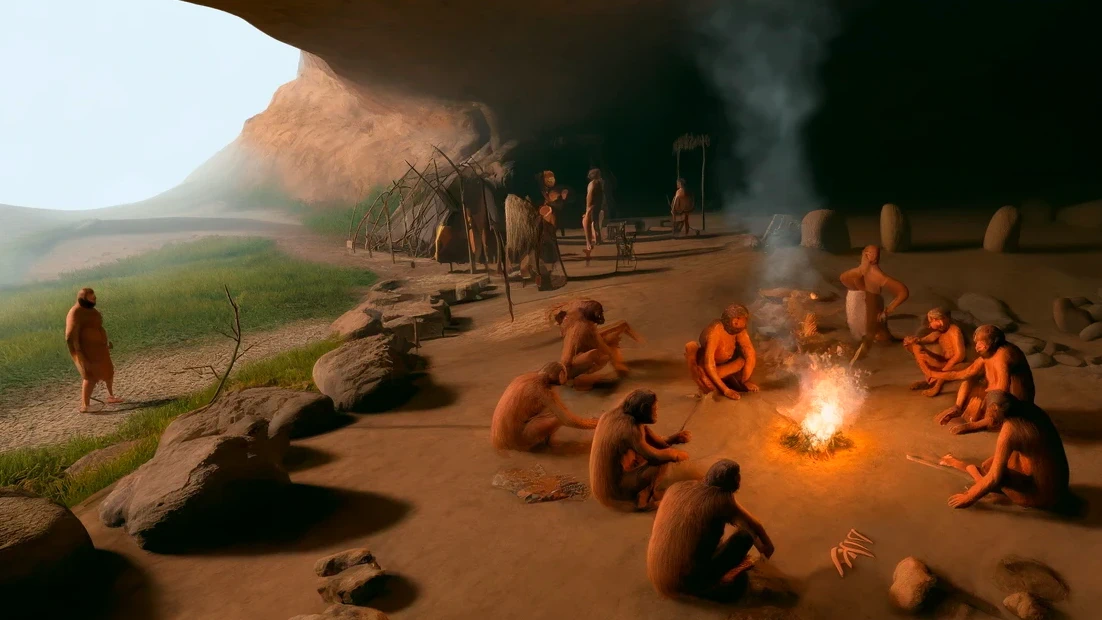
Full emotional intelligence (EI) likely emerged around this time in species such as Homo antecessor and Homo heidelbergensis. EI heralds the dawn of a new era where emotional intelligence began to take a recognizable shape. Analysis: With indications of complex social structures, more potential for language, and advanced tool-making abilities, these species navigated their world

Full Emotional Intelligence Emerges Read More »

Neanderthal-Sapien LCA

NSLCA: The Neanderthal-Sapien Last Common Ancestor was likely Homo heidelbergensis or Homo antecessor. Analysis: Before the discovery of Homo antecessor in the 1990s, Homo heidelbergensis was considered the primary candidate for the NSLCA due to its chronological and morphological position in the human lineage. The discovery of Homo antecessor, with its more modern-looking facial features, has

Neanderthal-Sapien LCA Read More »

First Clothes: Proto-Clothing and the Advent of Garments

Proto-clothing, encompassing basic garments such as animal skins and possibly decorative natural materials, likely emerged among hominins around 600,000 years ago, with Homo heidelbergensis being a probable early adopter. This species, experiencing diverse and often colder climates across Europe and Africa, may have utilized simple clothing for survival. Before venturing into colder climates, modesty, jealousy,

First Clothes: Proto-Clothing and the Advent of Garments Read More »

Transition from Trees to Savannah Begins

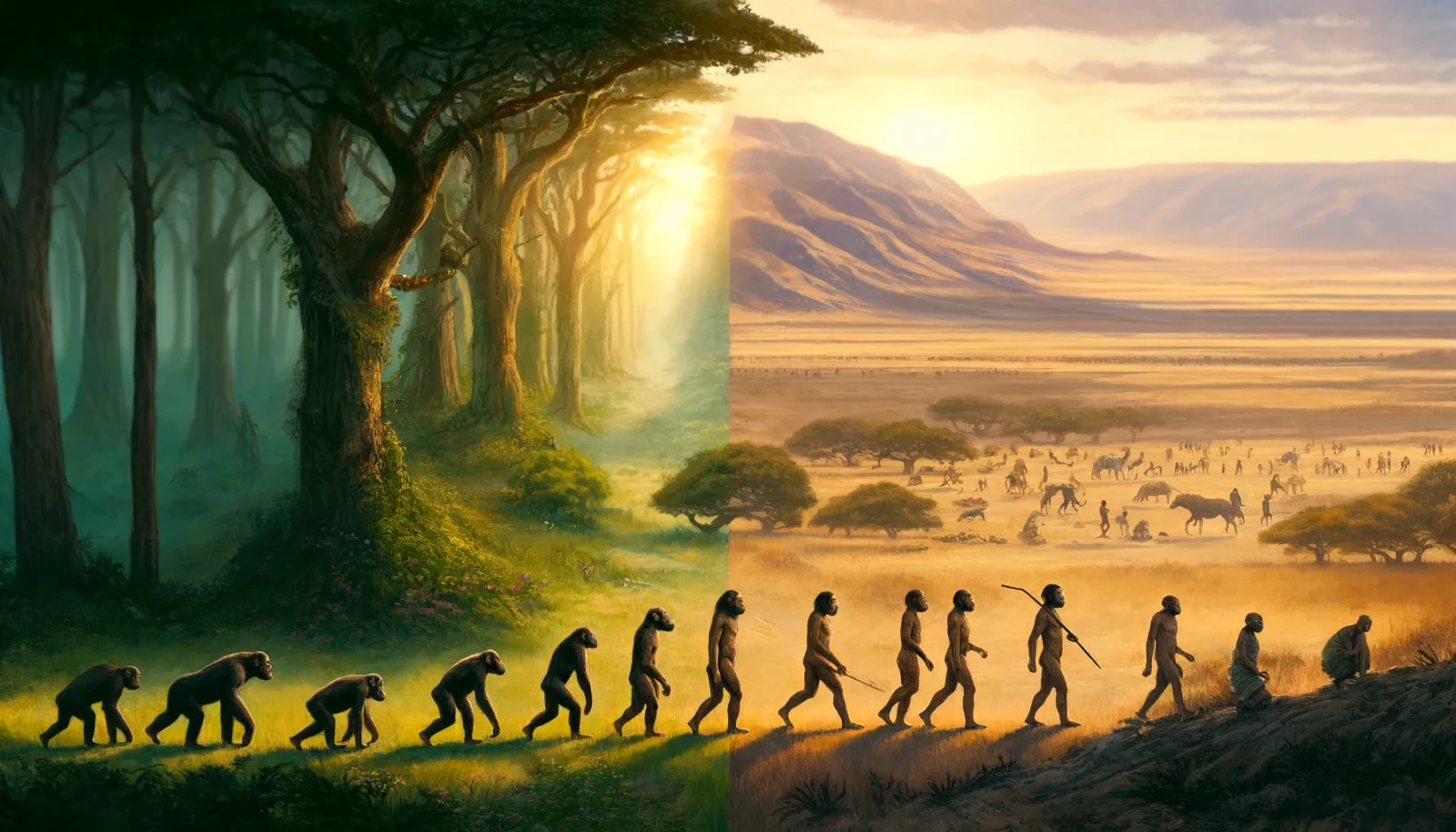
Arboreal to Terrestrial: Beginning approximately 9 million years ago, our ancestors began an evolutionary change from forests to woodlands to savannahs. This gradual transition from primarily arboreal (tree-dwelling) lifestyles to increasingly terrestrial (ground-based) behaviors was very gradual with traits specific for walking around carrying things gradually accumulating. This evolutionary journey spanned roughly 7 million years,

Transition from Trees to Savannah Begins Read More »

Emergence of the Great Apes (Great Apes LCA)

660,000 Generations Ago The Last Common Ancestor (LCA) of the Great Apes, a.k.a. the Hominidae family, marks a pivotal point in our evolutionary history, encompassing the origins of orangutans, gorillas, chimpanzees, and humans. This ancestor species, likely existing between 15 to 19 million years ago, represents the shared lineage from which all modern great apes

Emergence of the Great Apes (Great Apes LCA) Read More »

Panamacebus transitus: Earliest Known Monkey in the Americas

Discovered in 2016 in the Panama Canal area, Panamacebus transitus has been identified as the earliest known monkey to have reached the Americas, dating back approximately 21 million years. This find significantly alters our understanding of primate migration and geographical distribution during the Miocene epoch. This arrival in the Americas is a remarkable testament to

Panamacebus transitus: Earliest Known Monkey in the Americas Read More »

Homo antecessor: Earlier Modern Looks

48,000 Generations Ago NSLCA Candidate: This ancient human species challenges traditional views by suggesting that some of our human ancestors bore a closer resemblance to modern humans than previously believed. Homo antecessor, which existed long before Homo sapiens and Homo heidelbergensis, displayed distinctly modern human-like features, including a flatter face and a more refined nose,

Homo antecessor: Earlier Modern Looks Read More »

Scroll to Top