

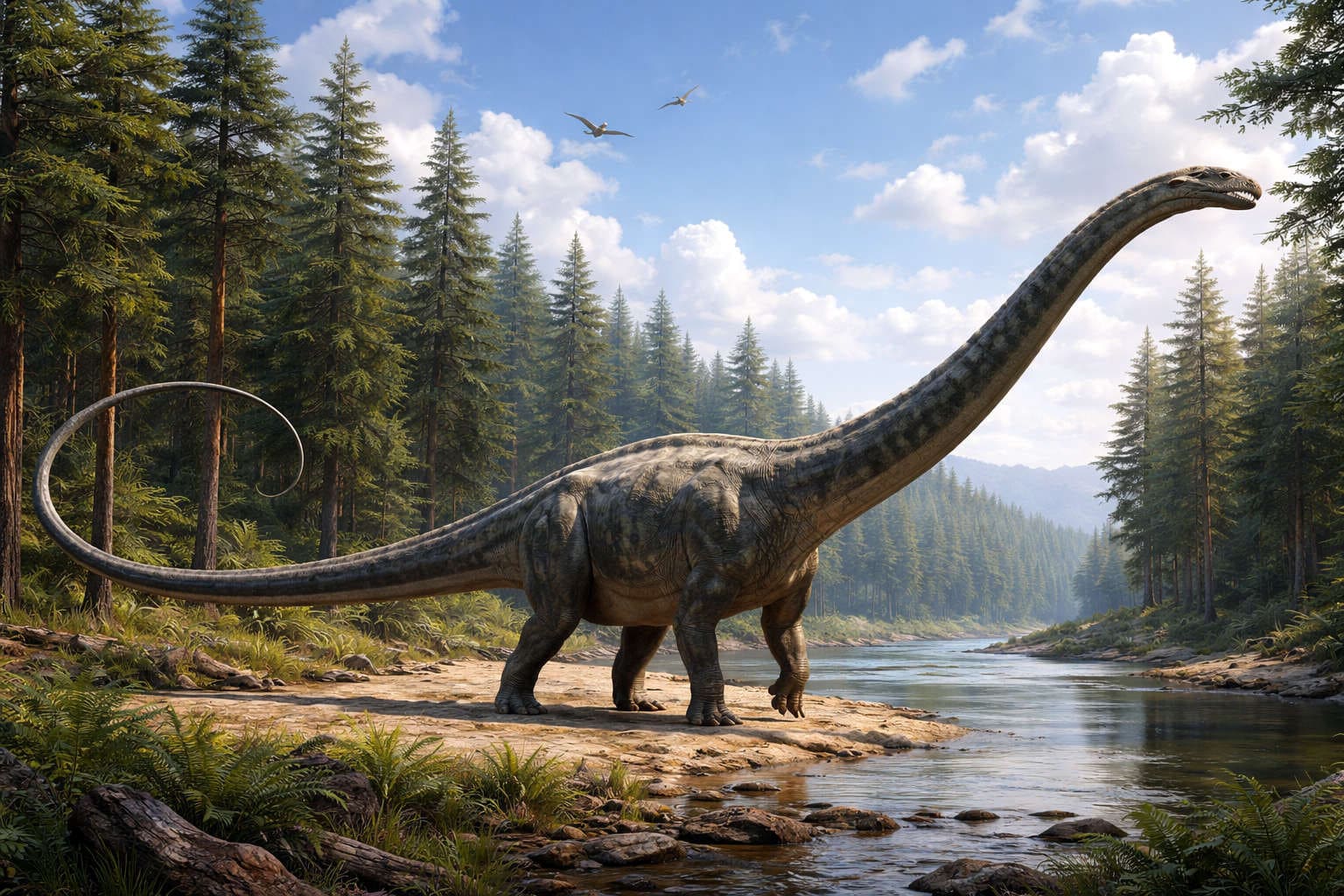
Diplodocus was another giant Late Jurassic sauropod from North America, but it had a different feel from Apatosaurus. It was one of the longest land animals ever, with a more slender build, an especially long whiplike tail, and a lighter, stretched-out look. If Apatosaurus was the muscular heavyweight of the diplodocid family, Diplodocus was the long, elegant specialist.
It also became one of the most commonly displayed dinosaurs in museums, which is a big part of why its silhouette is so deeply stamped into popular memory. Along with Apatosaurus and the revived Brontosaurus, it helps define what many people picture when they hear the word “sauropod”: a giant, long-necked, plant-eating dinosaur from the lush floodplains of the Late Jurassic.
One tiny nuance: the exact date ranges can vary a bit depending on which species and formation a source is emphasizing, so I used broad mainstream ranges rather than the narrowest possible dates.
