

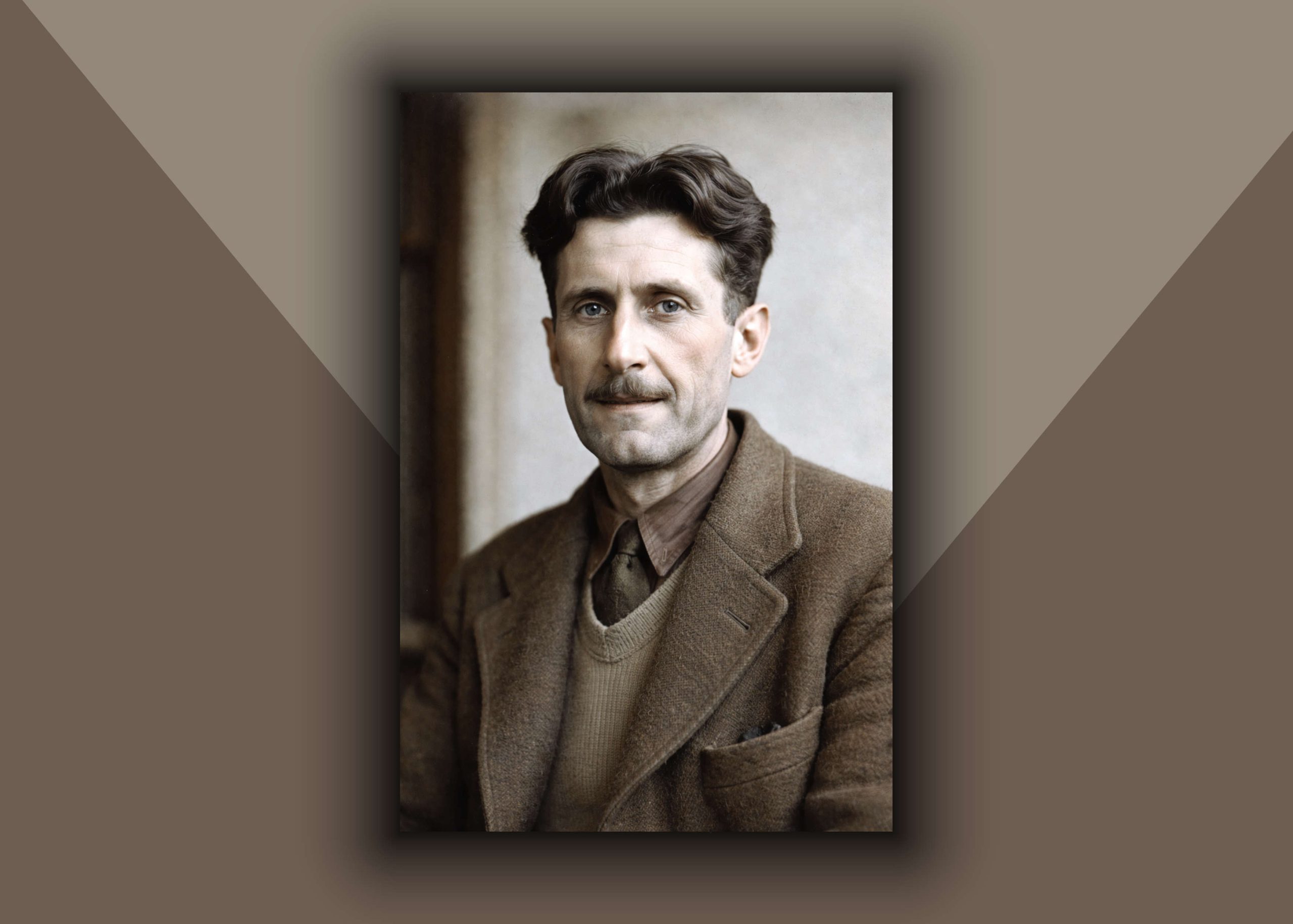
To understand the birth of Orwellian thought, let’s pick up George Orwell’s story in Burma in the 1920s. Before Spain, Orwell was already changing. As a young man serving in the Indian Imperial Police, he saw the daily machinery of empire up close and came away deeply disturbed by it. That experience helped turn him against imperialism and toward sympathy for ordinary people crushed by power. Over the next several years, through books like Down and Out in Paris and London and The Road to Wigan Pier, Orwell’s thinking moved further toward socialism, but it was still developing. He was already becoming Orwell, but the full shape of Orwellian thought had not yet arrived.
Then came Spain. In late 1936, Orwell went to support the elected Republican government against Franco’s Nationalist forces. For a time during the Spanish Civil War, he experienced a genuine sense of solidarity and shared purpose. But what he found was not just a struggle against Franco. He also found propaganda, factional infighting, suppression, and political dishonesty within the anti-fascist side itself. Stalinist forces turned on other leftist groups, including the POUM militia Orwell had joined. He was wounded by Stalinist-aligned communist forces within the Republican camp. Hunted by other leftist groups within the POUM militia Orwell had joined, he was forced to flee. Spain did not create Orwell’s conscience, but it sharpened it under fire. It forced him to confront a hard truth:
Your own side can betray its ideals too.
That is the heart of Orwellian thought. It is not just distrust of dictators on the other side. It is a moral defense of truth, plain language, and ordinary human decency against propaganda, cruelty, and ideological corruption from any side. Orwell came to see that once loyalty to a cause becomes more important than loyalty to truth, corruption has already begun. That is why Orwellian thought still matters. It names a pattern in political life:
Corruption starts the moment when language is twisted, facts are manipulated, and power begins demanding loyalty over reality.
Orwell carried that sharpened vision into the public works that made him famous. In Homage to Catalonia, he told the truth about Spain as he had lived it. In essays like Politics and the English Language, he warned that corrupted language helps corrupt thought. In Animal Farm, he exposed how revolutions can be hijacked by new tyrants. And in 1984, he gave the modern world one of its clearest warnings about surveillance, propaganda, and the political destruction of truth itself. Orwellian thought was forged in the 1920s and 30s, and the Spanish Civil War was the furnace that helped forge it.

