
Explore Science-first Philosophy

STORY

Alfred Korzybski

By Michael Alan Prestwood

Wed 18 Feb 2026
Published 2 months ago.
Updated 6 days ago.
TST Ethics
Related Stories
Marcus Aurelius: An Explorative Agnostic
A Unified Origin Story
Normalcy, Normal, and Abnormal
The Dawn of Empirical Spirituality
Open Viewpoint Method (OVM)
Share :

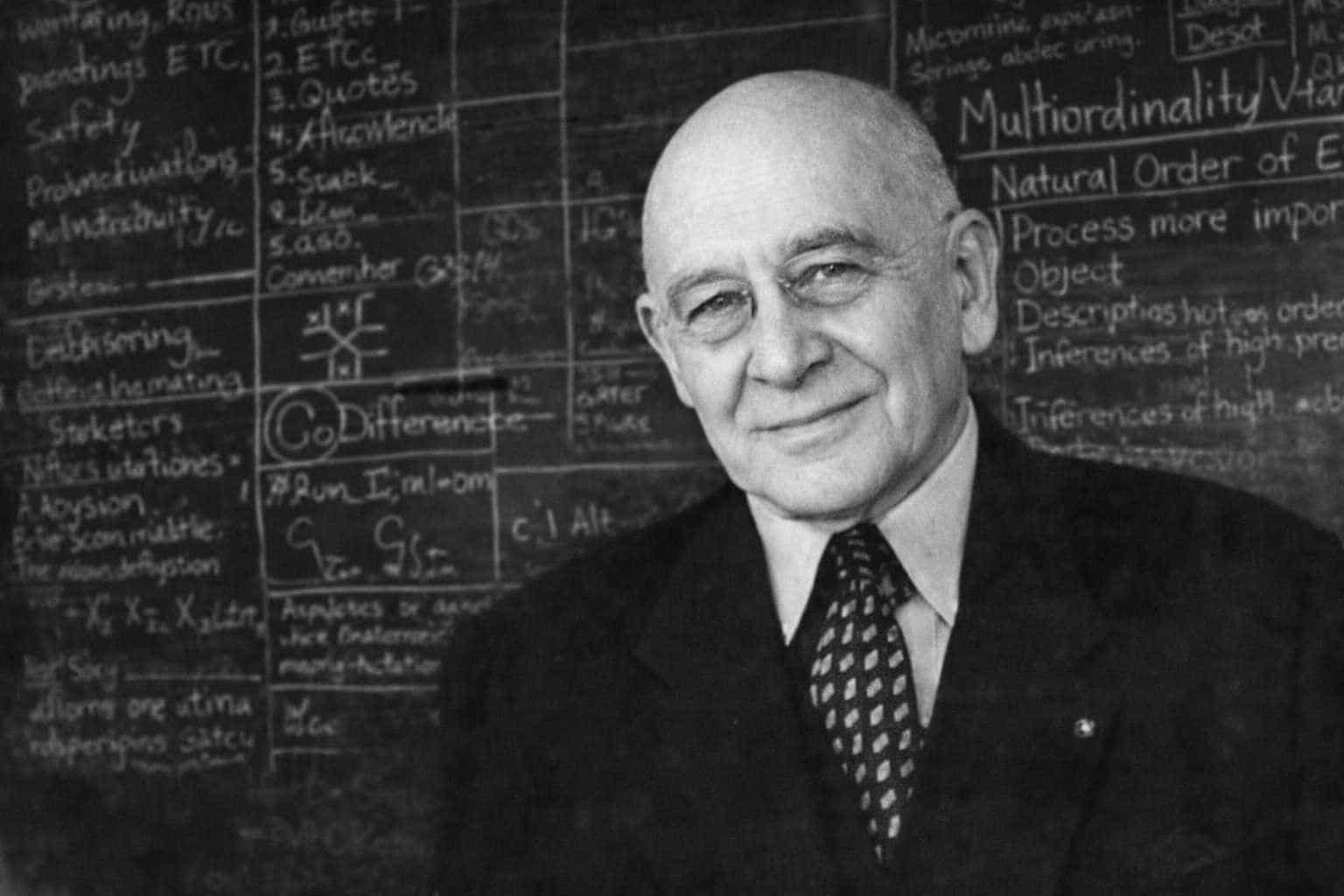
Alfred Korzybski

Born 1879.
Lived from 1879 to 1950, aged 70

Alfred Korzybski was a Polish-American thinker trained in engineering and mathematics. After serving in World War I, he emigrated to the United States and devoted his life to studying how language shapes human thought.

“The map is not the territory.”

Korzybski devoted his life to a deceptively simple insight: humans confuse their descriptions of reality with reality itself. Trained as an engineer and shaped by the devastation of World War I, he became obsessed with how language, symbols, and models quietly shape belief and behavior. His work in general semantics wasn’t anti-science or anti-reason—it was a warning about abstraction. Models are indispensable, but when we forget they are models, they harden into dogma. Korzybski saw this mistake everywhere: in politics, ideology, education, and even science itself.

In 1933, he published Science and Sanity, where he introduced General Semantics — a framework for understanding how humans confuse words with reality. He later founded the Institute of General Semantics to develop and teach these ideas.

Korzybski was not primarily a traditional philosopher. He was closer to a systems thinker — someone concerned with how humans build models, how those models influence behavior, and how misuse of language distorts reasoning.

— map / TST —

Michael Alan Prestwood
Author & Natural Philosopher
Prestwood writes on science-first philosophy, with particular attention to the convergence of disciplines. Drawing on his TST Framework, his work emphasizes rational inquiry grounded in empirical observation while engaging questions at the edges of established knowledge. With TouchstoneTruth positioned as a living touchstone, this work aims to contribute reliable, evolving analysis in an emerging AI era where the credibility of information is increasingly contested.
Email
Print
This Week @ TST
April 1, 2026
»Column Archive
WWB Research….
1. Story of the Week
The Dawn of Empirical Spirituality
2. Quote of the Week
“It is wrong always, everywhere, and for anyone, to believe anything upon insufficient evidence.”
3. Science FAQ »
Is science tainted by bias?
4. Philosophy FAQ »
How do knowledge frameworks help transform information into wisdom?
5. Critical Thinking FAQ »
Are personal spiritual experiences believable?
6. History FAQ!
Did the Buddha believe in Mount Meru and the six realms of existence?
Bonus Deep-Dive Article
TST Theory of Justification: What to Believe
Scroll to Top