Sometimes we overreact. A moment hits us wrong, we answer too strongly, something worse happens, and later, when the heat is gone, we feel the guilt. We replay it in our minds and think, I should have handled that better. That pattern is deeply human, and it has evolutionary roots. We evolved in a world where fast reactions often meant survival. And that means overreaction is not always a moral failure first. Sometimes it is an ancient survival system firing too hard, too fast, in a situation that did not truly require it.
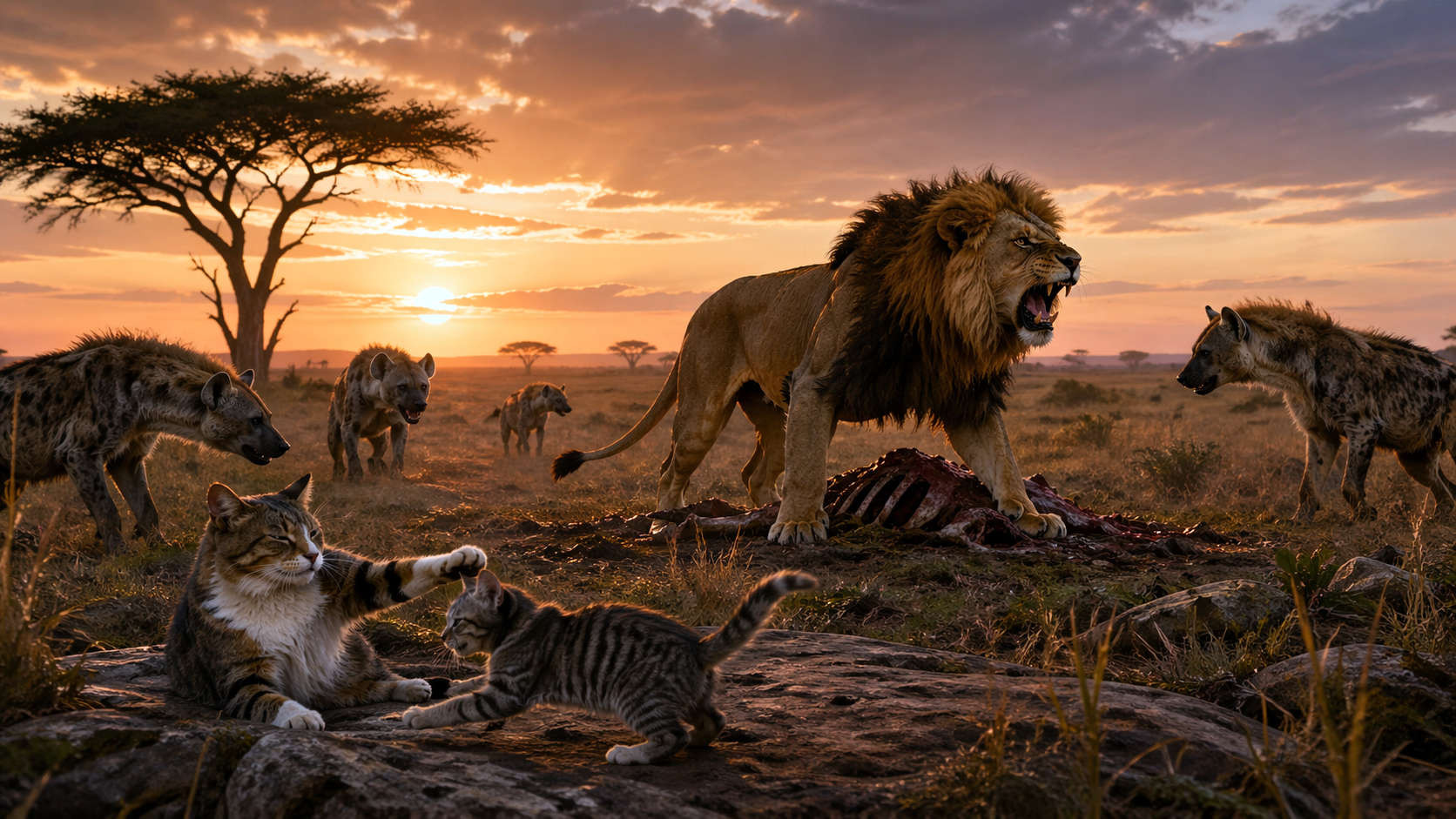
In everyday life, both animals and humans often handle irritation fairly well. If you have cats, you have probably seen this. One wants to sleep, the other wants to play. The annoyed cat tolerates it for a bit, then finally smacks the other in the face a few times, walks off, and goes back to sleep. Problem handled. No grand war. Just a proportionate response that says, enough. Humans do this too. In this sense, proportion is natural too. Not every conflict becomes a crisis.
The real trouble starts with deeper threats, especially threats tied to survival, territory, or resources. Imagine a lion about to lose a fresh kill to a pack of hyenas. It has to make an instant fight or flight judgment. Flight means losing something valuable. Fight means risking injury. In that moment, nature often leans on bluffing before full decision. The lion growls, postures, bares its teeth, and makes itself look more dangerous than it may be ready to prove. Birds puff up. Snakes hiss. Mammals lunge without biting. Feathers rise, fur stands up, bodies widen, voices get louder. Bluffing is a kind of exaggerated warning meant to avoid the real fight. In that sense, the roots of overreaction may lie partly in this ancient survival strategy.
But bluffing is risky, because once both sides raise the stakes, the performance can become real. And when exaggerated force works, it teaches a dangerous lesson. The mind learns: this got me what I wanted. Over time, that can become habit. It can turn people into manipulators, narcissists, and bullies. In politics and war, it can create leaders who treat domination as strength and escaltion as strategy. What began in nature as a survival bluff can become, in human society, a pattern of needless escalation. The answer, a desire to make things better for all.