Explore Science-first Philosophy

FAQ

What is the difference between secular and empirical spirituality?

Sun 24 May 2026
Published 18 hours ago.
Updated 18 hours ago.
Related FAQs
What is spirituality?
What ancient human species first realized it was going to die?
What is secular spirituality?
Should you engage Trump supporters?
What is the difference between being philosophical and spiritual?
What is Ontology and why is it important?
Share :
Email
Print

What is the difference between secular and empirical spirituality?

This difference is subtle, but important.

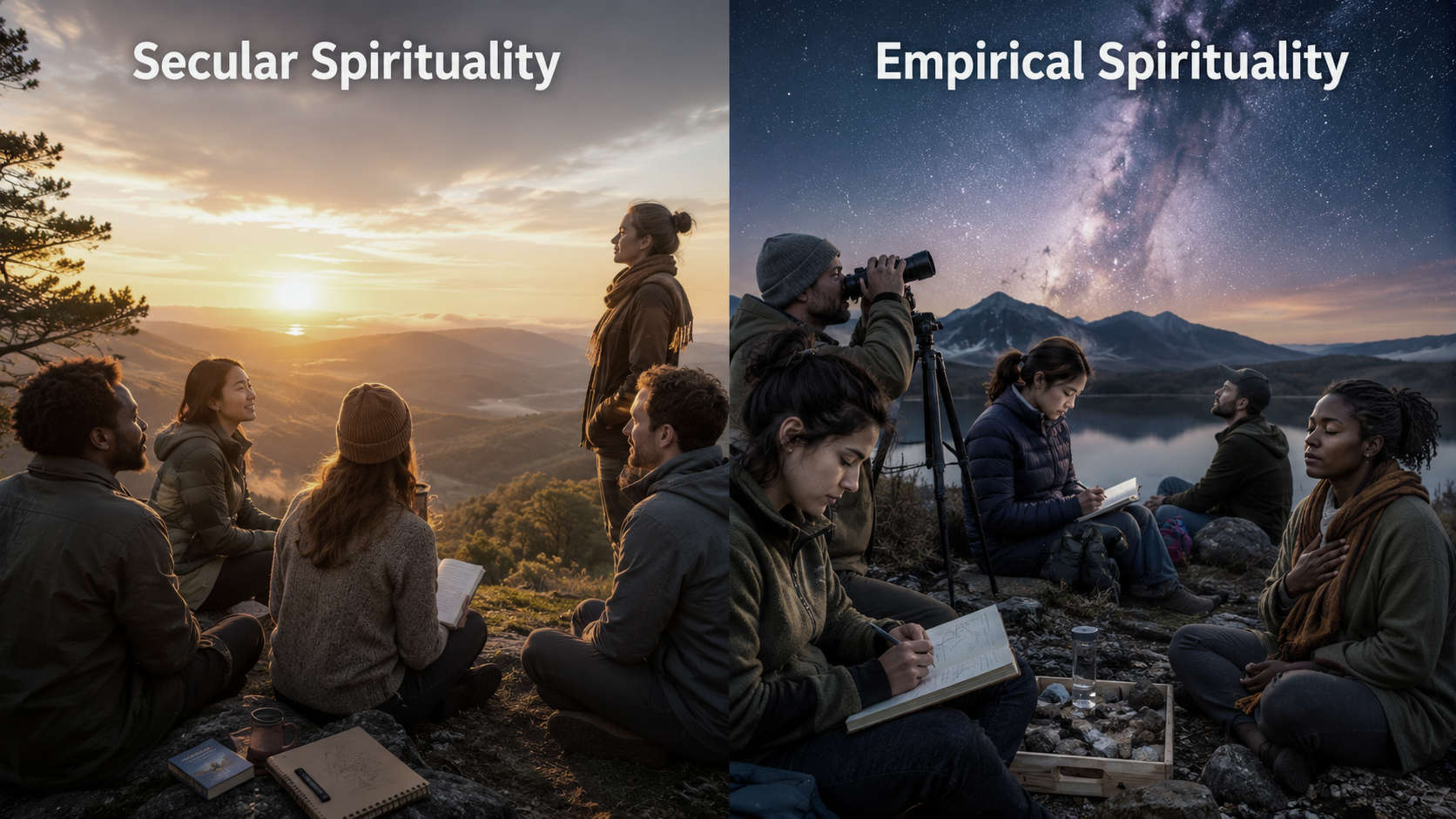
Secular spirituality is spirituality without religion, religious authority, supernatural claims, or disproven empirical claims. It explores awe, meaning, meditation, nature, compassion, moral growth, grief, identity, purpose, and the search for something larger than oneself. In 30 Philosophers, secular spirituality fits the spirit of “seek truth.” It is an open-minded exploration of life through the empirical, rational, and speculative parts of human experience.

Empirical spirituality is calibrated science-first spirituality. It explores many of the same things—meaning, awe, purpose, consciousness, reverence, and transformation—but it allows reality to push back so beliefs can be calibrated. When a spiritual idea makes contact with reality, reality gets the final say. That does not make empirical spirituality cold or anti-spiritual. It simply means spiritual claims are honestly classified as empirical, rational, speculative, or disproven.

So secular spirituality might say:

“Can I be spiritual without religion or supernatural belief?”

Empirical spirituality asks a more disciplined question:

“Which parts of spirituality are supported by observation, and how much confidence should I place in each claim?”

Both can include meditation, awe, grief, compassion, nature, ethics, art, science, and service. Both can explore metaphysics and ontology: What is reality? What kind of universe are we in? What does it mean that I am here now—aware, temporary, and responsible?

The difference is the role of discipline. Secular spirituality removes religious and supernatural dependence, then explores meaning freely. Empirical spirituality goes one step further: it calibrates spiritual ideas against observation, evidence, and honest classification.

A clean distinction:

Secular spirituality explores meaning without religion. Empirical spirituality tests and classifies spiritual claims by reality.

— map / TST —

Secular spirituality narrows the field by removing supernatural dependence. Empirical spirituality broadens the field by allowing every spiritual claim, but disciplines each one through classification.
Michael Alan Prestwood
Author & Natural Philosopher
Prestwood writes on science-first philosophy, with particular attention to the convergence of disciplines. Drawing on his TST Framework, his work emphasizes rational inquiry grounded in empirical observation while engaging questions at the edges of established knowledge. With TouchstoneTruth positioned as a living touchstone, this work aims to contribute reliable, evolving analysis in an emerging AI era where the credibility of information is increasingly contested.
This month @ TST
Column Menu
May 2026
»COLUMN ARCHIVE
--COLUMN--
Column Research….
1. Timeline Story
Book: The Idea of History
2. Linked Quote
“The historian without his facts is rootless…the facts without their historian are…meaningless.”
3. Science FAQ »
Is science tainted by bias?
4. Philosophy FAQ »
Debating History: Should We Say “Dark Ages” or “Middle Ages?”
5. Critical Thinking FAQ »
What is the preservation bias?
6. History FAQ!
Did Einstein’s driver really give one of his early talks?
Bonus Deep-Dive Article
TST Philosophy of History

Comments

Join the Conversation! Currently logged out.
NEW BOOK! NOW AVAILABLE!!

30 Philosophers: A New Look at Timeless Ideas

by Michael Alan Prestwood
The story of the history of our best ideas!
Scroll to Top