
Explore Natural Philosophy

Phil • Cr. Think • Science • Hist •

FAQ

Did morality evolve?

Sat 1 Aug 2026
Published 45 minutes ago.
Updated 1 hour ago.
Related FAQs
What is the TST Ethical Roadmap?
What ancient human species first realized it was going to die?
What does it mean to act with good intent?
Why does awareness increase moral responsibility?
How does TST Ethics handle the footbridge case?
Were neanderthals artistic?
Share :
Email
Print

Did morality evolve?

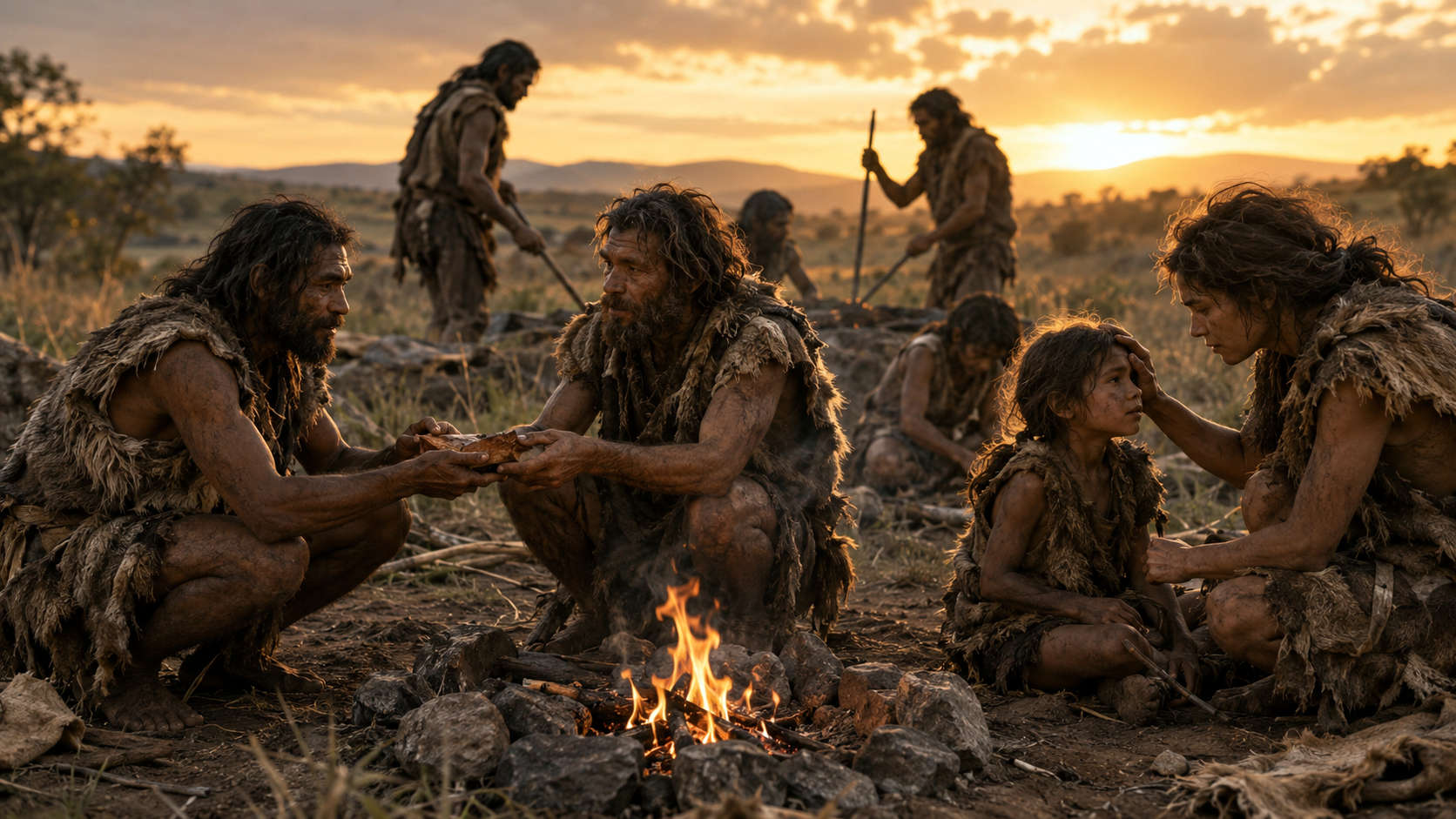
Yes it did. Long before humans wrote laws or argued philosophy, animals were already cooperating, forming alliances, and sharing resources. You’ve seen packs of animals react to threats. In primates especially, we see behaviors that look like early building blocks of morality. Not what we call human morality, but that indicates that morality has roots reaching deep into our evolutionary past.

Evolution gave us impulses that helped our ancestors survive, but survival instincts are always the best choice today. Anger can protect you, loyalty can bind us together, and self-interest can keep you alive, but each can also push too far.

As humans became increasingly social, we survived by cooperating, raising children together, sharing food, remembering who helped and who cheated, and depending on others for protection and knowledge. A group filled too many selfish individuals falls. So evolution favored empathy, guilt, trust, fairness, reputation, and the ability to punish people who repeatedly harmed the group. Somewhere along this path, our ancestors also became increasingly capable of thinking about their own behavior. We did not merely cooperate; we began judging whether we should cooperate. That was the great leap toward personal morality.

That is where taking control matters. Notice the impulse, think, listen to group guidance, and then choose with good intent. Morality today is neither purely biological nor purely invented. Evolution gave us the machinery; culture spent thousands of years reprogramming it. You are the moral agent. Your biology gets a vote, but it does not get the final decision. Watch what happens, watch the result, and adjust. Turn your inherited nature into a life lived with purpose.
 

— map / TST —

When you lose your temper, act selfishly, or make a bad decision, sometimes you are wrestling with impulses shaped deep in our evolutionary past. Understand them, but do not surrender to them. Take control of your journey. Think well, choose with purpose, and make decisions that help you and others flourish.
Michael Alan Prestwood
Author & Natural Philosopher
Prestwood writes on science-first philosophy, with particular attention to the convergence of disciplines. Drawing on his TST Framework, his work emphasizes rational inquiry grounded in empirical observation while engaging questions at the edges of established knowledge. With TouchstoneTruth positioned as a living touchstone, this work aims to contribute reliable, evolving analysis in an emerging AI era where the credibility of information is increasingly contested.
The Prestwood Column
Menu
August 2026
»COLUMN ARCHIVE
--COLUMN--
Column Research….
1. Timeline Story
Ethical Roadmap
2. Linked Quote
“The greatest weapon against stress is our ability to choose one thought over another.”
3. Science FAQ »
Did morality evolve?
4. Philosophy FAQ »
Is the Me Too movement consistent with TST Ethics?
5. Critical Thinking FAQ »
When should you stop following the crowd?
6. History FAQ!
What did the Nuremberg Trials clarify about moral agents?
Bonus Deep-Dive Article
TST Ethical Roadmap: A Process Model for Ethical Guidance and Moral Choice

Comments

Join the Conversation! Currently logged out.
NEW BOOK! NOW AVAILABLE!!

30 Philosophers: A New Look at Timeless Ideas

by Michael Alan Prestwood
The story of the history of our best ideas!
Scroll to Top