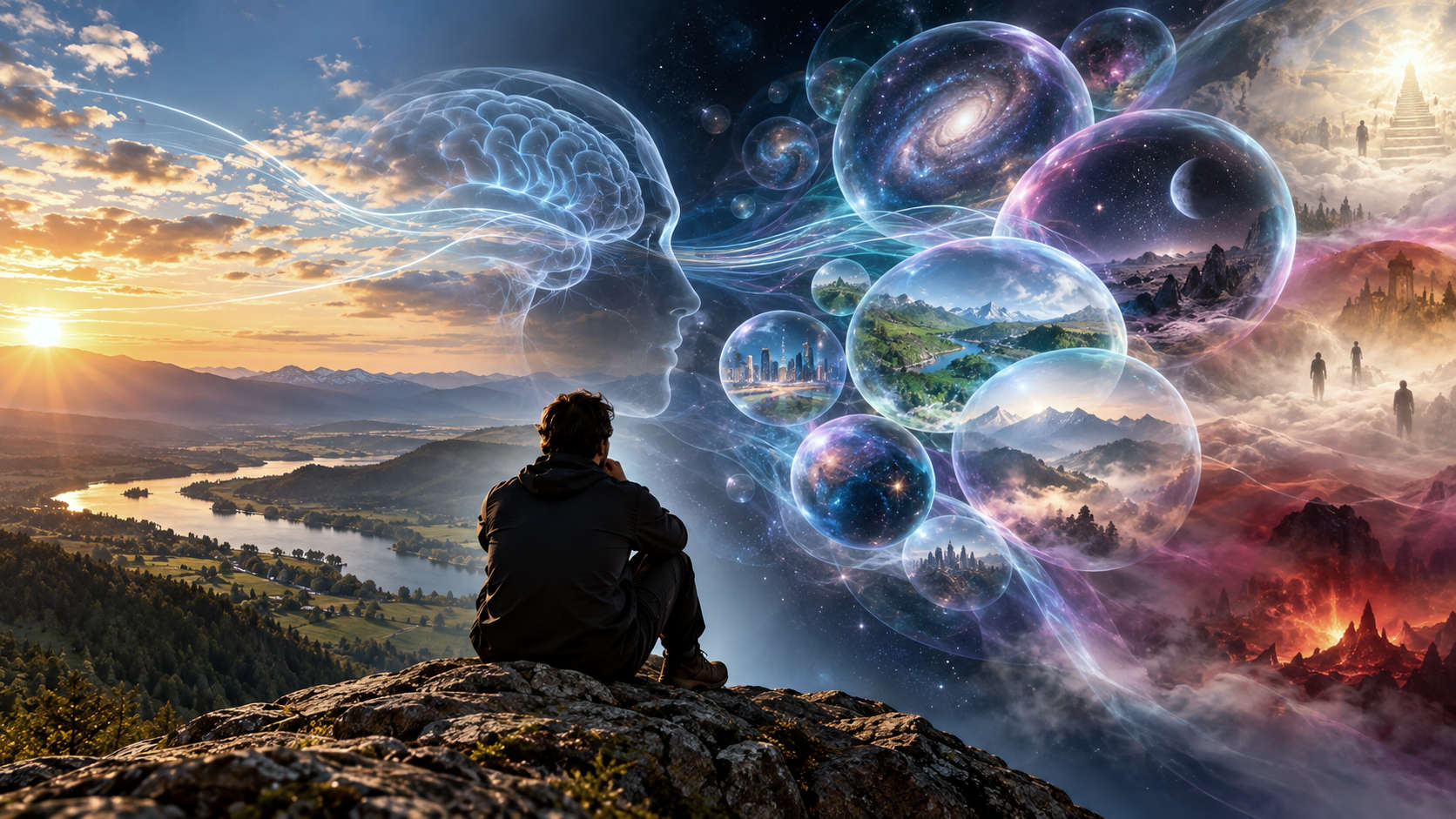
Yes, but only about our shared reality. Our Material World is one substance — the stuff science investigates. However, TST Philosophy itself makes no claim about other substances. It just categorizes the various ideas.
When philosophers talk about substance, they are talking about ultimate reality. This old and unsettled debate is about what’s out there and not merely a property. Descartes dualism focuses on mind or soul and body. Spinoza imagined a single substance: something akin to nature is God. For others, they think of two substances, this reality and the realm that God or the gods occupy. And it’s not about access. That means ideas like the Many Worlds interpretation can be viewed as one substance. The deeper question is whether reality ultimately consists of one kind of substance, two, or many.
This gives us the traditional divide between monism and dualism, but the possibilities are richer than the two labels. Monists propose some form of underlying unity. Dualists propose two fundamentally different kinds of reality. Pluralism proposes more than two. For example, the Hindu tradition contains an enormous diversity of views, while many Western traditions focus on this life and the afterlife.
The TST Split itself is epistemic, not a declaration that only the Material World can exist. Sure, it’s the only reality available for empirical investigation, and its consistency is why science works. But you are free to believe in additional realms such as Heaven, Hell, and Valhalla, and you are free to explore the number of substances. TST simply recognizes that such ideas are not established in the same way as the Material World. They fall under the speculation subtype of TST’s irrational category. TST is monistic about our shared reality, but makes no metaphysical claim beyond that.