
Weekly Insights for Thinkers

Science  Philosophy  Critical Thinking  History  Politics RW  AI  Physics  •  Evolution  Astronomy 30 Phil Book More…
Science  Phil  Cr. Thinking  History 

STORY

Earliest Known Magnification

By Michael Alan Prestwood

Author and Natural Philosopher

Sun 12 Sep 2021
Published 4 years ago.
Updated 2 years ago.
Share :
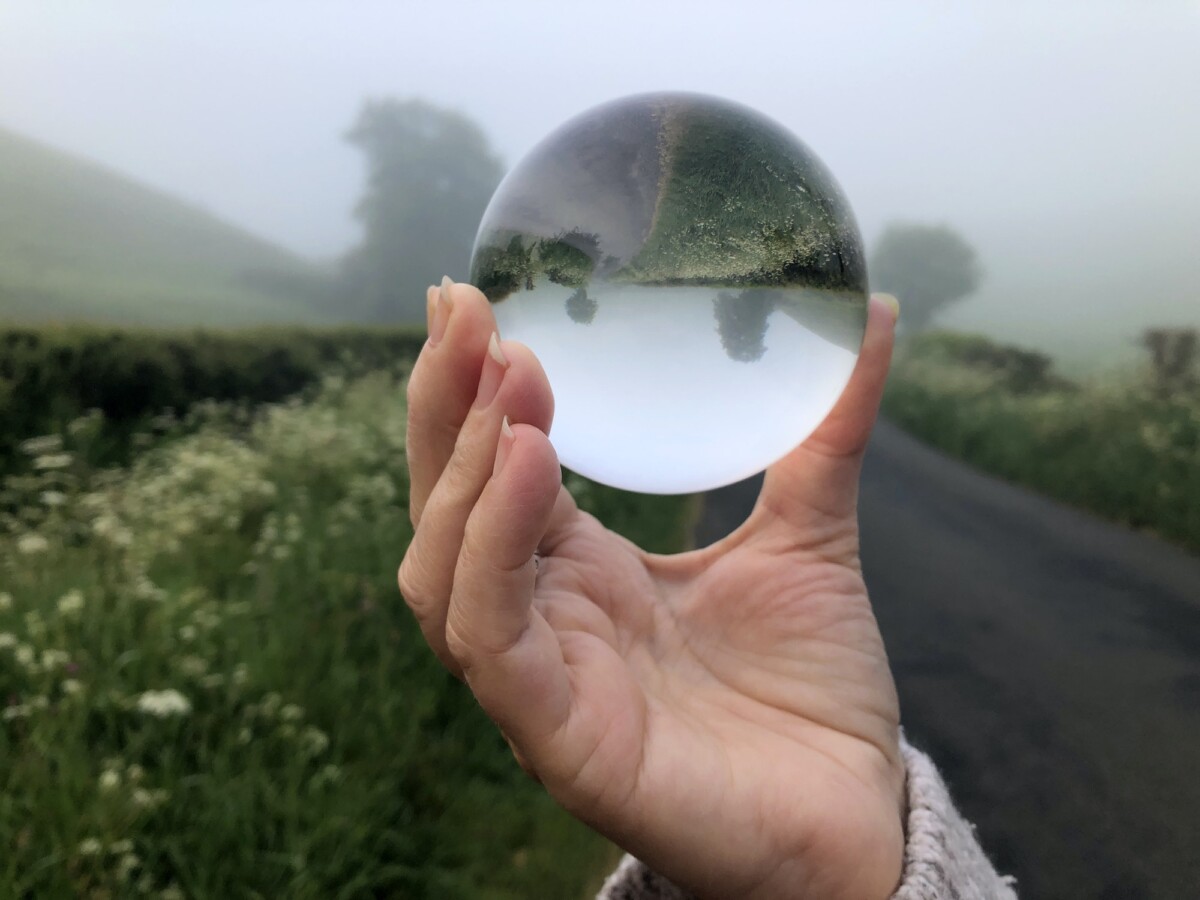
crystal lens ball in a woman’s hand, with a refracted view of a misty country lane

Earliest Known Magnification

65 CE

The earliest known magnification dates back to the first century. These simple early magnification devices consisted of using natural crystals or a glass globe filled with water. It is reasonable to assume the use of natural crystals for magnification was around for many thousands of years. One possible specimen is the Nimrud lens dating back to 750 BCE.

Although man-made glass was in common use about 3500 BCE, eye glasses would have to wait about 4,500 years later. Eye glasses were invented in the 13th century. A few centuries earlier, a reading glass was in common use. A piece of glass you set on a page of text to magnify the letters well enough to read easily.

These early devices provided a max of about 2x, or perhaps 3x, magnification. The microworld of cells and large bacteria would have to wait for the invention of good quality microscopes about 1630. The nanoworld of smaller bacteria, viruses, proteins, and molecules would have to wait for the invention of the electron microscope in 1931.

Michael Alan Prestwood
Author & Natural Philosopher

Prestwood writes on science-first philosophy, with particular attention to the convergence of disciplines. Drawing on his TST Framework, his work emphasizes rational inquiry grounded in empirical observation while engaging questions at the edges of established knowledge. With TouchstoneTruth positioned as a living touchstone, this work aims to contribute reliable analysis in an emerging AI era where the credibility of information is increasingly contested.

WWB Menu
7 Jan 2026
Essay of the Week
The Architecture of Change: Finding Stability in Flux
Story of the Week
Heraclitus
Quote of the Week
“Everything is in flux.”
Weekly Crossroads!
1. Science »
Will the night sky have stars nearly forever?
2. Philosophy »
What does existence before essence mean?
3. Critical Thinking »
Is cause and effect certain?
4. History!
Who were the Presocratic Philosophers?
WWB Menu
7 Jan 2026
Essay of the Week
The Architecture of Change: Finding Stability in Flux
Story of the Week
Heraclitus
Quote of the Week
“Everything is in flux.”
Weekly Crossroads!
1. Science »
Will the night sky have stars nearly forever?
2. Philosophy »
What does existence before essence mean?
3. Critical Thinking »
Is cause and effect certain?
4. History!
Who were the Presocratic Philosophers?
Scroll to Top