

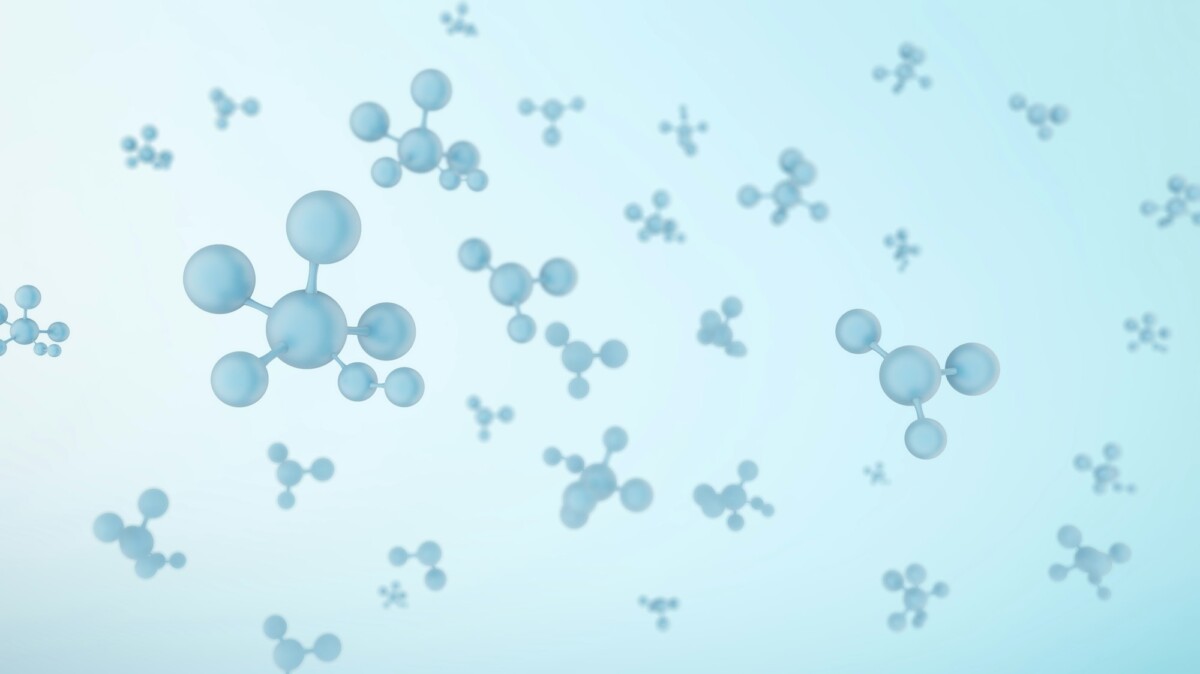
The image of the early universe that we see in the CMB reveals a time shrouded in darkness. During this era, the 17 known particles first started to combine to form the universe’s first atoms. Electrons, protons, and neutrons came together to create neutral hydrogen atoms, a process that allowed photons—or light—to traverse the cosmos freely. That is the glow we see in the CMB. Soon after this, well, cosmically soonish, gravity played its part and brought these atoms together, forming the first stars and galaxies. This “let-there-be-light” event occurred about 100 million years after the Big Bang.
STORY
First Atoms
☐ Read
☑ Read
You’ve read this 0 times.
You’ve listened to this 0 times.
By Michael Alan Prestwood
Mon 25 Mar 2024
Published 3 years ago.
Updated 5 months ago.
Share :
First Atoms
13.7 Billion Years Ago
Verified. Empirically supported and rationally deduced.
- < 1 minute read

Michael Alan Prestwood
Author & Natural Philosopher
Author & Natural Philosopher
Prestwood writes on science-first philosophy, with particular attention to the convergence of disciplines. Drawing on his TST Framework, his work emphasizes rational inquiry grounded in empirical observation while engaging questions at the edges of established knowledge. With TouchstoneTruth positioned as a living touchstone, this work aims to contribute reliable, evolving analysis in an emerging AI era where the credibility of information is increasingly contested.
Email
Print
The Prestwood Column
Menu
October 2026
»COLUMN ARCHIVE
--COLUMN--
Column Research….
NEW BOOK! NOW AVAILABLE!!
30 Philosophers: A New Look at Timeless Ideas
by Michael Alan Prestwood
