
Phil • Cr. Think • Science • Hist •

The Philosophy Website

FAQ

Did Plato Believe in a Soul and Heaven?

☐ Read
☑ Read
You’ve read this 0 times.
You’ve listened to this 0 times.
Sun 5 May 2024
Published 2 years ago.
Updated 2 months ago.
Related FAQs
How are original Daoism, Mohism, Confucianism, and Legalism related?
Did central Africa invent iron smelting before everybody else?
Does the philosophy of Heraclitus resonate with Eastern philosophy?
Was the Roman Empire like the Borg?
Were evangelicals and catholics a part of the first 100 years of the United States?
Did Pythagoras coin the word philosophy?
Share :
Email
Print

Did Plato Believe in a Soul and Heaven?

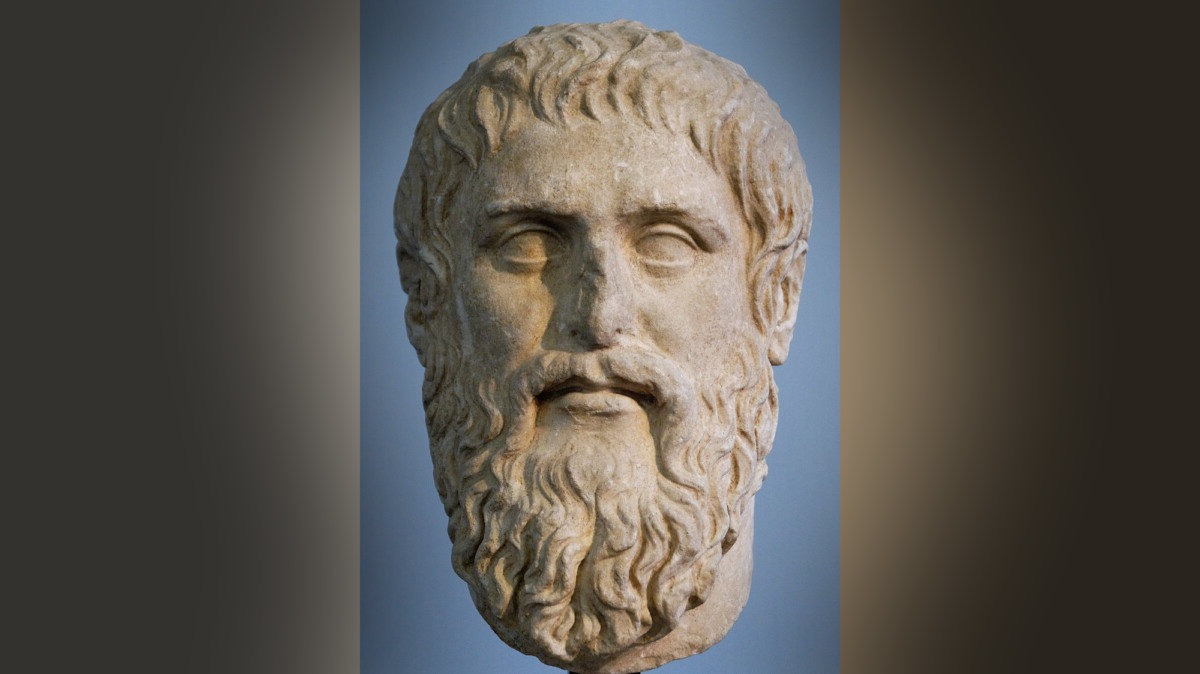
Yes, Plato believed in souls, but not in heaven nor hell. In Plato’s time, the underground realm of Hades was where we all went after death. His ideas were very influential for future concepts though. His ideas laid the groundwork for what would later evolve into the modern concept of heaven. The modern idea of heaven was not forged until about three centuries after Jesus Christ, which was about seven centuries after Plato.

Plato believed in the existence of the soul as an immortal essence and envisioned a complex afterlife that included different realms beyond the physical world. For Plato, the soul existed before birth and would persist after the body’s death, embarking on a journey through various states of existence. Central to his philosophy was the realm of Forms, a transcendent place where eternal and perfect ideals exist. This intellectual and spiritual realm can be seen as a precursor to the modern idea of heaven, though Plato’s conception was not a heaven in the religious sense but rather a state of ultimate knowledge and purity.

In addition to the realm of Forms, Plato also spoke of the material world in which we live, as well as Hades—a place where souls go immediately after death—and the Isle of the Blessed, where souls of the virtuous reside in a state of bliss. These ideas are explored in his dialogues, such as the “Phaedo” and the “Republic,” where he outlines his vision of the soul’s journey and its purification process through multiple lifetimes until it can finally escape the cycle of rebirth and attain a state of perfection.
— map / TST —

TST Tracker
✓ Reading recorded.
Deep-Dive Article: Echoes of the Self: Exploring Consciousness Across the Ages
Michael Alan Prestwood
Author & Natural Philosopher
Prestwood writes on science-first philosophy, with particular attention to the convergence of disciplines. Drawing on his TST Framework, his work emphasizes rational inquiry grounded in empirical observation while engaging questions at the edges of established knowledge. With TouchstoneTruth positioned as a living touchstone, this work aims to contribute reliable, evolving analysis in an emerging AI era where the credibility of information is increasingly contested.
The Prestwood Column
Menu
August 2026
»COLUMN ARCHIVE
--COLUMN--
Column Research….
1. Timeline Story
Ethical Roadmap
2. Linked Quote
“The greatest weapon against stress is our ability to choose one thought over another.”
3. Science FAQ »
Did morality evolve?
4. Philosophy FAQ »
Is the Me Too movement consistent with TST Ethics?
5. Critical Thinking FAQ »
When should you stop following the crowd?
6. History FAQ!
What did the Nuremberg Trials clarify about moral agents?
Bonus Deep-Dive Article
TST Ethical Roadmap: A Process Model for Ethical Guidance and Moral Choice

Comments

Join the Conversation! Currently logged out.
NEW BOOK! NOW AVAILABLE!!

30 Philosophers: A New Look at Timeless Ideas

by Michael Alan Prestwood
The story of the history of our best ideas!
Scroll to Top