
Phil • Cr. Think • Science • Hist • …
TST PRACTICE

By Philosopher Michael Alan Prestwood

FAQ

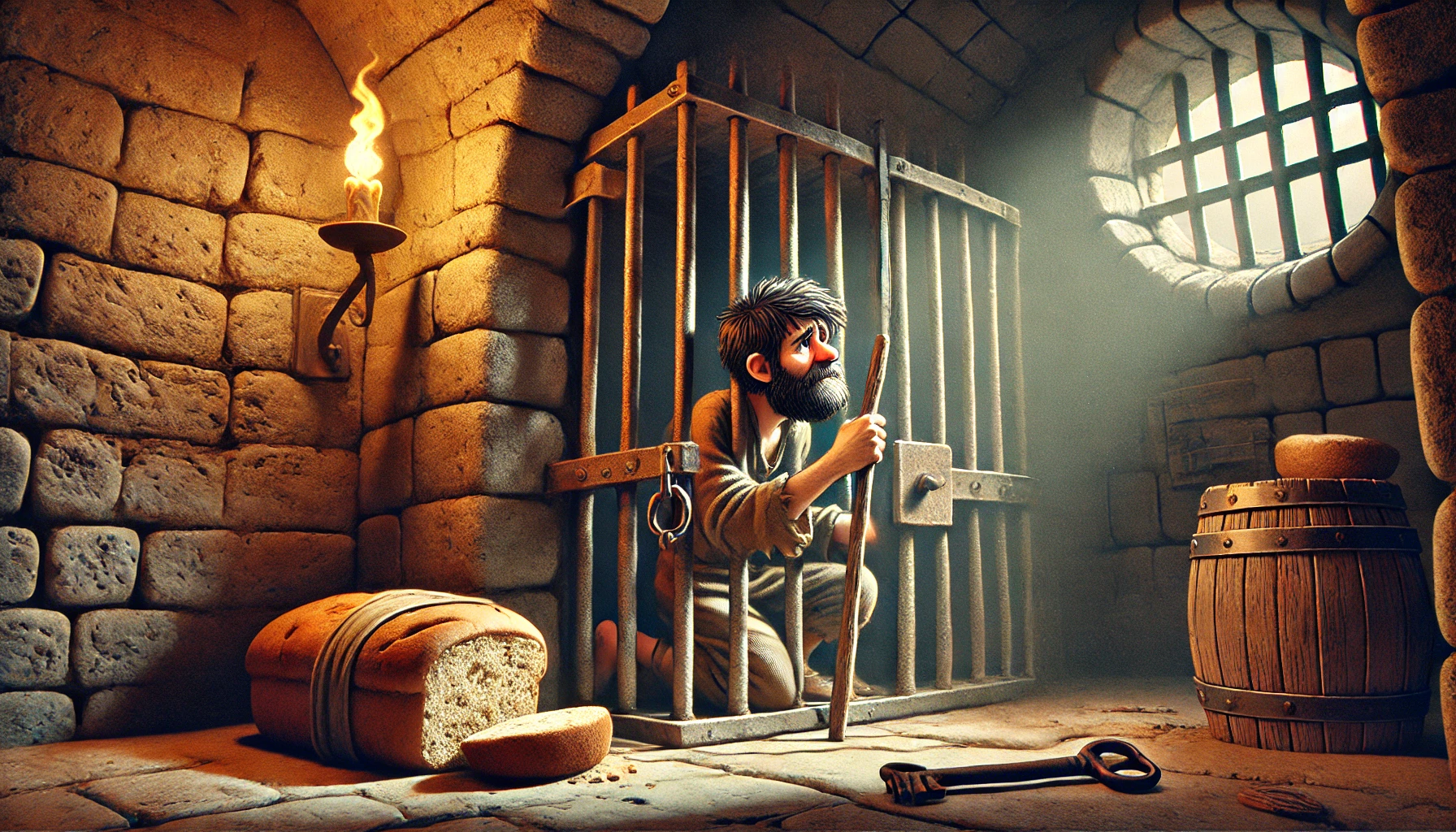
Is the prisoner choosing bread over a key to freedom a critical thinking error?

☐ Read
☑ Read
You’ve read this 0 times.
You’ve listened to this 0 times.
Wed 1 Jan 2025
Published 2 years ago.
Updated 3 months ago.
Related FAQs
Is it logical to vote for a candidate based on just one issue?
Why do we only remember the good parts of vacations, forgetting the bad?
In what way did Rudolf Steiner influence Waldorf education?
Which tradition puts friendship above all else?
Should you engage Trump supporters?
Does infinity exist?
Share :
Email
Print

Is the prisoner choosing bread over a key to freedom a critical thinking error?

Present bias is when we favor immediate relief or reward over greater long-term benefit.

While philosophical thought experiments like this are often used to explore human behavior—suggesting that immediate survival (the bread) is prioritized over long-term freedom (the key)—this scenario is also a great example of present bias. Present bias is a common cognitive bias that leads us to favor immediate rewards over long-term benefits, even when the long-term outcomes are far more valuable.

In my writing, I often focus on the Epicurean idea of favoring long-term pleasures over short-term ones. I think Epicureanism’s dichotomy of pleasure resonates surprisingly well with the modern idea of present bias—two millennia after it was crafted! One example I like to use is learning to favor the satisfaction of a committed, long-term relationship over the fleeting excitement of an affair.

Another clear example of present bias is choosing to spend money on unnecessary luxuries today instead of saving for retirement. When you opt for the thrill of buying a new gadget or dining at an expensive restaurant instead of putting money aside, you’re giving in to present bias.

A final example of present bias can be seen in health decisions. Eating fast food or skipping exercise may provide instant gratification or relief from effort, but these choices often come at the cost of long-term health and well-being.

Whether you view this concept through the ancient lens of Epicurean philosophy or the modern understanding of present bias, it shapes countless decisions in our daily lives—often pulling us toward choices that satisfy us now but fail to serve us in the future.

— map / TST —

TST Tracker
✓ Reading recorded.
Michael Alan Prestwood
Author & Natural Philosopher
Prestwood writes on science-first philosophy, with particular attention to the convergence of disciplines. Drawing on his TST Framework, his work emphasizes rational inquiry grounded in empirical observation while engaging questions at the edges of established knowledge. With TouchstoneTruth positioned as a living touchstone, this work aims to contribute reliable, evolving analysis in an emerging AI era where the credibility of information is increasingly contested.
The Prestwood Column
Menu
October 2026
Column Research….
1. Timeline Story
The Great Quaker Debates!
2. Linked Quote
“All men are prone to differ. It is no new thing in all former ages, in all parts. Each party is most right in his own eyes.”
3. Science FAQ »
Do facts actually change minds?
4. Philosophy FAQ »
When does persuasion become manipulation?
5. Critical Thinking FAQ »
How can you tell when a debate has stopped being productive?
6. History FAQ!
What is the history of debate?
Bonus Deep-Dive Article
Roger Williams Biography and Dedication to the Freedom of Conscience

Comments

Join the Conversation! Currently logged out.
NEW BOOK! NOW AVAILABLE!!

30 Philosophers: A New Look at Timeless Ideas

by Michael Alan Prestwood
The story of the history of our best ideas!
Scroll to Top