Explore Science-first Philosophy

--Flourishing--

A Complete 5-Step System

TST Philosophy

Think well. Live well.
PHILOSOPHY: Think well. Live well.
Science-first philosophy with one goal: flourishing for all. It begins with the split between reality and thought, then adds tools for thinking clearly and living legal, moral, and fair. That fairness includes accepting that others will hold their own religious beliefs.
1 Goal » 2 Layers » 3 Hammers » 4 Traps » 5 Tools
CORE READING
Two Paths
Tidbits:

Stories, Quotes, and FAQs.

The wisdom builder tidbits that feed the columns, articles, and trainer.
TST PHILOSOPHY
Featured Story
Updated This Week
History
Story
born circa 604 BCE
Laozi
By tradition, he lived from 604 to 517 BCE.
Daoism
To live well in Laozi’s way is to stop fighting the flow of life. The Dao cannot be fully named or controlled, but you can align with it. Practice wu-wei with others by letting them live their way, live naturally through ziran and embrace and flow with your natural life cycle, and let wisdom guide you toward simplicity, balance, and peace.
Featured QUOTE
Updated This Week
Philosophy
Quote
“We are all tattooed in our cradles with the beliefs of our tribe.”
Worldviews
Oliver Wendell Holmes Sr. reminded us that we are not forged in a vacuum. Long before we can choose our own beliefs, we inherit them from family, tradition, and society. This early conditioning shapes how the world first makes sense to us, creating an indelible worldview before we even learn to question it. A wise mind treats this upbringing as a starting point, not a permanent boundary. To think well, you must deliberately inspect these inherited “tattoos”—separating the automatic biases of your tribe from the truths you actively choose to keep.
Featured FAQ
New This Week
Philosophy
FAQ
What is Eastern “chee,” or qi?
Eastern Spirituality
Qi, entelechy, and conatus are not the same idea, but they belong in the same philosophical family. Qi focuses on life as flowing energy, Aristotle’s entelechy on fulfilled potential, and Spinoza’s conatus on the drive to persist. Each gives us a different way to see life as active, unfolding, and alive.
TST Philosophy
Structured Empirical Realism
Directly engaged with reality, disciplined by structure.

TST Philosophy affirms that a mind-independent material world exists and that we encounter it directly through perception and action. Yet our explanations of that world are shaped by models, symbolic systems, and broader worldviews that organize experience into coherent structure. Reality constrains both our interpretations and our outcomes, even as our descriptions remain partial and revisable. Knowledge grows not by escaping mediation, but by refining our frameworks — aligning intent, model, and result ever more closely with the world itself.

Two Paths to the Way

TST Philosophy has two paths: Think well and live well. The Live Well path is a Five-Step Framework that starts with one goal: flourishing. To flourish, you live within the two layers or reality, guided by 3 hammers, 4 traps, and 5 tools.

The Think Well path starts with step five. The formal name of this 5-4-3 framework is “TST Framework.” This Critical Thinking path starts with the Five Thought Tools to establish clarity in a chaotic world. As you live, you reduce suffering and flourish by avoiding the Four Mind Traps. The Three Truth Hammers bring in group think and institutions. Useful anchors when confusion sets in.

Deep-Dive Articles
Idea of IdeasLive well.Spirituality

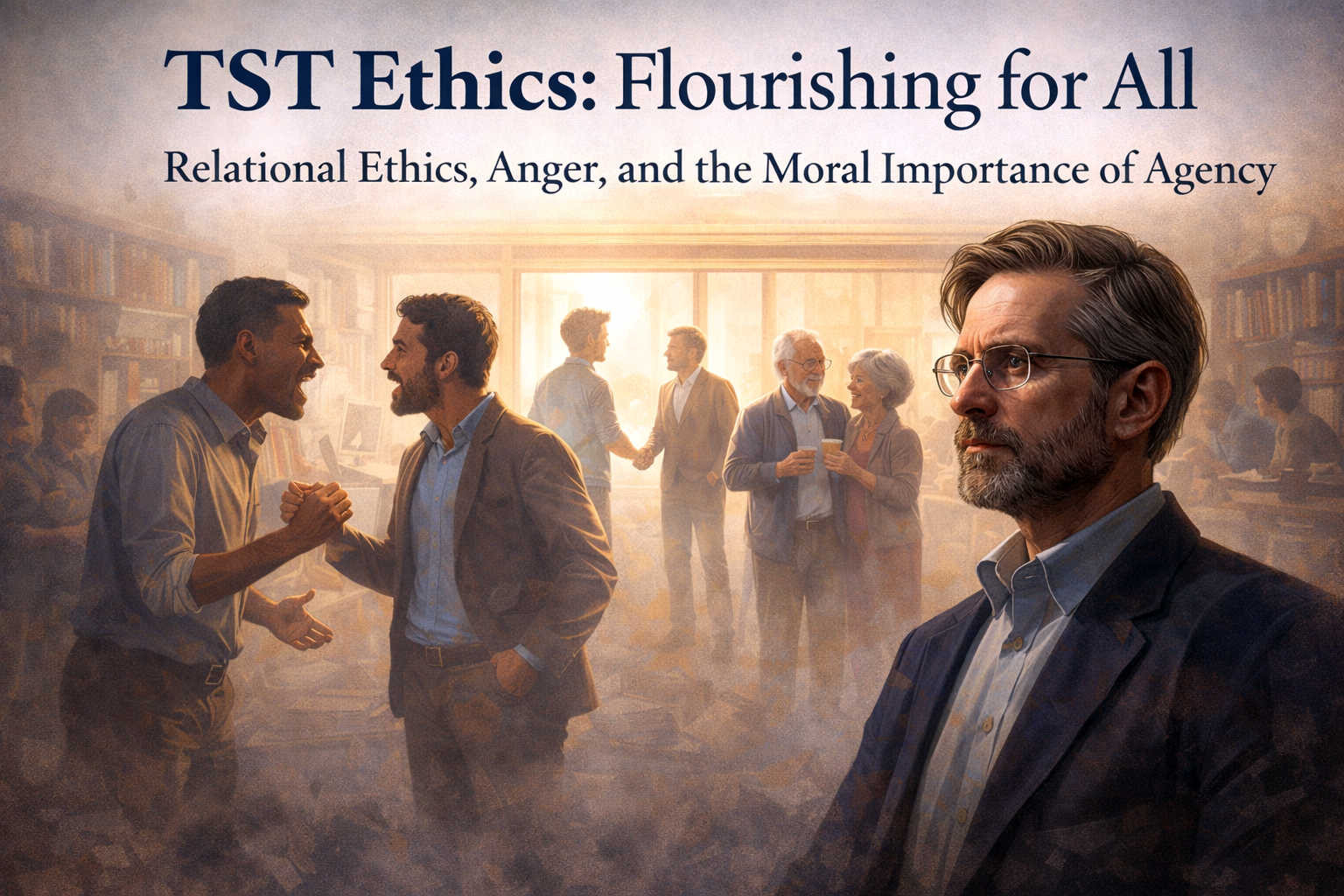
TST Doxastic Formation: Public Belief, Tribe, and Worldview

This is your life. Embrace the beliefs you understand and believe in, not just the beliefs you inherited.
EpistemologyIdea of IdeasLive well.

TST Philosophy of History

Historical tales are empirical ideas. We believe these evidence-based reconstructions of real past events with varying degrees of confidence. We can prove or disprove their related empirical implications.
Epistemology

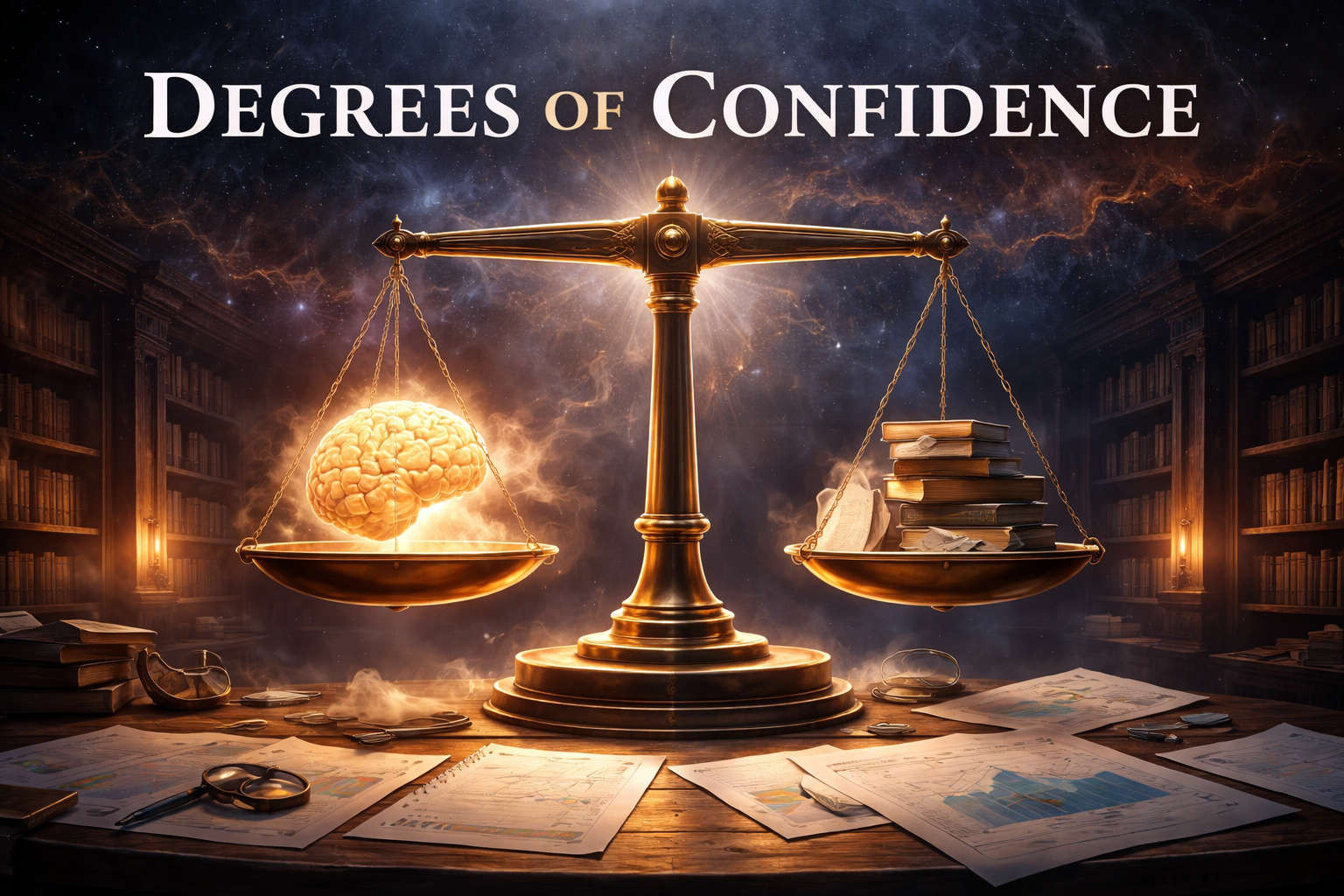
TST Epistemic Calibration: Credence and Degrees of Belief

TST Calibration Theory asks: How strong should our confidence be? Answer: Confidence is the quality of alignment to reality.
Epistemology

TST Theory of Truth: Reality-First Correspondence

TST Theory of Truth asks: What makes an idea true? Truth is successful alignment between our representations and a determinate, mind-independent reality.
Idea of Ideas

TST Metaphysics: The Split

The split separates our ideas and the material world. To live in harmony with nature, embrace the idea that our rational ideas must be internally ...
Must-Reads
Ancient History

Pragmatism and Pythagoras

Pythagoras exemplifies rational pragmatism and reminds us that authority is often topic specific. Choose your authorities carefully, because good authority is usually limited to a ...
Ethics

Existential Toolkit: Evolution’s Consciousness Misstep

Existentialism evolved during the post medieval time. At its core, existentialism is about discovering your authentic self. You, in your environment, in your time, living ...
Ancient Humans

The Evolution of Vocabulary in Ancient Humans

The evolution of language is the evolution of communication. From touch which evolved about 800 million years ago to human words. Along the journey, communication ...
New Ideas
Idea of Ideas

TST Metaphysics: The Split

The split separates our ideas and the material world. To live in harmony with nature, embrace the idea that our rational ideas must be internally ...
Book-30 Philosophers

30 Philosophers: New Looks

The fourscore of touchstones in the book.
The human hand fills the last missing elements of the surface from the jigsaw puzzle
Epistemology

TST Framework: A 5-4-3 Structure

A short overview of the 5 Thought Tools, 4 Mind Traps, and 3 Truth Hammers.
Updated Articles
No more posts to show
Scroll to Top