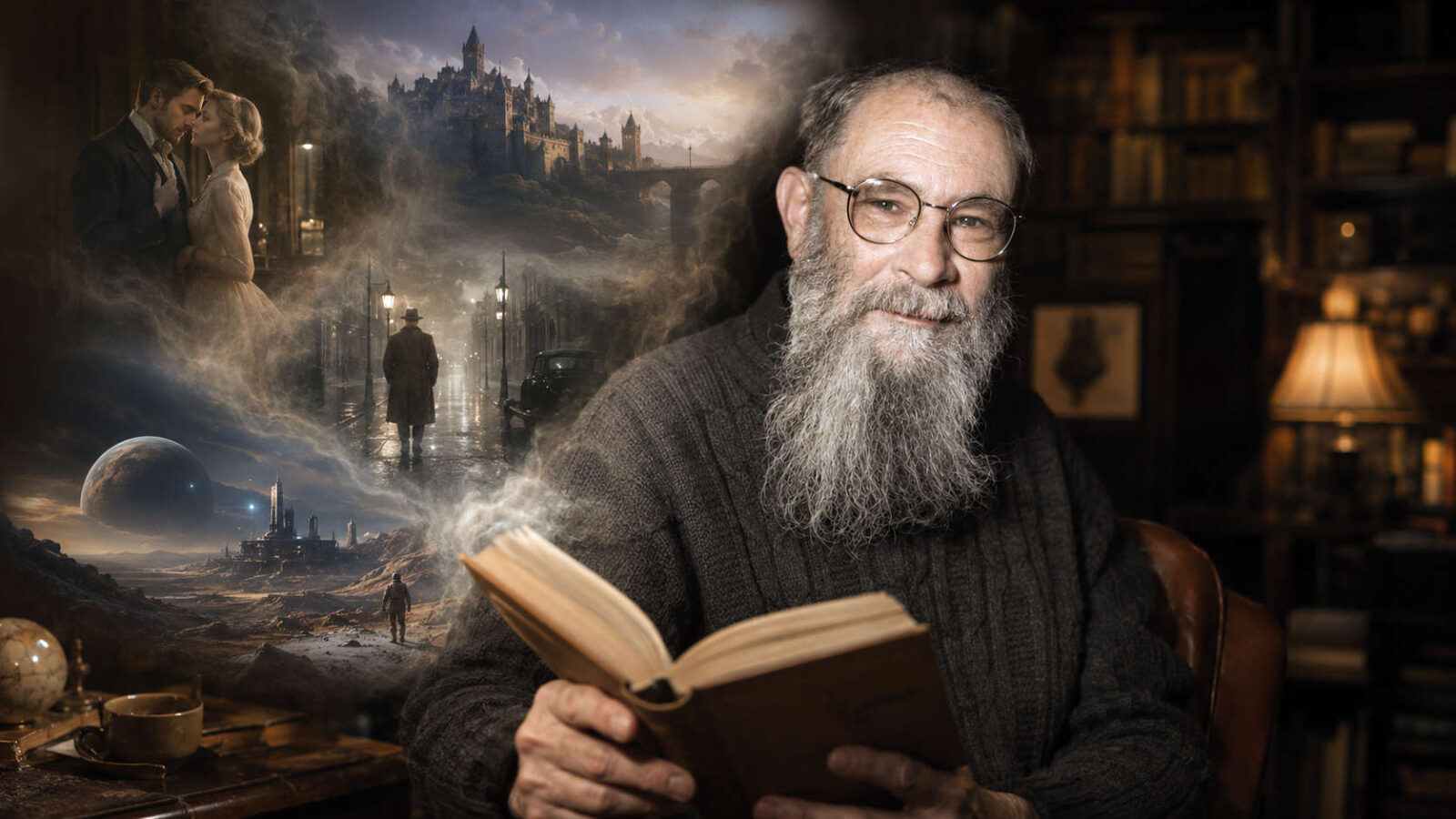
The famous Lewis “Truth in Fiction” Paper
Fictional statements can be “true” inside an invented world, even when they are not true in actual history.
The famous Lewis “Truth in Fiction” Paper Read More »


Fictional statements can be “true” inside an invented world, even when they are not true in actual history.
The famous Lewis “Truth in Fiction” Paper Read More »

Good common knowledge is the Grand Rational Framework. It is our common-floor public belief, and it evolves knowledge anchored to the material world, where only evidence-grounded reasoning reshapes what we collectively treat as true.
Grand Rational Framework Read More »

30 Phil, Chapter 18: In this new look at universals and the problem of universals, we use the traditional framing of realism, nominalism and Abelard’s middle ground of conceptualism. The role is science is used to update this exploration and introduce the idea that things like color don’t actually exist at all.
The Problem of Universals Read More »

When encountering new information, first ask: is it empirical, rational, or irrational? Then think about how much you believe it.

30 Phil, Chapter 18, Peter Abelard, Touchstone 46: Pattern Recognition. Humans possess an extraordinary ability to identify patterns both in nature as well as in our minds. It is fundamental to how we understand the world, and at the core of the universals debate. Building on pattern recognition, our minds also engage in pattern ranking.
Pattern Recognition Read More »

30 Phil, Chapter 18, Peter Abelard, Touchstone 45: Object-Oriented Nature. Our minds naturally categorize the world into objects, properties, and their interactions. We mentally reduce the complexities of reality into objects. For instance, when we interact with a battery, we use its interface, the positive and negative terminals unconcerned about the details. In this somewhat
Object-Oriented Nature Read More »

30 Phil, Chapter 18, Peter Abelard, Touchstone 44: Intent. The concept of intent has deep roots. Aristotle, in his Nicomachean Ethics, argued that voluntary actions guided by intention were essential for moral responsibility and virtue. Similarly, Roman law incorporated the concept of “mens rea,” a guilty mind, as a vital element in determining guilt. In
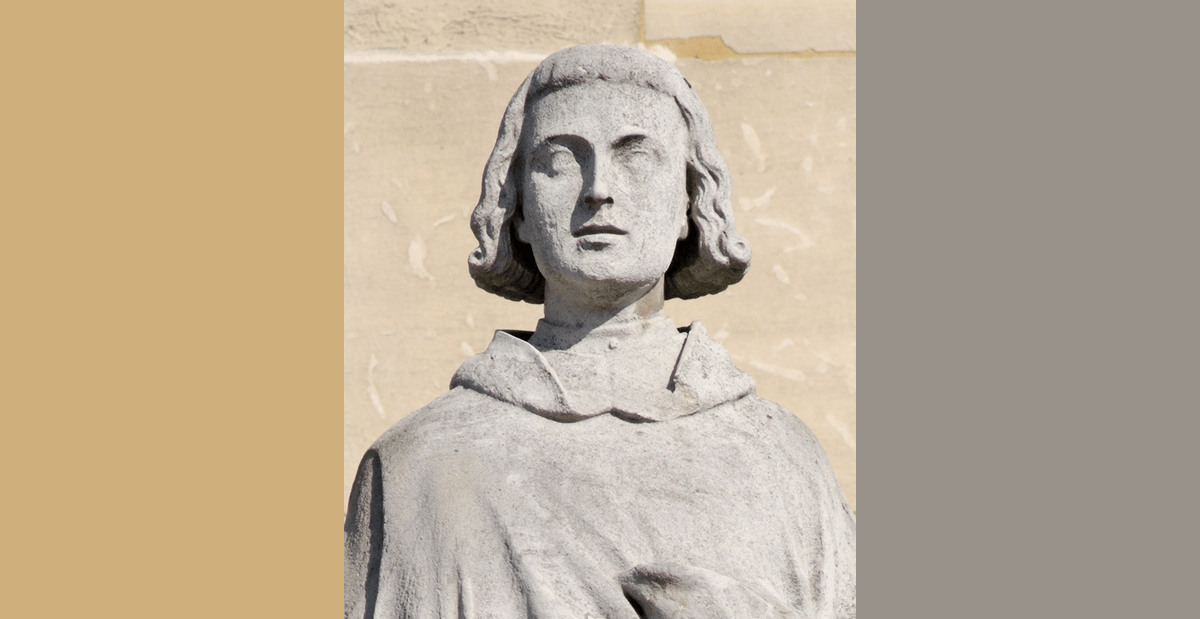
38 Generations Ago 30 Phil, Chapter 18: Peter Abelard and Universals Born in 1079 in Le Pallet, a small village in France, Peter Abelard hailed from a noble lineage. His father, a knight of the local lord, intended for his son to follow in his footsteps. Instead, Peter chose a path of knowledge. His brilliance

The Greeks knew the Earth is spherical. For example, Pythagoras (570-495 BCE), Aristotle (384-322 BCE), and Euclid (circa 450 BCE) wrote about the Earth as a sphere. Eratosthenes (276-194 BCE) even calculated the circumference of the Earth to within 1%. He also wrote about the idea that India could be reached by sailing westward from
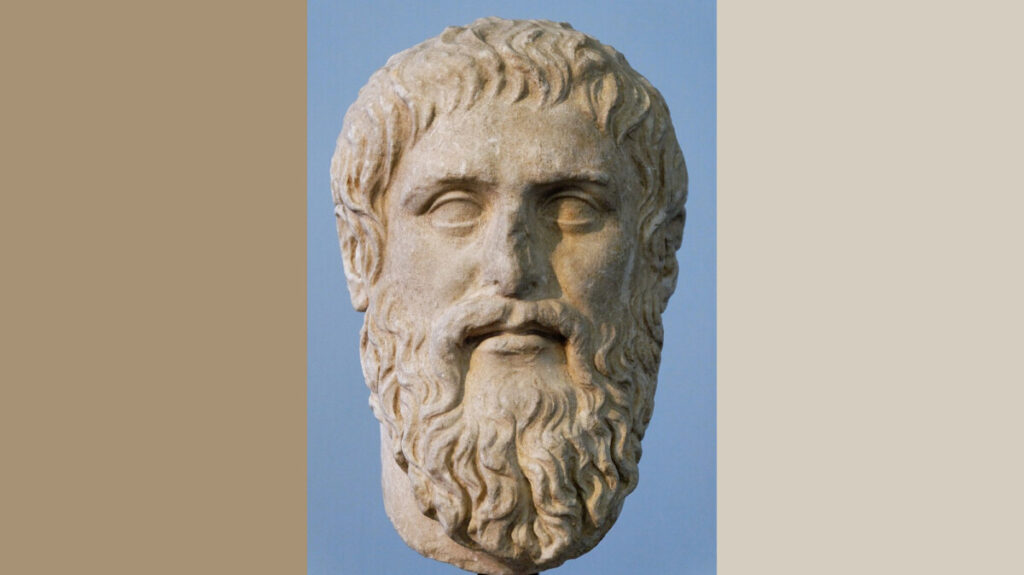
Plato reminds us that what we see is not always the whole story. Humans use abstract ideas, categories, and ideals to make sense of the changing world around us.