Explore Science-first Philosophy

Human Ancestors

Pre-hominid human evolution all the way back to LUCA.

Ape Thumb Evolves

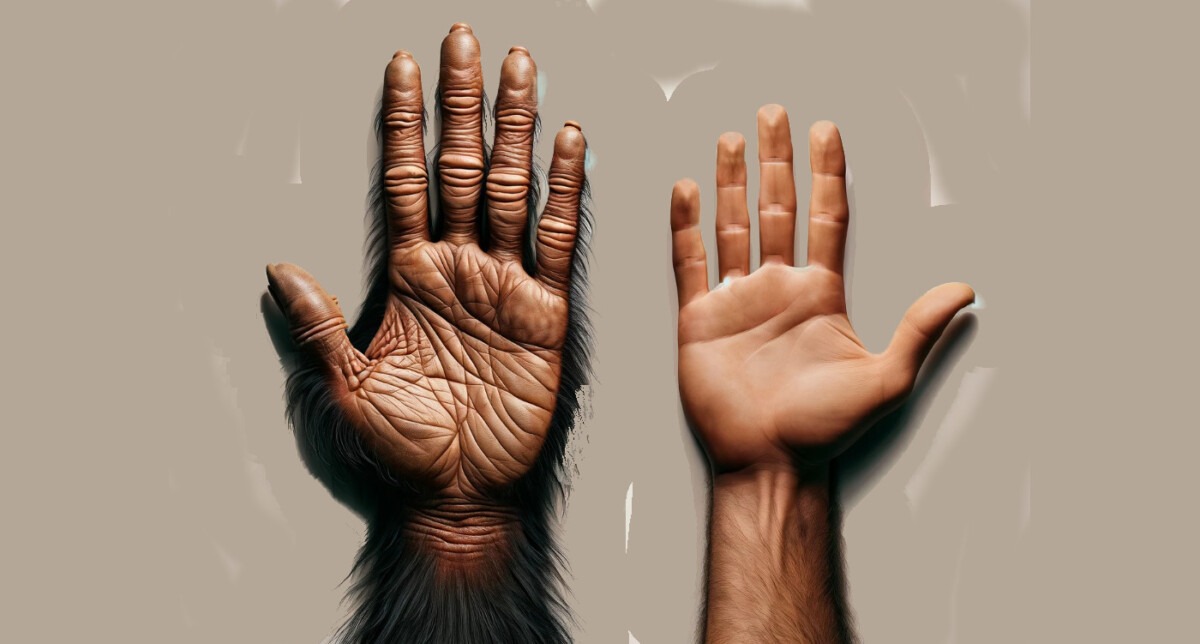
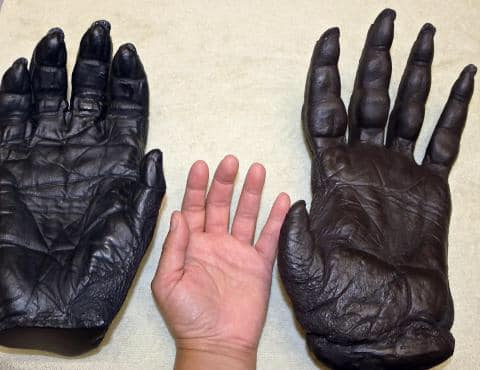
Likely between 25 and 30 million years ago, the evolution of the apes brought about further refinement of the opposable thumb. This period saw the divergence of the lineages that would lead to modern “lesser” apes like gibbons as well as later “great” apes, including orangutans, gorillas, and chimpanzees. The ape thumb evolved to become

Ape Thumb Evolves Read More »

General Relativity

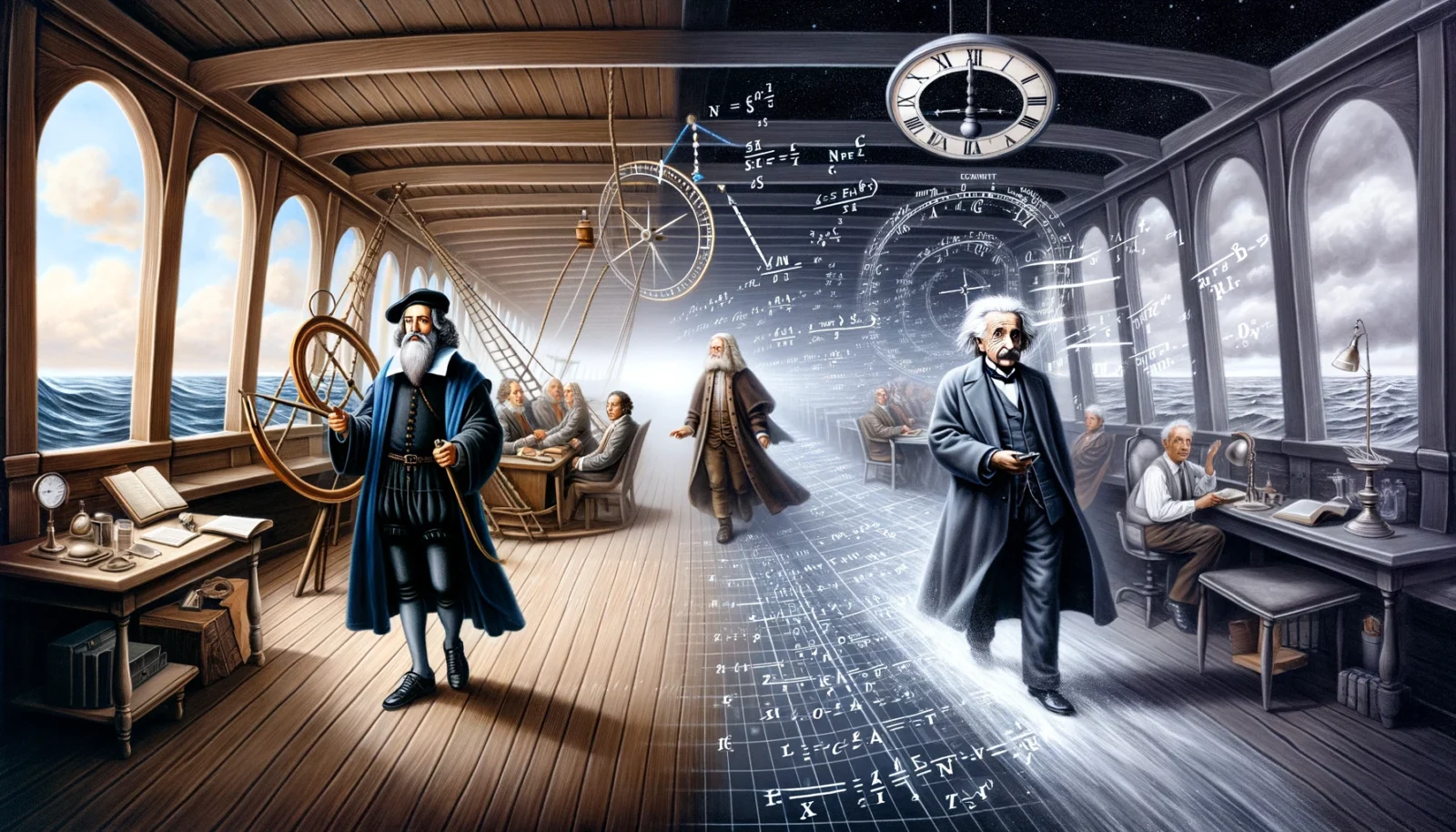
General Relativity incorporated gravity into the mix. It describes gravity not as a force, but as the curvature of spacetime caused by massive objects. According to General Relativity, the curvature of spacetime around an object like the Earth causes objects to fall towards its center, which we experience as gravity.  In November 1915, Einstein expanded

General Relativity Read More »

Special Relativity

Special Relativity explains the relationship between space, time, mass, and energy. It shows that time and space are not separate entities but are connected as a single entity called spacetime. Additionally, it introduced the famous equation E=mc², which demonstrates that mass is engergy, energy is mass. They are equivalent and can be converted into each

Special Relativity Read More »

Cosmic Microwave Background (CMB)

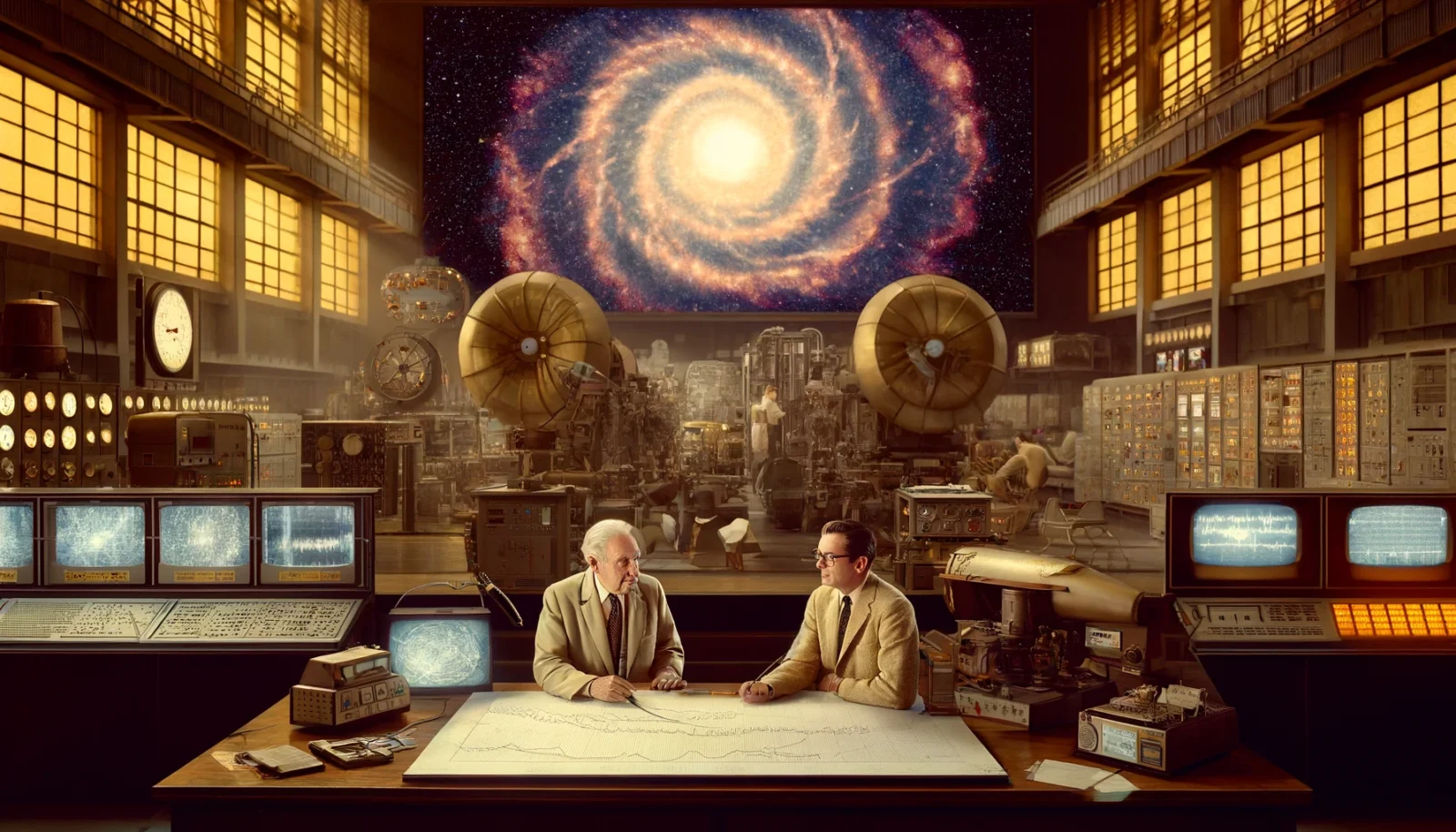
In 1965, Arno Penzias and Robert Wilson, two radio astronomers at Bell Telephone Laboratories, stumbled upon a mysterious and persistent background noise that pervaded their radio telescope. After much investigation and the elimination of potential terrestrial and instrumental sources, they concluded that this noise was cosmic in origin. Their findings, published on May 20, 1965,

Cosmic Microwave Background (CMB) Read More »

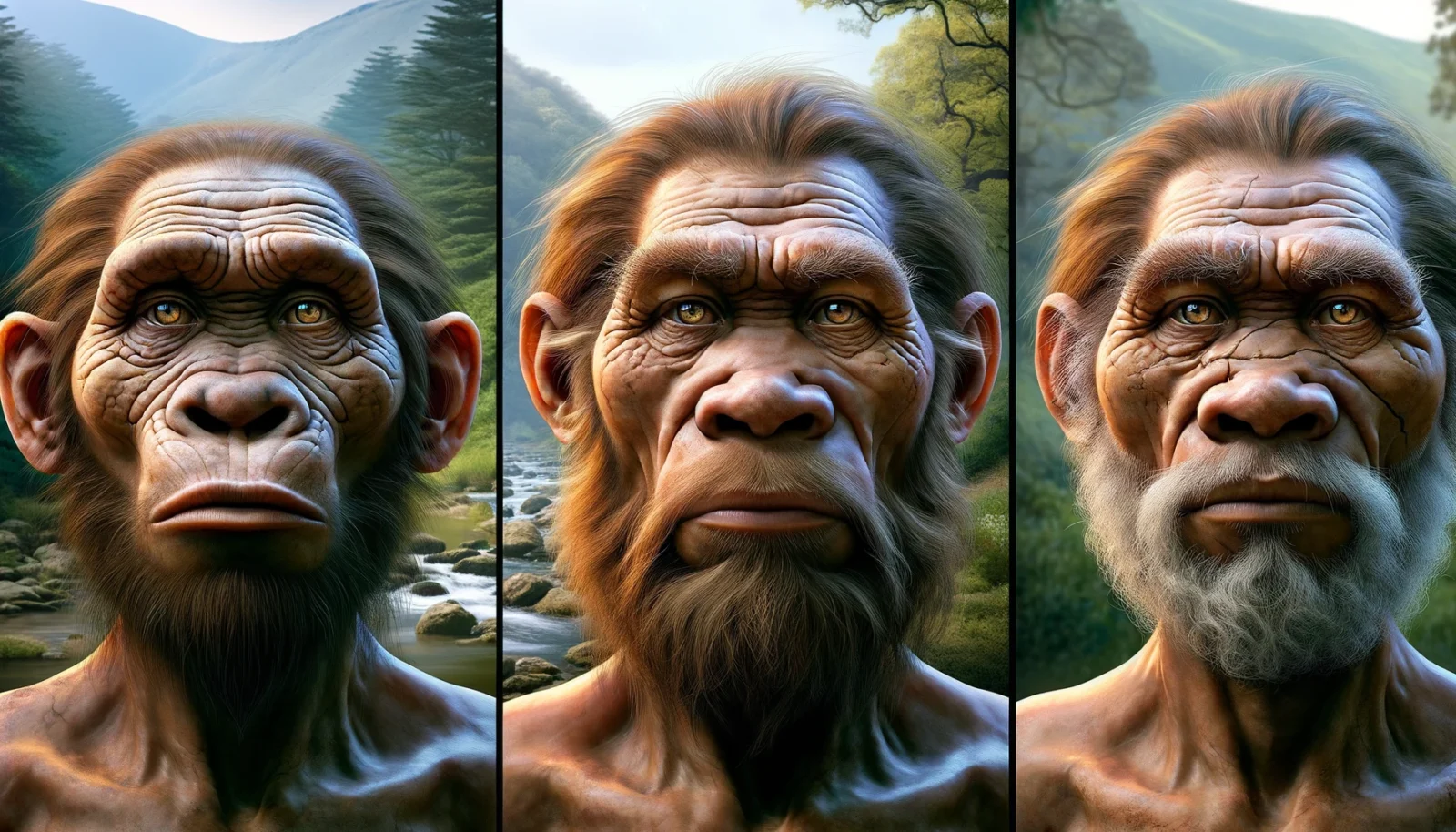
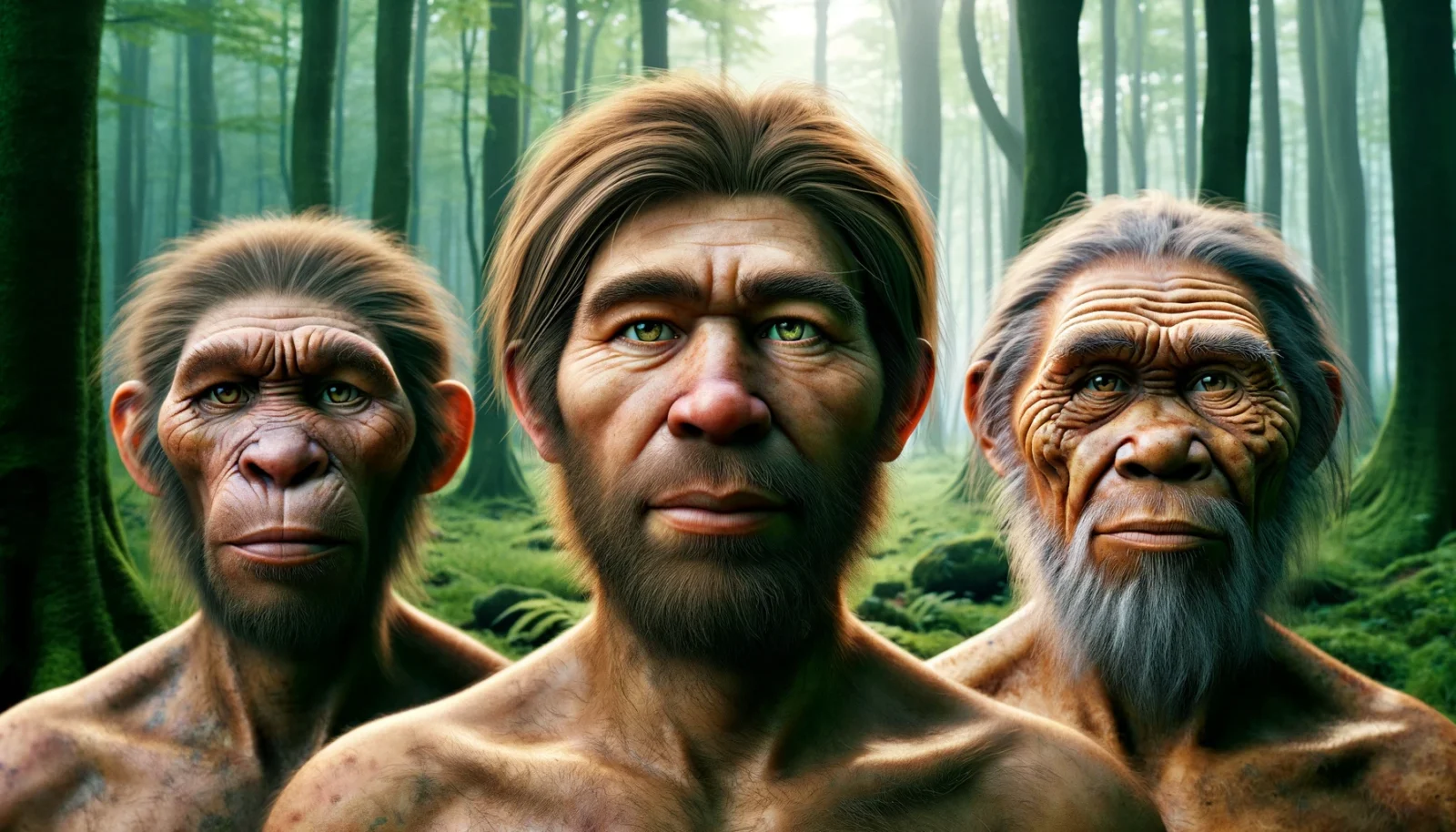
Homo rhodesiensis: A Hybrid Lesson

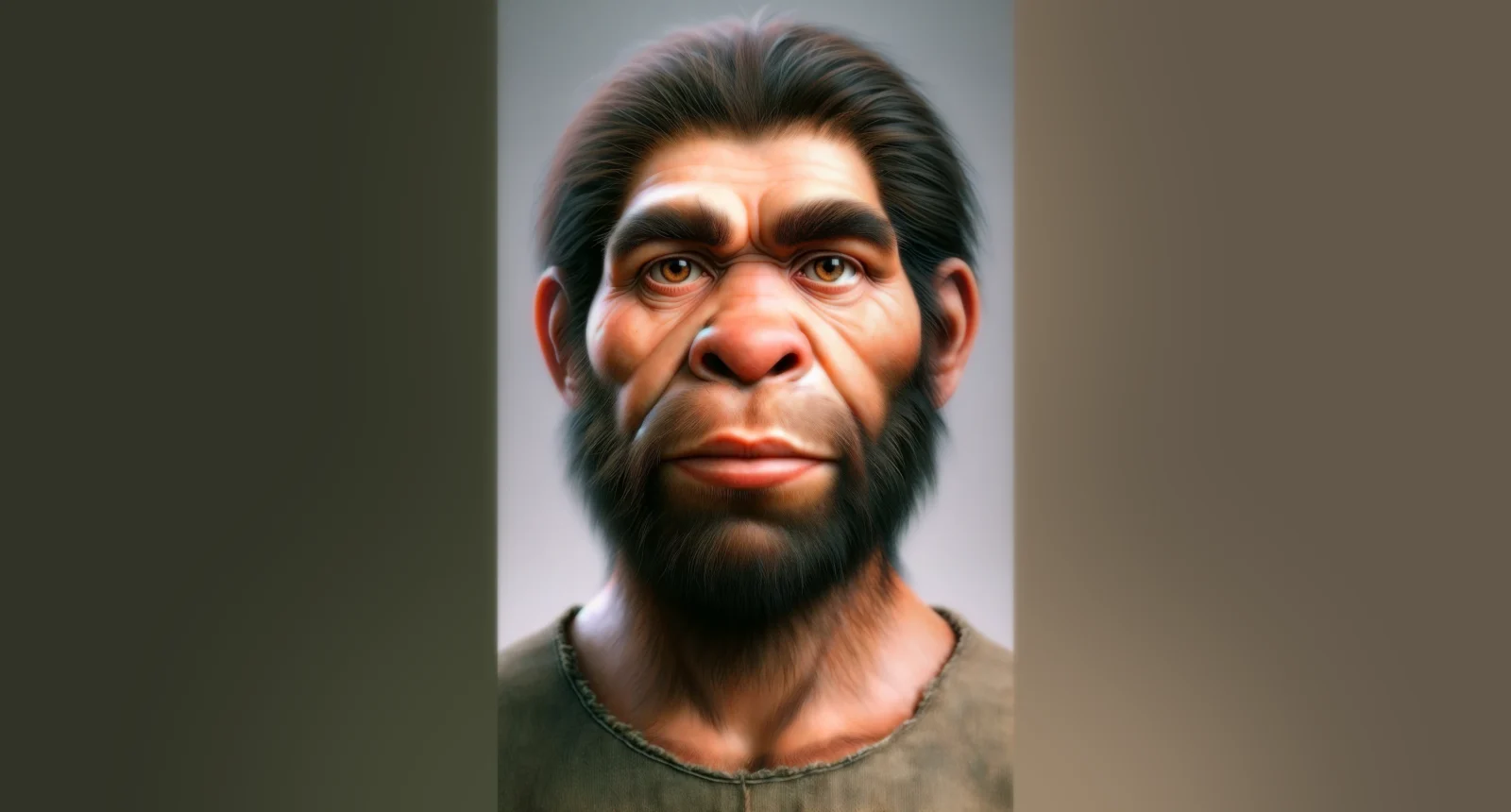
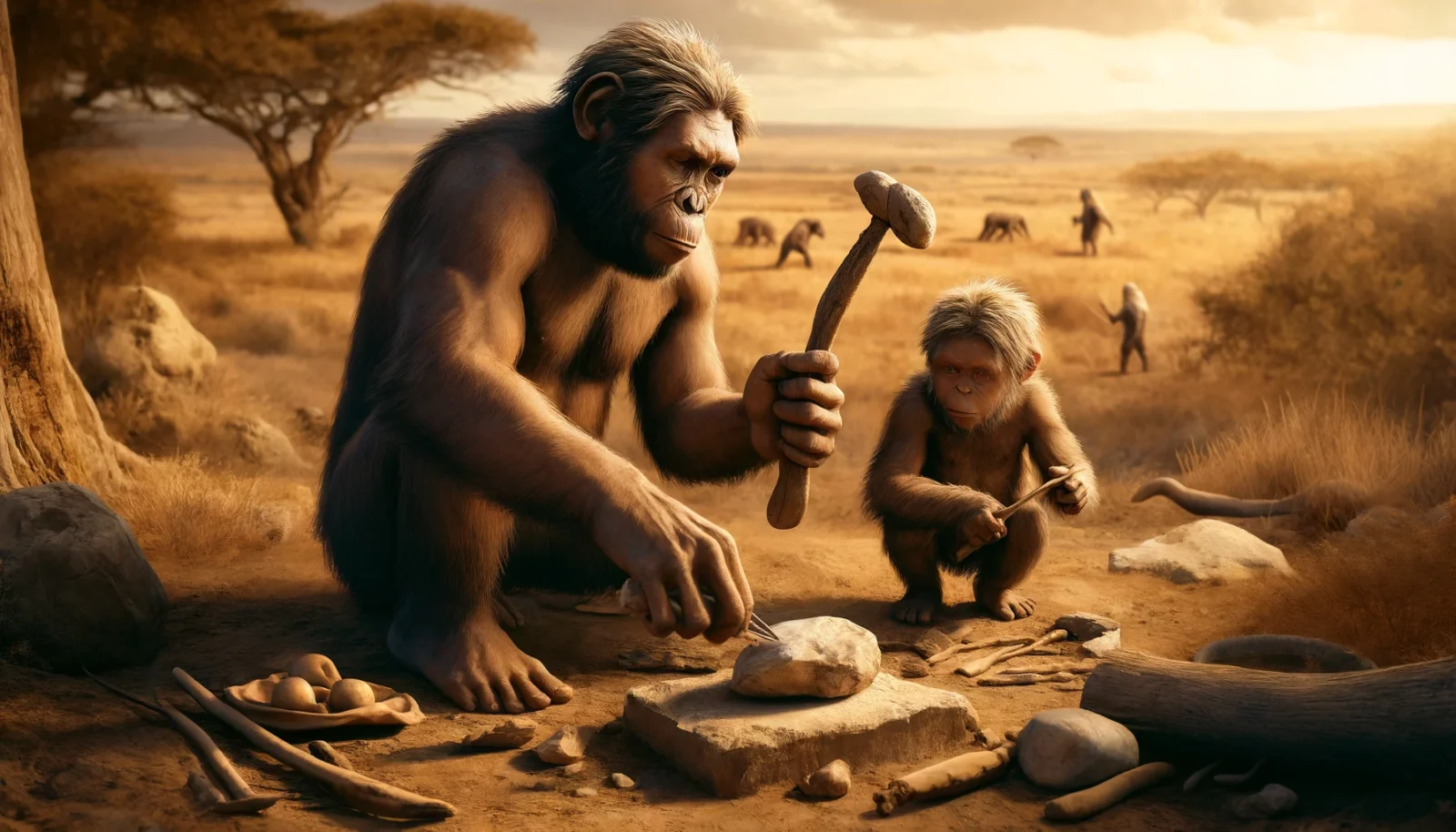
Homo rhodesiensis, often regarded as Africa’s counterpart to Europe’s Homo heidelbergensis, represents a pivotal species. Discovered in Kabwe, Zambia, the species exhibits a mix of robust and modern traits with a large brain size and advanced tool use, reflecting significant cognitive capabilities. Interbreeding Analysis: The evolutionary journey of Homo rhodesiensis might highlight well the complex

Homo rhodesiensis: A Hybrid Lesson Read More »

Emergence of Early Hominin Shelters

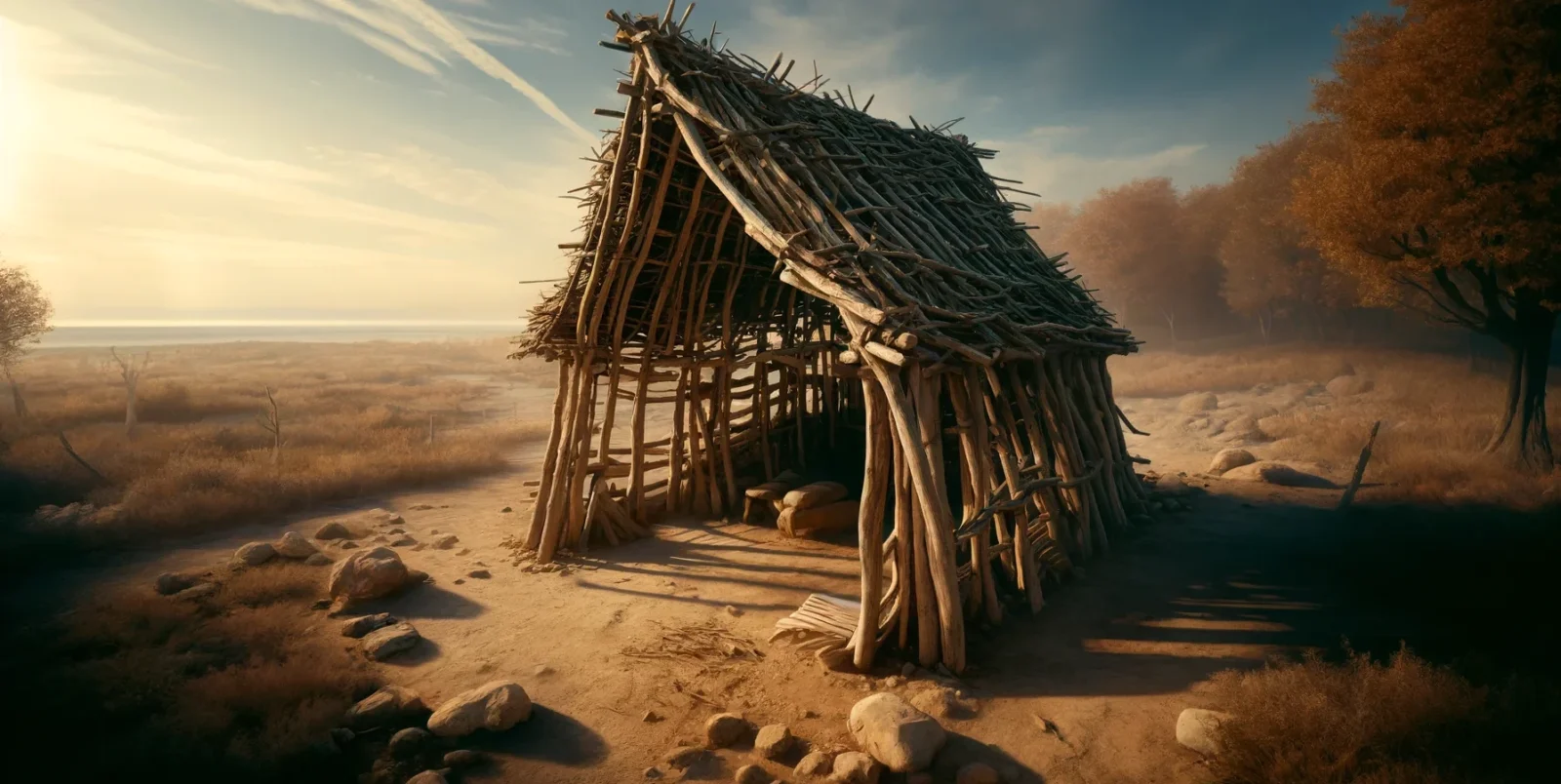
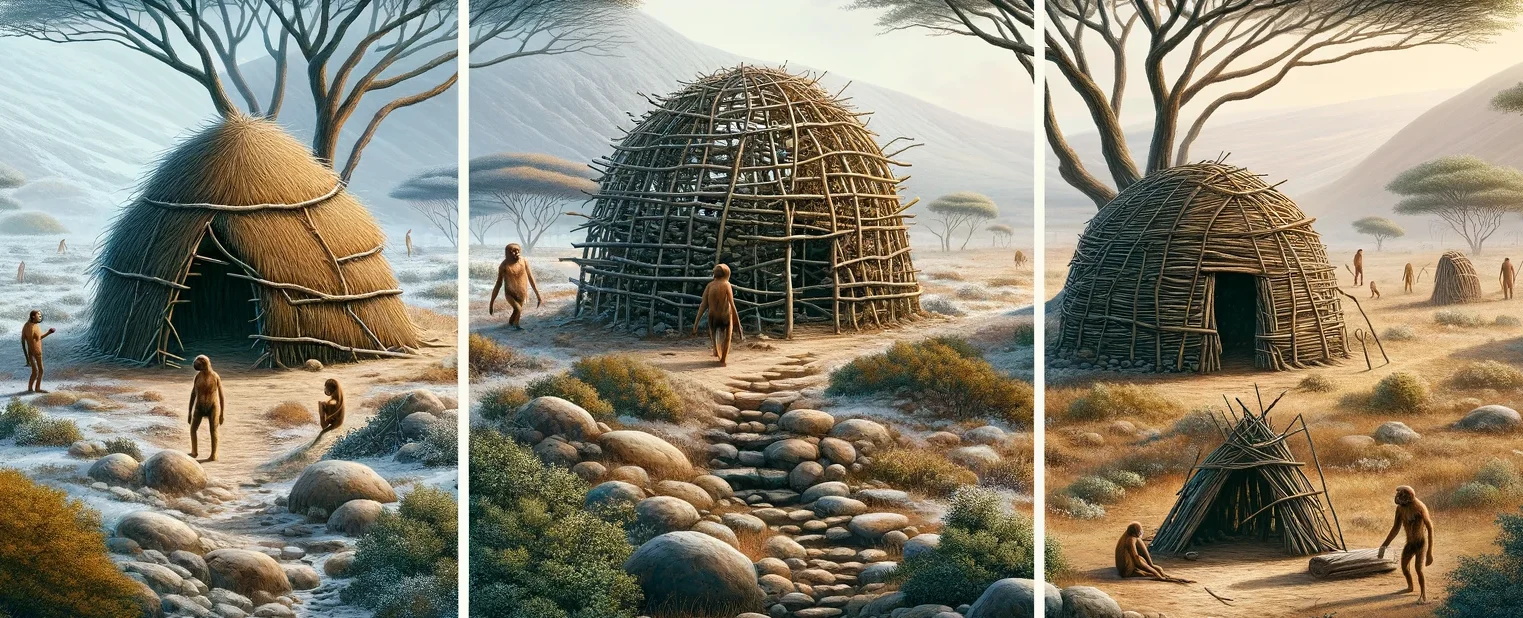
The origins of tent-like structures in human history remain shrouded in mystery, primarily due to the perishable materials involved and the lack of direct archaeological evidence. However, as Homo erectus appeared and spread into varied climates, their enhanced tool-making skills and control of fire likely necessitated and enabled the construction of more complex shelters. This

Emergence of Early Hominin Shelters Read More »

First Proto-Containers

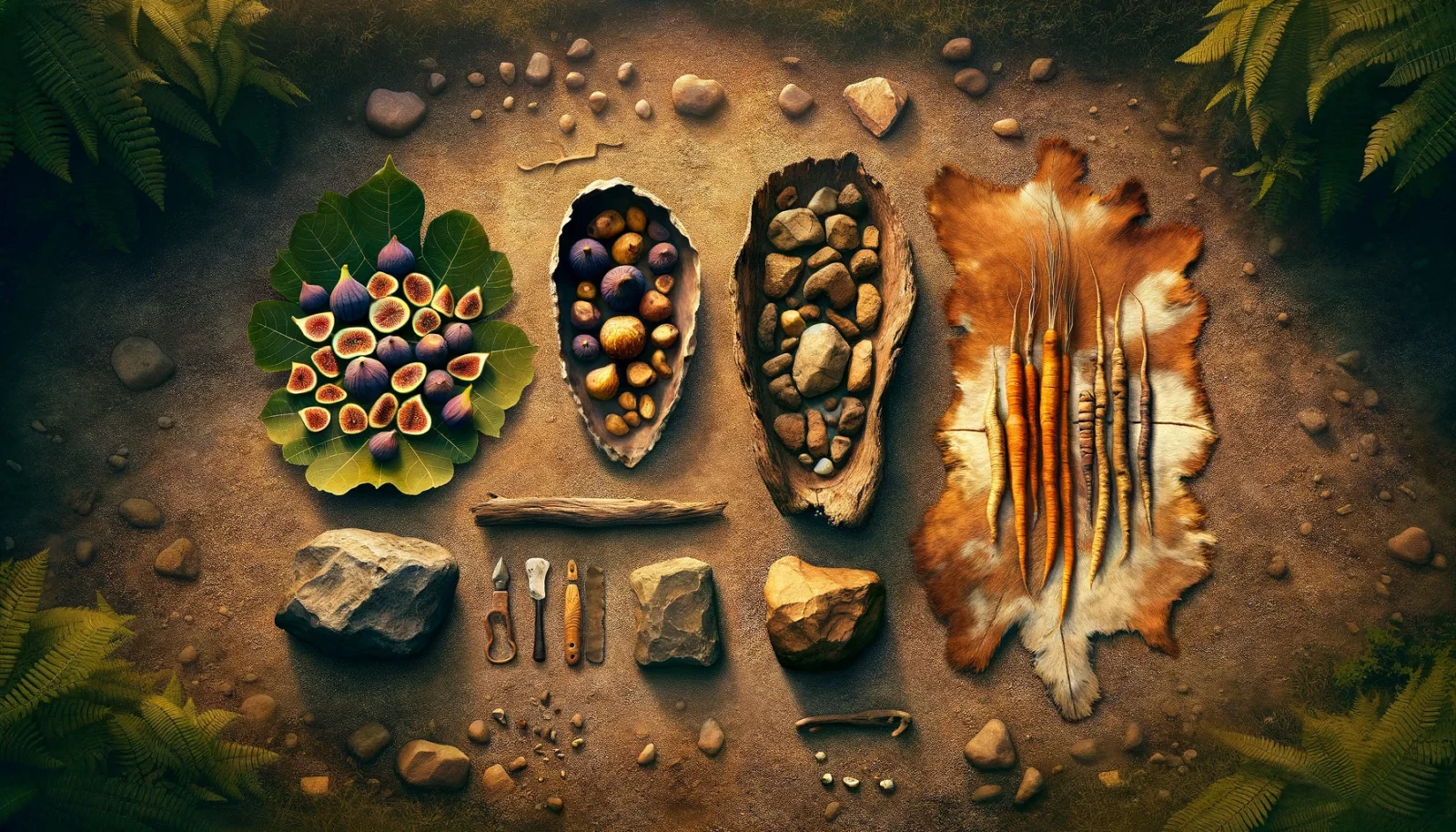
The earliest containers were likely simple natural resources that early hominins stumbled upon and adapted for use. Starting possibly with Homo habilis around 2.0 million years ago, these early humans may have utilized large leaves, shells, or naturally hollowed-out pieces of wood as rudimentary containers. This usage marks an innovative step in early human technology,

First Proto-Containers Read More »

Full Emotional Intelligence Emerges

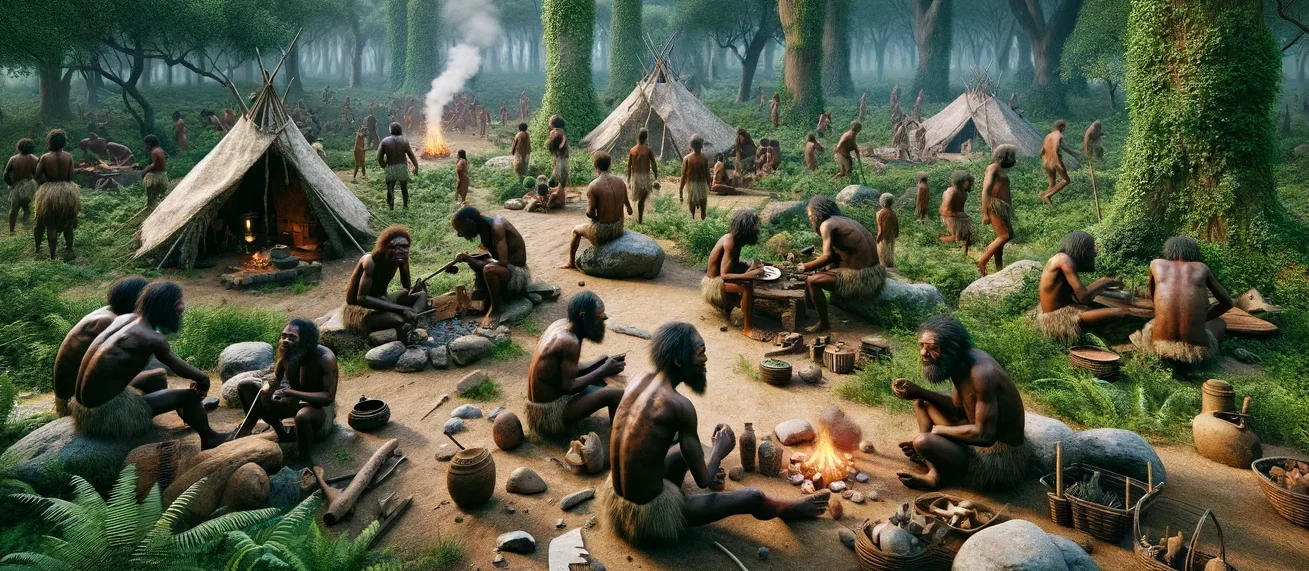
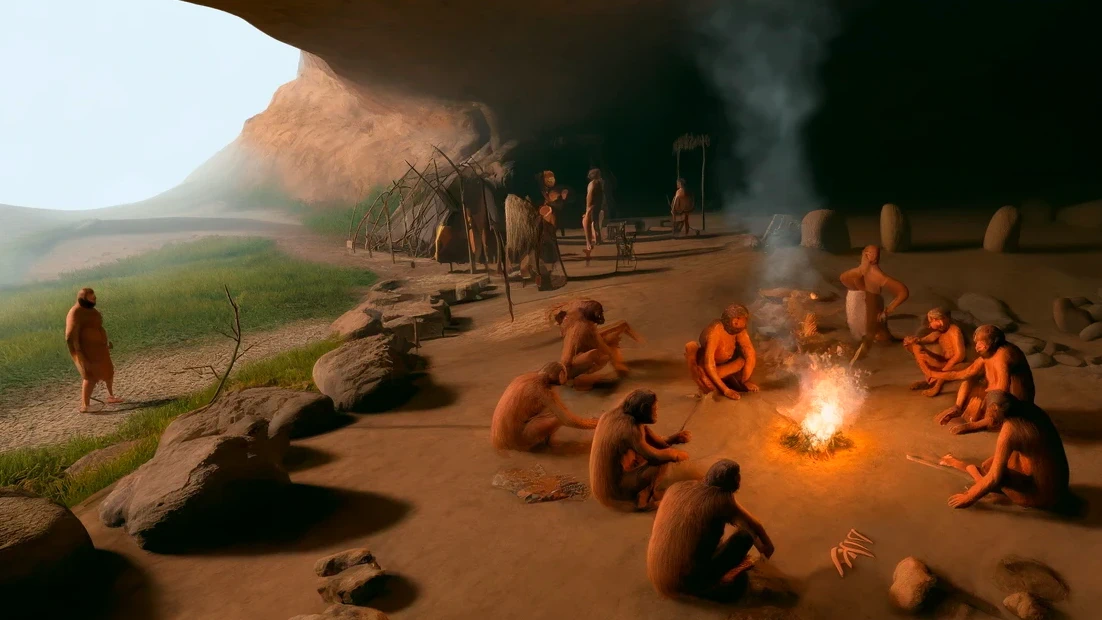
Full emotional intelligence (EI) likely emerged around this time in species such as Homo antecessor and Homo heidelbergensis. EI heralds the dawn of a new era where emotional intelligence began to take a recognizable shape. Analysis: With indications of complex social structures, more potential for language, and advanced tool-making abilities, these species navigated their world

Full Emotional Intelligence Emerges Read More »

Neanderthal-Sapien LCA

NSLCA: The Neanderthal-Sapien Last Common Ancestor was likely Homo heidelbergensis or Homo antecessor. Analysis: Before the discovery of Homo antecessor in the 1990s, Homo heidelbergensis was considered the primary candidate for the NSLCA due to its chronological and morphological position in the human lineage. The discovery of Homo antecessor, with its more modern-looking facial features, has

Neanderthal-Sapien LCA Read More »

First Clothes: Proto-Clothing and the Advent of Garments

Proto-clothing, encompassing basic garments such as animal skins and possibly decorative natural materials, likely emerged among hominins around 600,000 years ago, with Homo heidelbergensis being a probable early adopter. This species, experiencing diverse and often colder climates across Europe and Africa, may have utilized simple clothing for survival. Before venturing into colder climates, modesty, jealousy,

First Clothes: Proto-Clothing and the Advent of Garments Read More »

Transition from Trees to Savannah Begins

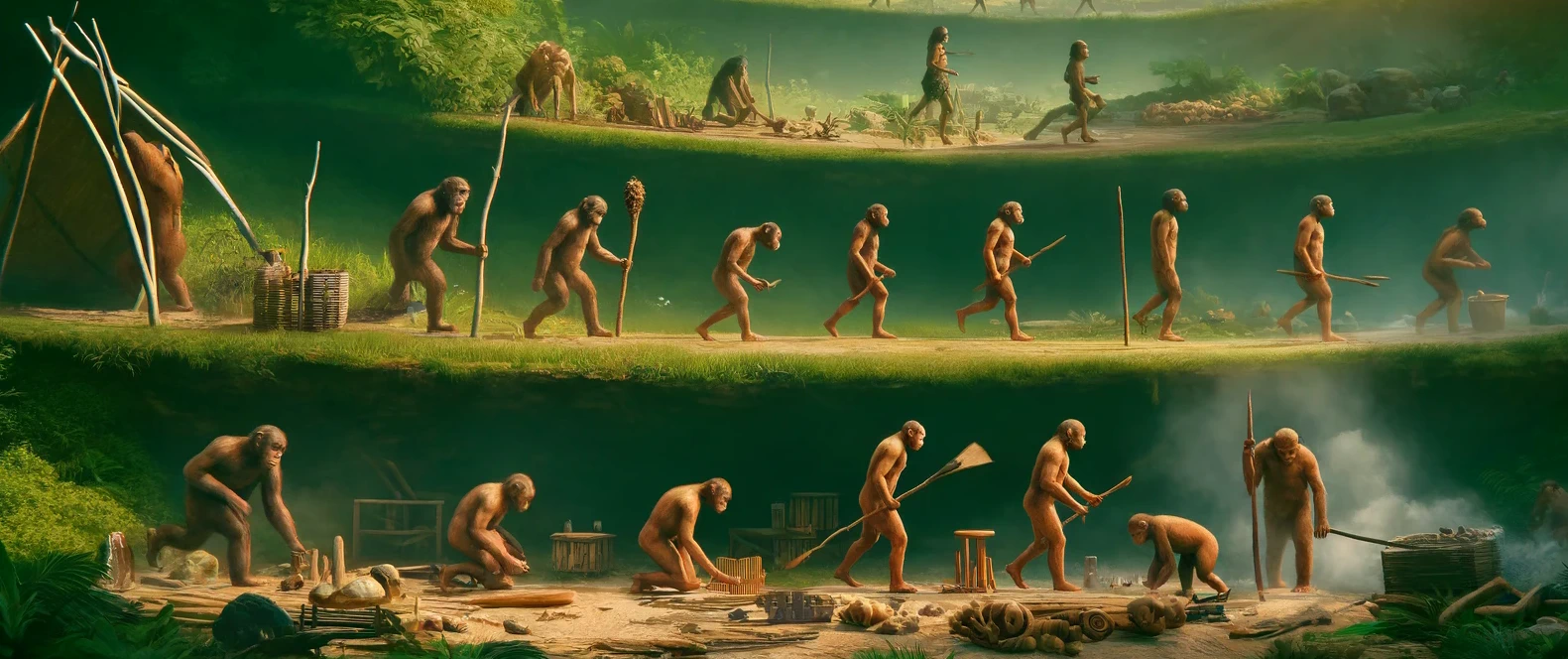
Arboreal to Terrestrial: Beginning approximately 9 million years ago, our ancestors began an evolutionary change from forests to woodlands to savannahs. This gradual transition from primarily arboreal (tree-dwelling) lifestyles to increasingly terrestrial (ground-based) behaviors was very gradual with traits specific for walking around carrying things gradually accumulating. This evolutionary journey spanned roughly 7 million years,

Transition from Trees to Savannah Begins Read More »

Modern Skin Color Variety Emerges

Current understanding suggests that the diverse skin colors among modern humans, ranging from dark brown to fair, evolved multiple times both within Africa and as Homo sapiens migrated out of Africa. This variation is driven by natural adaptation to varying levels of UV radiation exposure in different populations, a process that typically unfolds over thousands

Modern Skin Color Variety Emerges Read More »

Scroll to Top