
First True Animals – Comb Jellyfish
The first true animals are the comb jellyfish which evolved about 555 million years ago.
First True Animals – Comb Jellyfish Read More »


The first true animals are the comb jellyfish which evolved about 555 million years ago.
First True Animals – Comb Jellyfish Read More »
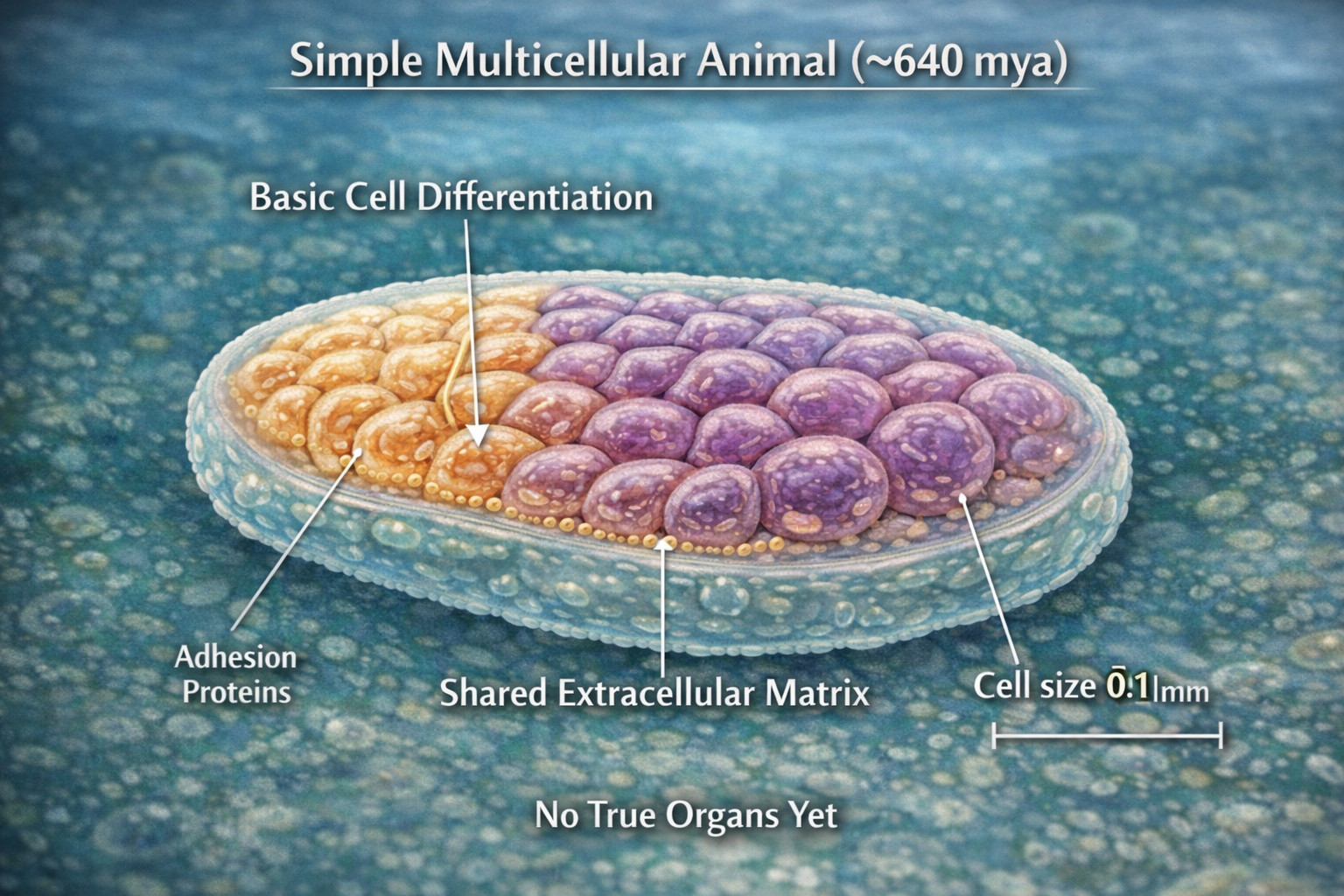
Organisms that consist of more than one cell took several billion years to evolve from unicellular organisms. All species of animals, land plants and most fungi are multicellular, as well as many algae. A few organisms are partially both such as slime molds and social amoebae. Domain: Eukaryota > Kingdom: Animalia > Phylum: Porifera (sponges)
First Multicellular Animals Read More »

The earliest known life on Earth are fossilized microorganisms found in hydrothermal vent precipitates. Currently dated to about 3.42 billion BCE. These microorganisms were prokaryote cells. Single celled organisms with no nucleus and had early simple DNA. More complex DNA in a nucleus evolved about 1.5 billion years later in Eukaryotic cells, circa 2 billion
Oldest Known Fossil-Microorganisms Read More »

North America splits from Europe causing diverging evolutionary lines. Over millions of years, the modern-day Europe (Eurasian plate) and North America (North American Plate) separated during the final breakup of Pangaea in the early Cenozoic Era. This split is a later part of that breakup and created the North Atlantic Ocean.
Opening of the North Atlantic Ocean Read More »
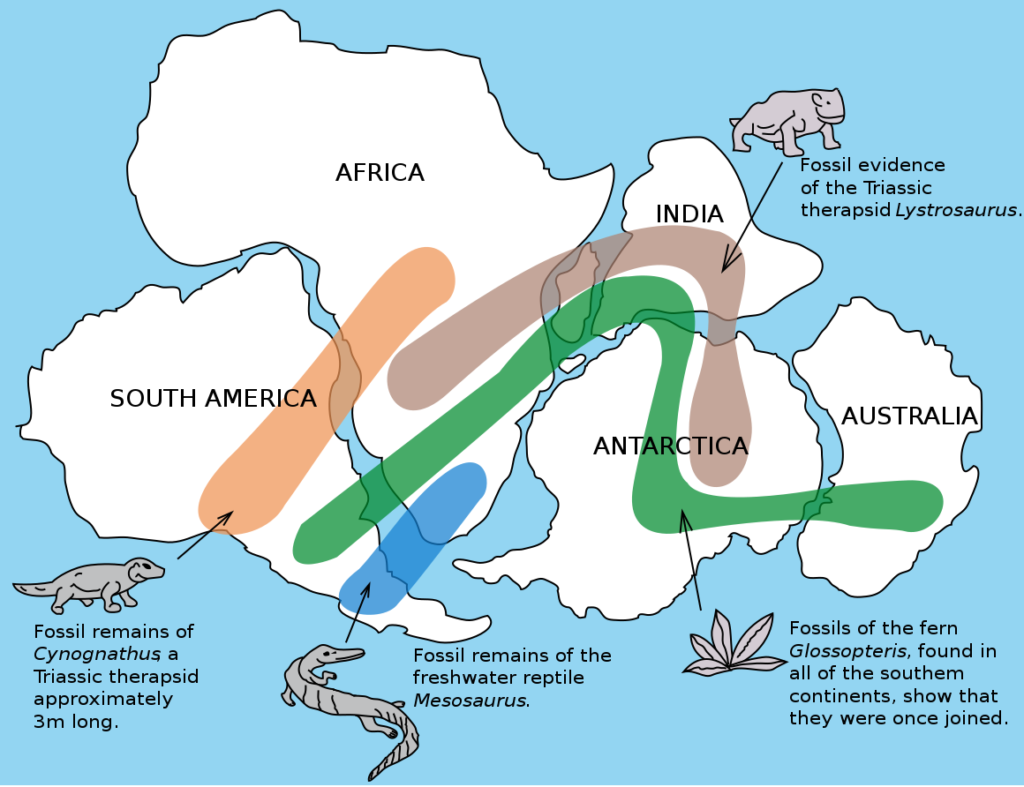
By dating rocks and fossils scientists can document the movement of the continents over time. To confirm and refine this science, geologists study rocks, paleontologists study fossils, and anthropologists study human societies, cultures, and relics. The location and dating of rocks, fossils, and relics allow us to understand the distant past. Cynognathus, circa 242 million

The breakup of Pangaea did not just reshape geography. It reshaped evolution by isolating populations, limiting movement, and allowing different branches of life to follow different paths.
Pangaea Splitting Starts Splitting Evolution Read More »
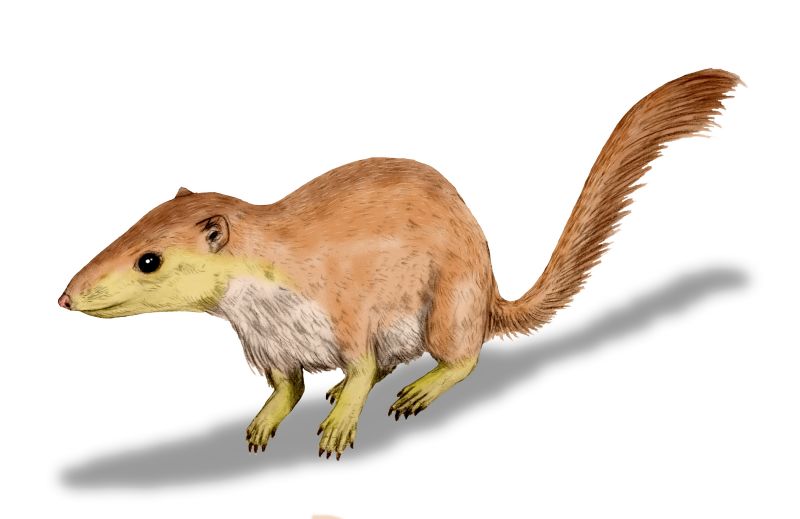
Within mammals, only primates have binocular vision, grasping hands, and flat nails–instead of claws. Purgatorius might have had all three earning it the earliest known proto-primate label. It lived in Eastern Montana about 66 million years ago during the very last years of the Cretaceous period. It lived through the K-T extinction event and the extinction
Purgatorius — Earliest known proto-primate. Read More »