Weekly Insights for Thinkers

Science  Philosophy  Critical Thinking  History  Politics RW  AI  Physics  •  Evolution  Astronomy 30 Phil Book More…
Science  Phil  Cr. Think  Hist 

Land: Africa and Middle East

The history of Africa and the Middle East.

Chimpanzee-Bonobo Split

Around 1.5 million years ago, the ancestors of today’s bonobos and chimpanzees became isolated from one another, likely due to the formation of the Congo River. This geographical barrier separated populations of the genus Pan, which ultimately evolved into two distinct species: bonobos (Pan paniscus) south of the Congo River, and chimpanzees (Pan troglodytes) to […]

Chimpanzee-Bonobo Split Read More »

Library of Ashurbanipal

The Library of Ashurbanipal, established during the reign of Ashurbanipal (668–627 BCE), the last great king of the Neo-Assyrian Empire, is one of the most significant collections of ancient texts. Located in Nineveh, the capital of Assyria, this library housed thousands of clay tablets inscribed with cuneiform script, covering a wide range of subjects including

Library of Ashurbanipal Read More »

Gilgamesh, circa 2700 BCE

Gilgamesh is the legendary figure whose exploits are immortalized in the “Epic of Gilgamesh.” Gilgamesh’s reign as king is shrouded in myth and history. The epic describes his journey from a tyrannical ruler to a wise and beloved king, highlighting his quest for immortality and the profound friendship with Enkidu, a wild man created by

Gilgamesh, circa 2700 BCE Read More »

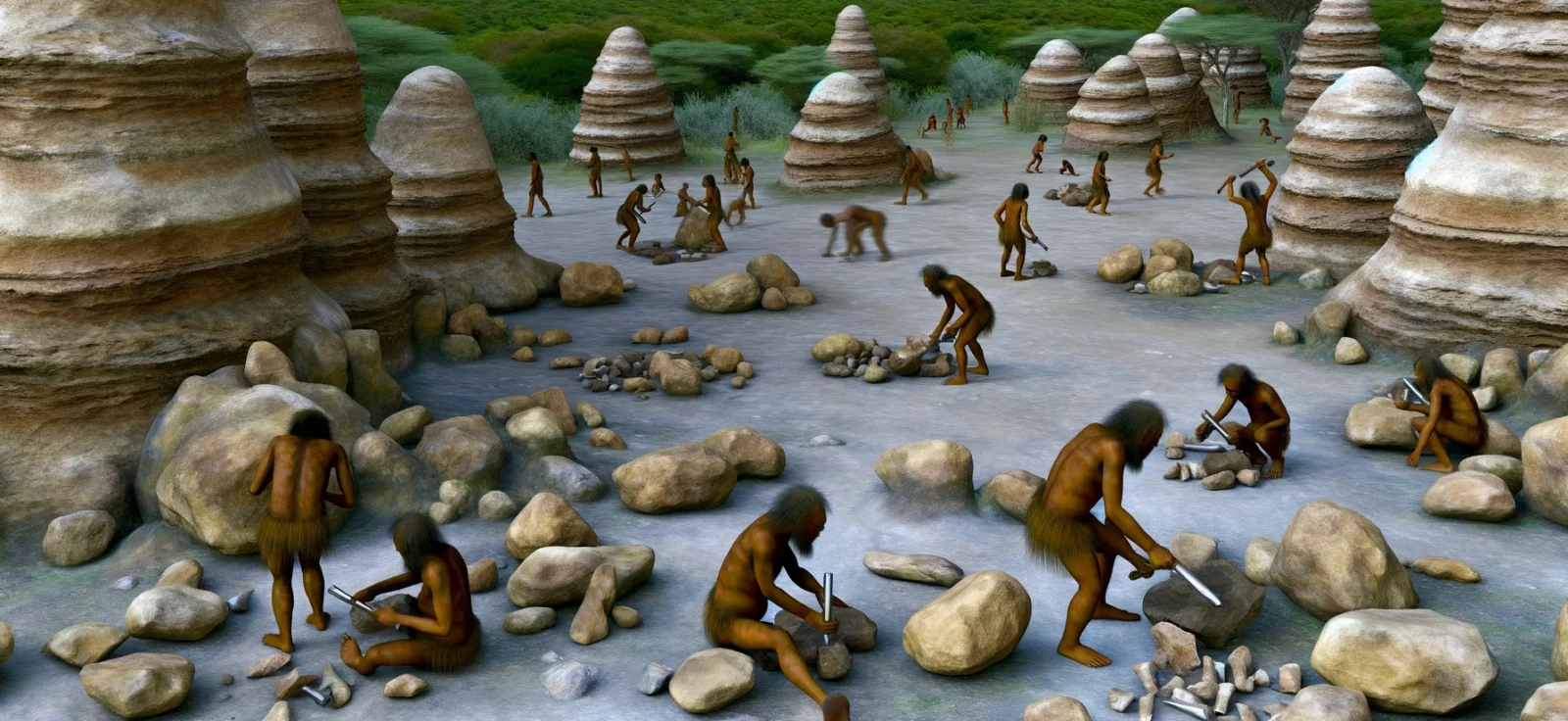
Olduvai Gorge Site: A Glimpse into Early Organizational Behavior

The Olduvai Gorge in Tanzania stands as a testament to early human ingenuity and foresight, illustrating a rudimentary form of organizational behavior that predates modern civilization. Utilized extensively over two million years, the site functioned akin to a “factory,” where early humans systematically crafted a variety of stone tools. They strategically selected specific locations that

Olduvai Gorge Site: A Glimpse into Early Organizational Behavior Read More »

First Clothes: Proto-Clothing and the Advent of Garments

Proto-clothing, encompassing basic garments such as animal skins and possibly decorative natural materials, likely emerged among hominins around 600,000 years ago, with Homo heidelbergensis being a probable early adopter. This species, experiencing diverse and often colder climates across Europe and Africa, may have utilized simple clothing for survival. Before venturing into colder climates, modesty, jealousy,

First Clothes: Proto-Clothing and the Advent of Garments Read More »

Hominin World Population: 2 Million (speculative)

Other than humans, today’s smartest primates—chimpanzees, bonobos, gorillas, and orangutans—have a combined wild population of approximately 400,000 to 700,000. This number persists despite their near-complete inability to expand beyond their current ideal environments, a restriction not faced by any human species since before Homo habilis. Moreover, this is in spite of the extreme pressures exerted

Hominin World Population: 2 Million (speculative) Read More »

Hominin World Population: 2 Million (maybe)

When Homo sapiens first emerged, their population in Africa was likely just a few hundred thousand, while the total hominin population, including other species like Neanderthals and Homo heidelbergensis, may have ranged from 1.1 to 2.1 million. During this period, Homo sapiens were primarily found in Africa, while other hominins occupied broader ranges across Eurasia,

Hominin World Population: 2 Million (maybe) Read More »

World Population: 1.5 Million

Cognitive Revolution By 70,000 BCE. Population range: 500,000 to 2.5 million. Given the uncertainties and lack of direct data, the following are speculative estimates. Africa-Middle East: 50-60% or 600,000 to 1 million people Africa, being the origin of modern humans, likely had the highest population density at this time, particularly in Sub-Saharan regions which were

World Population: 1.5 Million Read More »

World Population: 15 Million

Stone Copper Age Chalcolithic Period: 3,000 BCE – 500 BCE. Africa-Middle East: 36% or 5 million people Early civilizations include Egypt and Mesopotamia with a relatively higher population density. Asia: 36% or 5 million people Early civilizations include Indus Valley and ancient China. They saw early urban development and agriculture which supported larger populations. Europe-Mediterranean:

World Population: 15 Million Read More »

Seasonal Settlements at Klasies River Caves

Earliest known seasonal settlement in the Africa/Middle East zone: In the diverse and rich landscapes of what is now South Africa, the Klasies River Caves served as a vital seasonal haven for early modern humans. Positioned strategically along the coast, these caves were revisited across generations, suggesting a shared understanding among different groups about the

Seasonal Settlements at Klasies River Caves Read More »

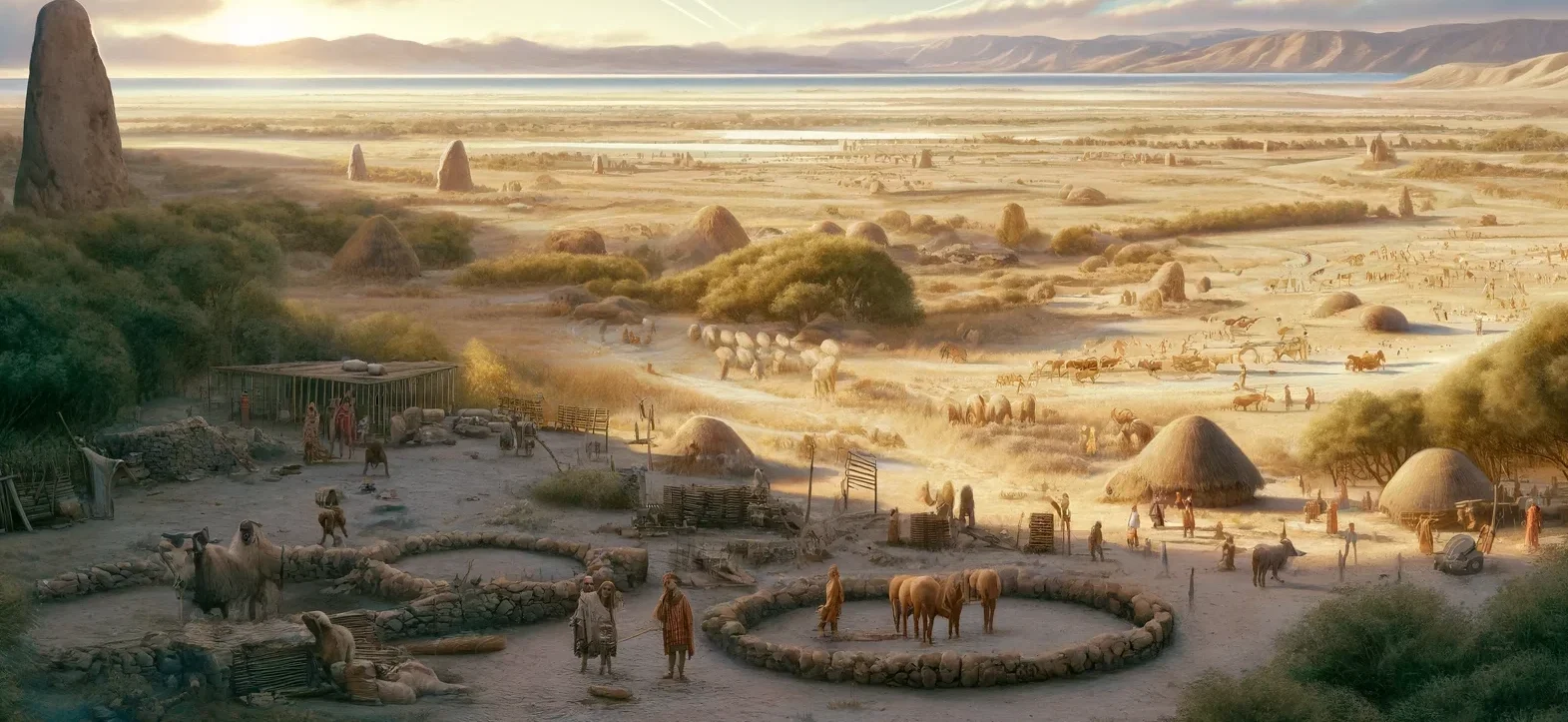
Egypt: Nabta Playa (Agrarian)

Earliest known agrarian society in the Africa/Middle East zone: Located in southern Egypt, Nabta Playa is one of the earliest known agrarian societies in the Sahara. This prehistoric community developed a sophisticated system of cattle herding and possibly small-scale cultivation, alongside seasonal water management strategies, making it a precursor to more complex agricultural societies in the

Egypt: Nabta Playa (Agrarian) Read More »

wall, decay, plaster

Plaster Invented

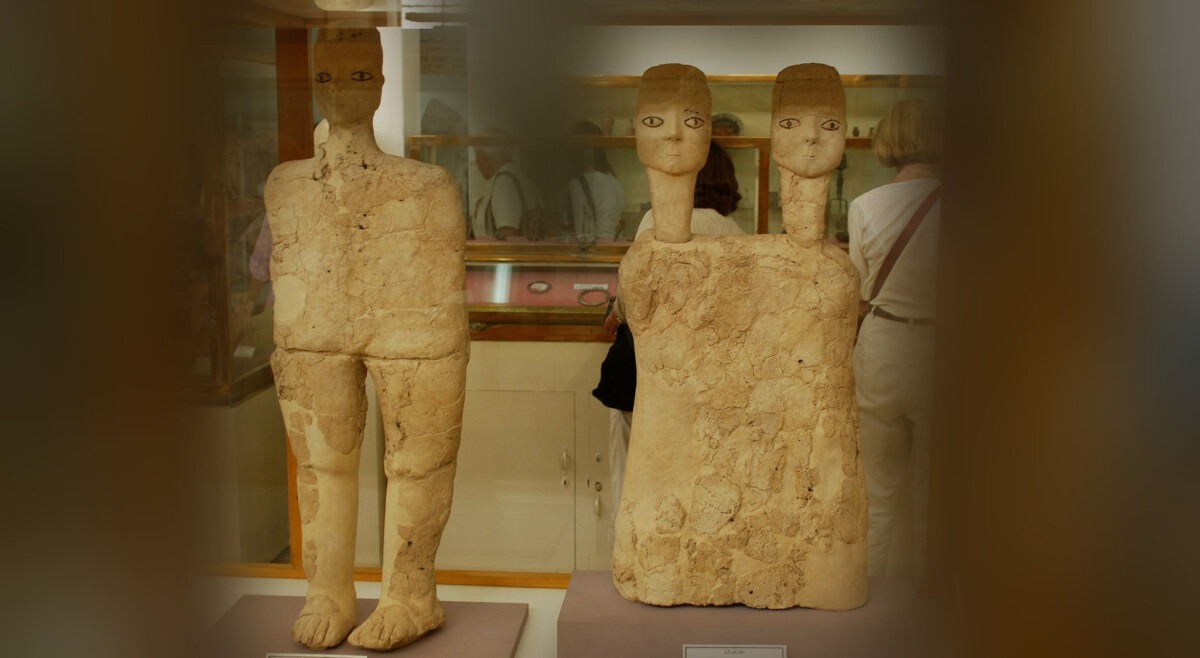
The earliest known use of plaster dates back to around 9000 BCE, with evidence from the ancient site of Çatalhöyük in modern-day Turkey. Here, Neolithic inhabitants utilized plaster made from lime to coat the floors, walls, and even ceilings of their mud-brick houses. This early application of plaster represents a significant technological innovation, indicating a

Plaster Invented Read More »

Tell Abu Hureyra

Located in modern-day Syria, this is an important site because of the evidence demonstrating a likely pattern from hunter-gatherer to farming. It provides evidence of one of the earliest known villages. The leading interpretation is that they were settled in the area and practiced hunting and gathering before about 11,500 BCE. Around 11,500 BCE there

Tell Abu Hureyra Read More »

Scroll to Top