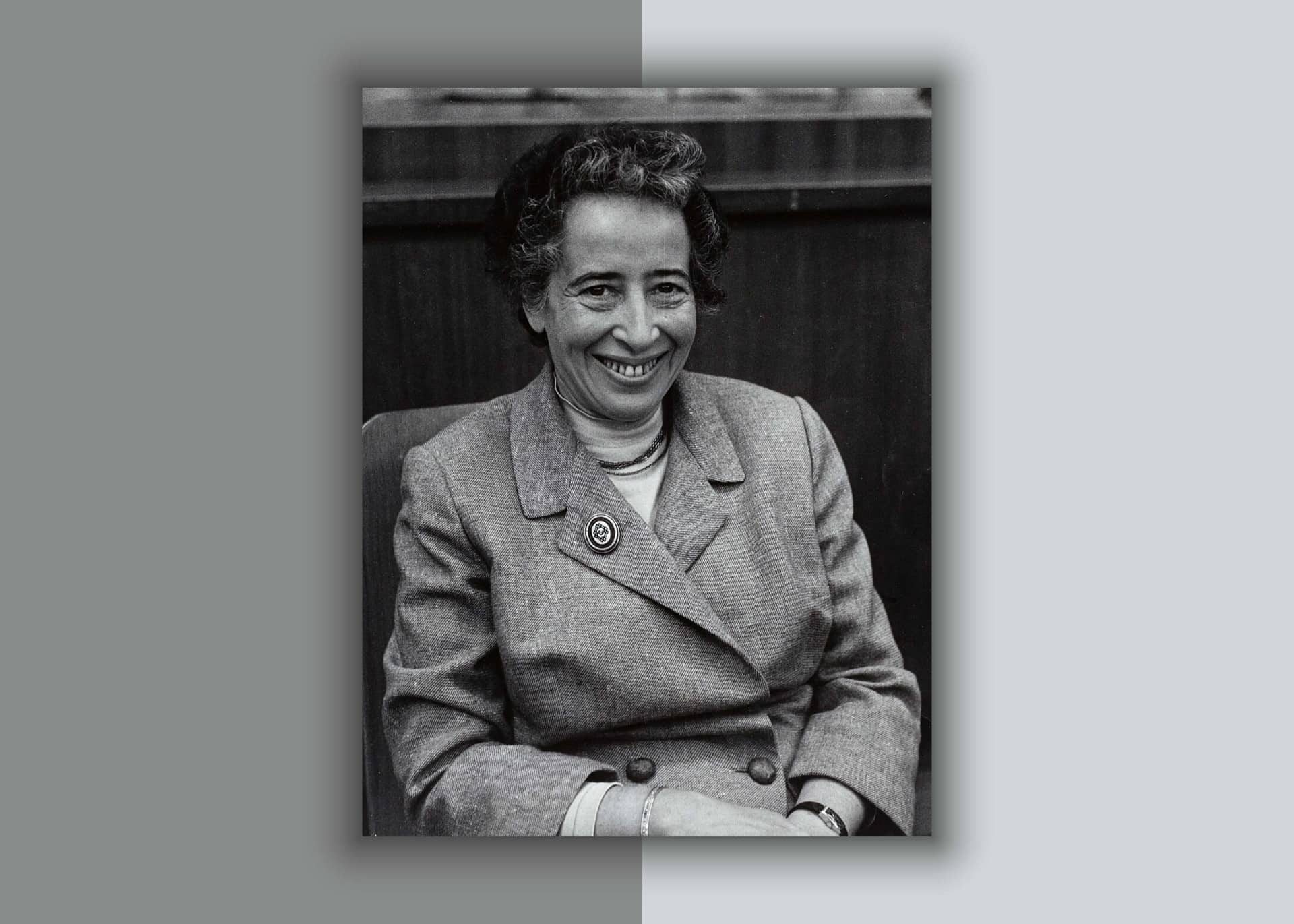
Hannah Arendt didn’t set out to excuse evil. She set out to understand it. While reporting on the trial of Adolf Eichmann, one of the organizers of the Holocaust, she expected to find a monster—someone fueled by hatred or fanaticism. Instead, she found something more unsettling: a bureaucrat who insisted he was simply doing his job.
Eichmann did not see himself as evil. He did not experience his actions as moral choices at all. He followed procedures. He complied with orders. He avoided thinking about consequences. That absence—of reflection, of judgment, of personal responsibility—is what Arendt found most terrifying.
Her insight was not that evil is trivial, but that it can be ordinary. It emerges when people disengage from moral reasoning and outsource responsibility to systems, laws, or authority figures. In those moments, harm no longer requires malice. It only requires participation.
This is why Arendt’s warning still matters. When people say, “I was just following the law,” or “that’s not my responsibility,” they are not defending justice—they are abandoning it. Law and authority do not absolve moral responsibility; they test it.
Arendt reminds us that the most dangerous failures are not always loud or dramatic. They are quiet. Procedural. Routine. And once thinking stops, almost anything can be done in the name of order.