
Explore Science-first Philosophy

STORY

Galileo: Observation Corrects the Map

By Michael Alan Prestwood

Tue 10 Mar 2026
Published 2 months ago.
Updated 2 months ago.
Related Stories
Material-Spiritual Framework
Identity
Unknowable Dao
Doppler Effect for Sound and Light
Essence and Existence
Absolute Truth
Share :
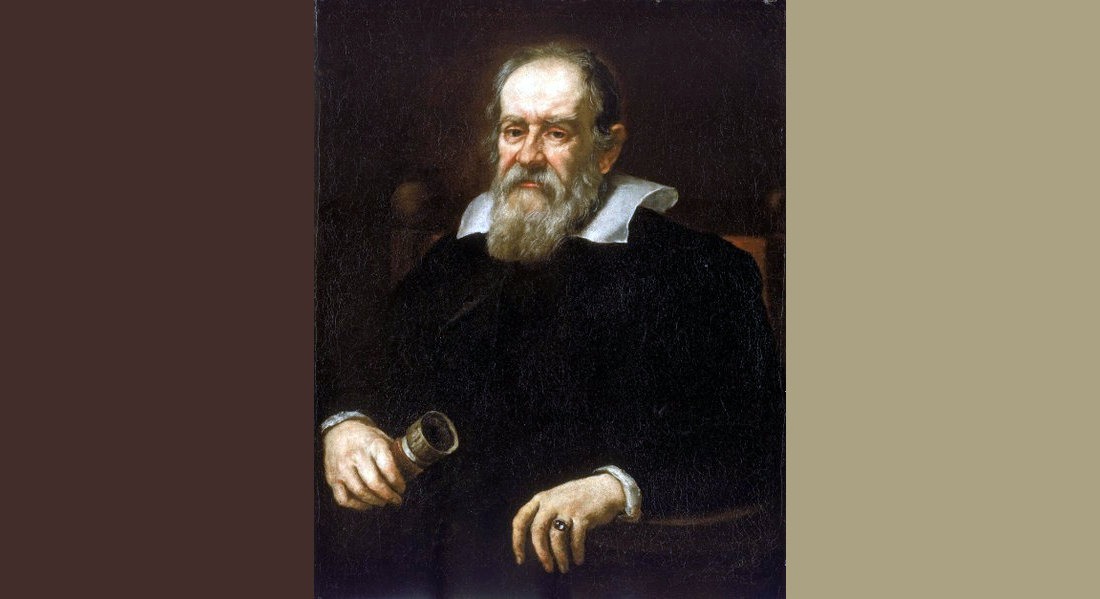
Portrait of Galileo at about 74. He included a copy in his 1638 Two New Sciences book.

Galileo: Observation Corrects the Map

1610

Galileo did not change the heavens. He changed how humans described them. When his telescope revealed a rough Moon and moons orbiting Jupiter, it exposed a gap between inherited ideas and the material world itself. That gap is the split: reality is one thing, our models of it another. Wisdom begins when we remember the difference.

Translated from early Italian, Galileo wrote the following in his Il Saggiatore (The Assayer) in 1623:

“Philosophy is written in that great book which ever lies before our eyes—I mean the universe.”

— map / TST —

Michael Alan Prestwood
Author & Natural Philosopher
Prestwood writes on science-first philosophy, with particular attention to the convergence of disciplines. Drawing on his TST Framework, his work emphasizes rational inquiry grounded in empirical observation while engaging questions at the edges of established knowledge. With TouchstoneTruth positioned as a living touchstone, this work aims to contribute reliable, evolving analysis in an emerging AI era where the credibility of information is increasingly contested.
Email
Print
TST Column
April 22, 2026
Column Research….
1. Timeline Story
Augustine of Hippo
2. Linked Quote
“In order for a war to be just, three things are necessary.”
3. Science FAQ »
Why do we overreact and escalate?
4. Philosophy FAQ »
How does TST Ethics handle the trolley problem?
5. Critical Thinking FAQ »
How do you prevent yourself from overreacting?
6. History FAQ!
What is the history of ethical war?
Bonus Deep-Dive Article
1 Goal: Flourish (TST Ethics)
Scroll to Top