
Phil • Cr. Think • Science • Hist •
TST PRACTICE

The Philosophy Website

FAQ

Is flourishing for all just utilitarianism?

☐ Read
☑ Read
You’ve read this 0 times.
You’ve listened to this 0 times.
Tue 1 Sep 2026
Published 16 minutes ago.
Updated 2 days ago.
Related FAQs
Do my people and culture help or harm my critical thinking?
What is fear-based ethics?
What is the difference between reason and logic?
What is the “Parable of the Ship?”
What is Deception Research?
What is the difference between a heuristic and a cognitive bias?
Share :
Email
Print

Is flourishing for all just utilitarianism?

No. But, “flourishing for all” shares utilitarianism’s concern for real-world consequences and human well-being. However, it rejects one of utilitarianism’s defining moves: combining welfare across people and making the best overall result morally decisive.

In classical utilitarianism, morality looks too much like a balance sheet. The goal is to maximize overall welfare across everyone affected. That sounds fair at first—everyone counts. But John Rawls famously pointed to a serious problem: this approach can fail to respect the “distinctness of persons.” If only the total matters, severe burdens placed on a few can be justified when enough benefits flow to everyone else.

The suffering and benefit belong to each person, and that matters.

TST treats the phrase “for all” differently. First,

for all means no affected person simply disappears from the moral field.

heir agency, interests, dignity, autonomy, and potential for flourishing continue to matter. Second,

for all does not mean adding everyone’s individual “flourishing score” into one maximized number.

That could too easily turn individuals into expendable pieces of a larger calculation. Mill’s own “no harm principle” helps fix this problem. In TST, morality is not reduced to net welfare — principles such as individual rights, fairness, personal autonomy, proportionality, duties, and moral agency retain their own constraining roles within the system. Outcomes matter, but they are not the only thing that matters.

There is a useful critical-thinking lesson here: similarity is not identity. Two ethical frameworks can both care deeply about consequences and universal human well-being while operating very differently. Utilitarianism seeks the best overall welfare outcome. TST keeps every affected person inside the moral picture and asks how we can move toward flourishing for all without simply sacrificing individuals to the total.
— map / TST —

TST Tracker
✓ Reading recorded.

Annotated References:

  • Mill, John Stuart. Utilitarianism. 1861. Chapter II, “What Utilitarianism Is”: defines the Greatest Happiness Principle, holding that actions are right insofar as they promote happiness and wrong insofar as they produce the reverse. Mill’s formulation makes overall happiness the central standard of moral evaluation.
  • Rawls, John. A Theory of Justice. 1971. Sections 5–6: argues that utilitarianism can fail to take seriously the “separateness of persons” by treating gains to some as capable of compensating for serious losses imposed on others within an aggregate social calculation.
  • Prestwood. 30 Philosophers. 2024. Chapter 29, “Mill and Utilitarianism”: presents utilitarianism as consequentialism focused on “good results” and maximizing good collectively, while also exploring the tension between individual harm and general welfare. The chapter provides the historical foundation for TST’s later distinction between caring about consequences and reducing ethics to an aggregate welfare calculation.
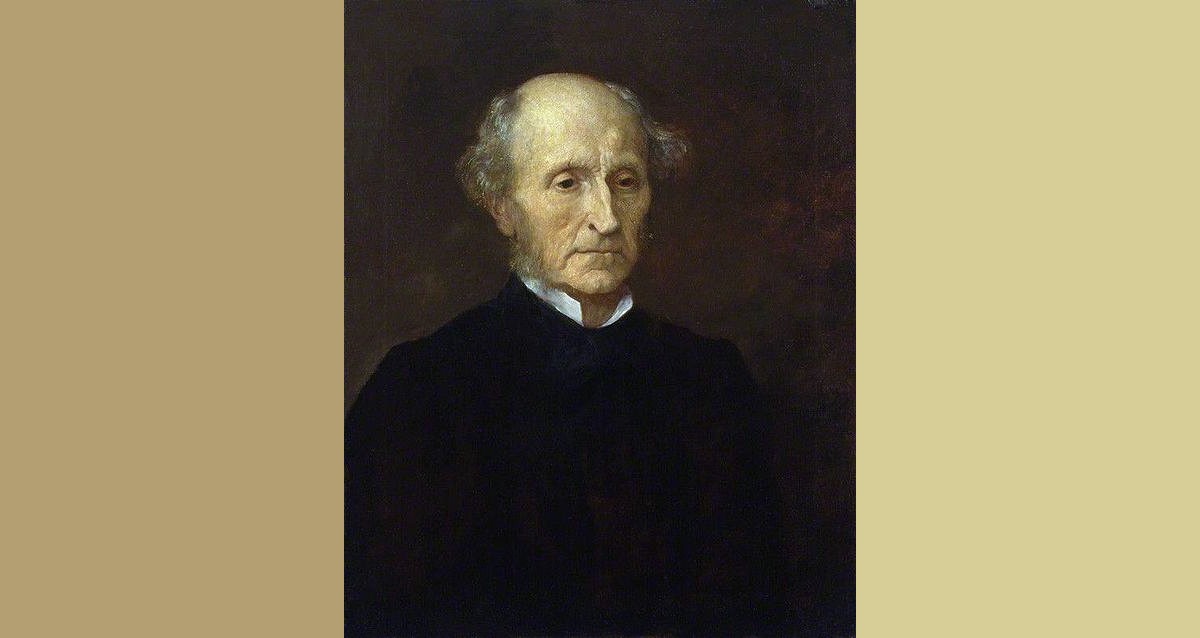
John Stuart Mill. Choose the action that produces the greatest good for the greatest number. Morality should aim at the greatest overall happiness.
Michael Alan Prestwood
Author & Natural Philosopher
Prestwood writes on science-first philosophy, with particular attention to the convergence of disciplines. Drawing on his TST Framework, his work emphasizes rational inquiry grounded in empirical observation while engaging questions at the edges of established knowledge. With TouchstoneTruth positioned as a living touchstone, this work aims to contribute reliable, evolving analysis in an emerging AI era where the credibility of information is increasingly contested.
The Prestwood Column
Menu
September 2026
Column Research….
1. Timeline Story
Hume’s Is–Ought Problem
2. Linked Quote
“I meet with no proposition that is not connected with an ought, or an ought not.”
3. Science FAQ »
Can science prove flourishing should be our goal?
4. Philosophy FAQ »
What is the difference between a normative aim and a normative directive?
5. Critical Thinking FAQ »
Is flourishing for all just utilitarianism?
6. History FAQ!
What is the history of the idea of flourishing in philosophy?
Bonus Deep-Dive Article
Flourishing for All: The Normative Aim of TST Philosophy

Comments

Join the Conversation! Currently logged out.
NEW BOOK! NOW AVAILABLE!!

30 Philosophers: A New Look at Timeless Ideas

by Michael Alan Prestwood
The story of the history of our best ideas!
Scroll to Top