What is the difference between Stalinesque and Orwellian propaganda?
< 1 minute read
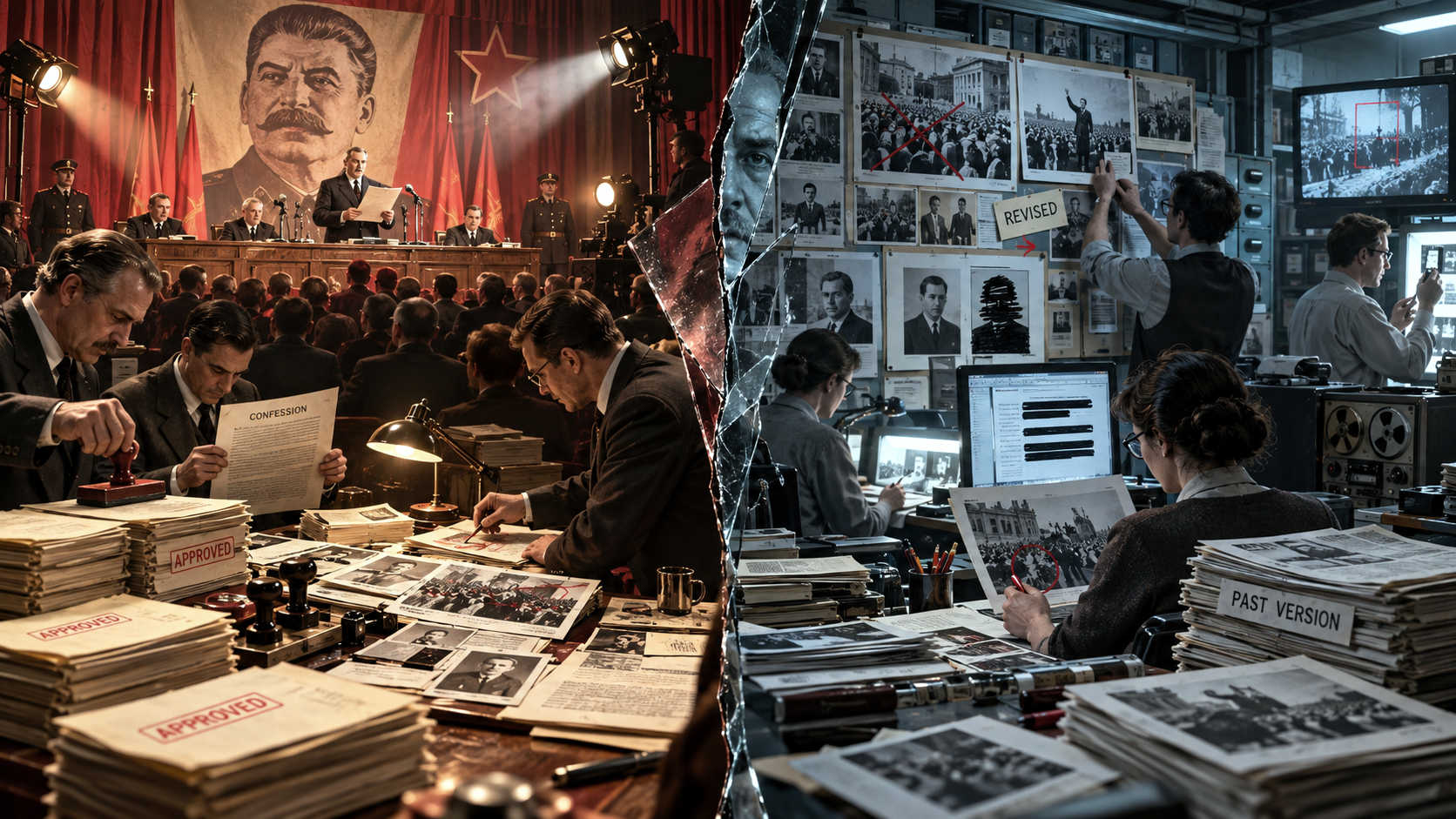
While discussing memory in Daniel Dennett’s book Consciousness Explained, he used two types of propaganda that have stuck with me: Stalinesque and Orwellian. Both stem from the acts of men: Joseph Stalin’s show trials and George Orwell’s writing.
Stalinesque propaganda tries to create your first impression. Orwellian propaganda tries to replace it.
We see both around the world as various groups try to seize or keep power. Too often, they succeed in replacing reality with a false narrative.
Stalinesque propaganda was born out of Stalin’s infamous show trials. They used false testimony and evidence to prove predetermined conclusions. You see it today in American politics. When the Republican Party tried to overturn the 2020 election using alternate electors and certificates, that was Stalinesque. It was a fake show. They submitted their own people and papers. Another example occurred in August 2024 during the Republican impeachment of Joe Biden. Before the election, the FBI informant Alexander Smirnov literally made up evidence. After, he pleaded guilty to fabricating the whole thing.
As Orwell imagined in 1984, Orwellian propaganda rewrites existing history. The events happened, but are rewritten to match a narrative. And the Republican Party also engages in this. They literally rewrite history. January 6 provides a clear Orwellian example. We have videos, court records, and convictions. Yet party leaders continue to describe the convicted and pardoned as patriots and hostages. Another example is when the Trump administration ordered agencies to remove established DEI, climate change, and other information.
When the CDC rewrote their own autism-and-vaccine information, they were questioning long-established conclusions that vaccines do not cause autism. They did this even while another CDC page continued to state that studies show no association. That is about as literal as Orwellian rewriting gets!
Stalin created false stories; Orwell rewrote real ones.
Dennett. Consciousness Explained. Boston: Little, Brown and Company, 1991. Contrasts “Stalinesque” fabrication with “Orwellian” revision while discussing memory and consciousness. This FAQ extends that distinction into propaganda.
Davies, Sarah. “Stalin as Producer: The Moscow Show Trials and the Construction of Mortal Threats.” 2005. Stalin’s show trials used staged testimony, confessions, and predetermined narratives to manufacture political reality.
Orwell, George. Nineteen Eighty-Four. London: Secker & Warburg, 1949. Orwell’s Ministry of Truth rewrites past records so history always matches the Party’s current story.
U.S. House of Representatives. Final Report of the Select Committee. Washington, DC: 2022. Documents the alternate-elector effort and the involvement of Trump allies, the RNC, and state Republican organizations.
National Archives and Records Administration. “2020 Presidential Election Unofficial Certificates Submitted to the Office of the Federal Register.” 2024.
Preserves the unofficial elector certificates submitted from seven states and notes they were not accepted as official state action.
U.S. Department of Justice. “Grand Jury Returns Indictment Charging FBI Confidential Human Source with Felony False Statement and Obstruction Crimes.” February 15, 2024. Details Alexander Smirnov’s fabricated Biden-Burisma bribery allegations, which later became part of the impeachment narrative.
Reuters. “After Taking Office, Trump Pardons 1,500 Jan. 6 Defendants.” January 20, 2025. Covers the mass pardons and the continuing political reframing of the January 6 attack.
Centers for Disease Control and Prevention. “Autism and Vaccines.” 2026; and “Frequently Asked Questions about Autism Spectrum Disorder.” 2026. The two CDC pages present conflicting language about vaccines and autism, illustrating how official information itself can be rewritten.
Prestwood. 30 Philosophers. Develops the Truth Hammers framework—science, law, and journalism—as processes for testing claims against evidence and reality.
Good critical thinking means refusing to let either the first story or the latest story own your mind. Stalinesque propaganda builds a false reality from manufactured evidence; Orwellian propaganda rewrites an existing one. Think well by checking premises, preserving evidence, and letting reality push back against the story.
Michael Alan Prestwood Author & Natural Philosopher
Prestwood writes on science-first philosophy, with particular attention to the convergence of disciplines. Drawing on his TST Framework, his work emphasizes rational inquiry grounded in empirical observation while engaging questions at the edges of established knowledge. With TouchstoneTruth positioned as a living touchstone, this work aims to contribute reliable, evolving analysis in an emerging AI era where the credibility of information is increasingly contested.