
Explore Natural Philosophy

Phil • Cr. Think • Science • Hist •

FAQ

Do my people and culture help or harm my critical thinking?

Wed 8 Apr 2026
Published 3 months ago.
Updated 5 days ago.
Related FAQs
Is there evidence for other dimensions?
Are social constructs invented or discovered?
Did Pythagoras coin the word philosophy?
Is Terrance Howard correct when he says zero does not exist?
Ethics Lesson: Should Trump go to jail for his crimes?
Why can’t we divide by zero?
Share :
Email
Print

Do my people and culture help or harm my critical thinking?

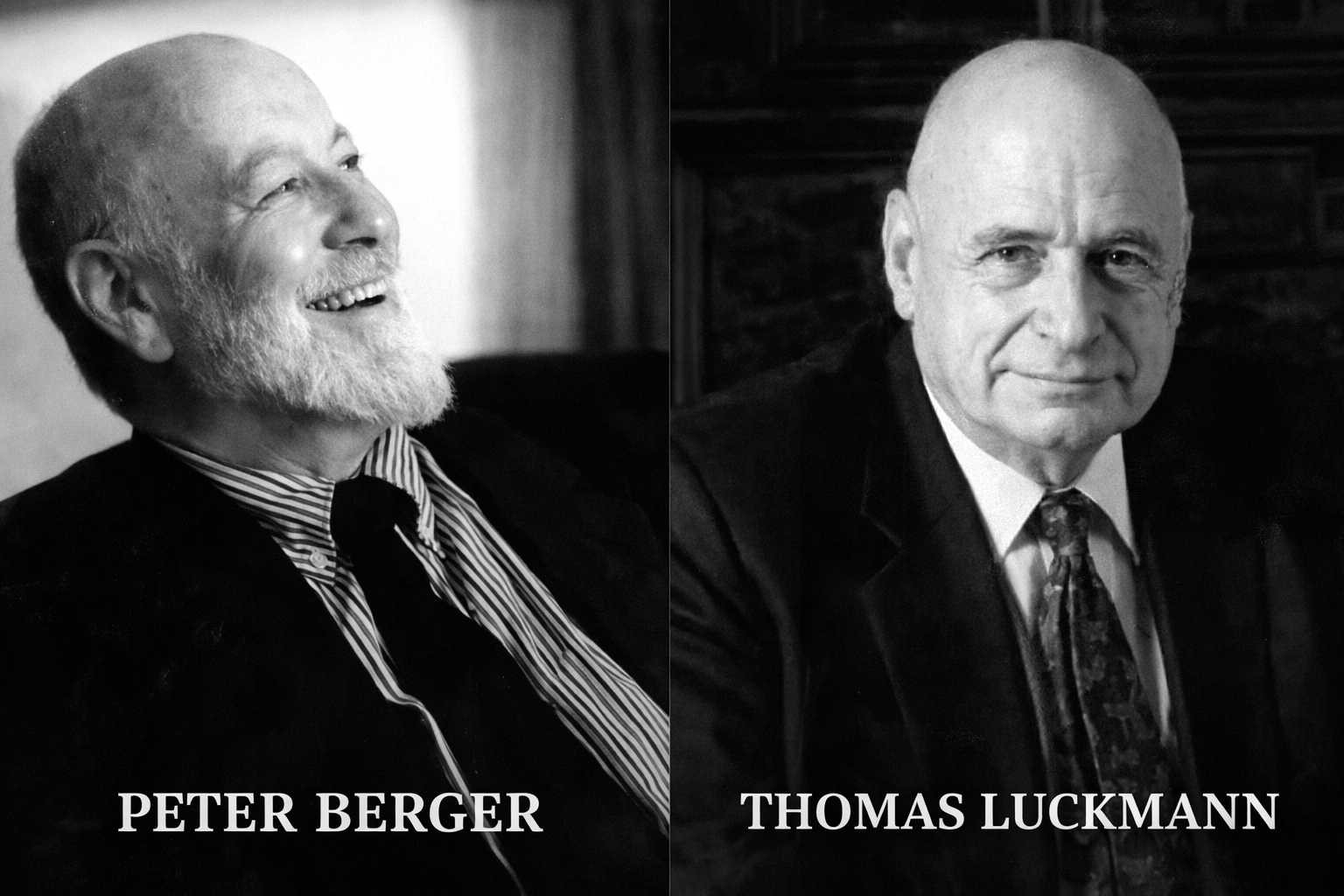
Peter Berger and Thomas Luckmann remind us that we do not begin life as blank thinkers. We inherit a ready-made world of meaning, and critical thinking begins when we start sorting it.

The honest answer is: both. The people around you and the culture you grow up in give you language, categories, values, stories, and habits of thought long before you ever stop to examine them. In that sense, your culture helps you think by giving you a place to start. The common saying that we stand on the shoulders of giants points to the same truth: as society grows more advanced, each newborn inherits more and more. We are all handed a ready-made world of meaning. That is a gift, but it is also a danger.

Back in 1966, Peter Berger and Thomas Luckmann helped put this problem into focus in The Social Construction of Reality. We are not born into a blank world. We are born into a social world already stocked with “what everybody knows.” Some of that common sense is wise and hard-earned. Some of it is mistaken, tribal, fashionable, or flat-out false. That means critical thinking is not just about learning facts. It is also about learning to notice which parts of your social inheritance deserve trust, and which parts need to be challenged.

So yes, your people and culture can sharpen your mind, but they can also quietly train it to stay inside approved boundaries. They can hand you truth, but they can also hand you slogans, blind spots, and emotional loyalties dressed up as reality. Critical thinking begins when you realize that what feels normal is not automatically what is true. From there, the job is not to reject your inheritance, but to examine it carefully and sort it with honesty.

— map / TST —

Michael Alan Prestwood
Author & Natural Philosopher
Prestwood writes on science-first philosophy, with particular attention to the convergence of disciplines. Drawing on his TST Framework, his work emphasizes rational inquiry grounded in empirical observation while engaging questions at the edges of established knowledge. With TouchstoneTruth positioned as a living touchstone, this work aims to contribute reliable, evolving analysis in an emerging AI era where the credibility of information is increasingly contested.
The Prestwood Column
Menu
July 2026
»COLUMN ARCHIVE
--COLUMN--
Column Research….
1. Timeline Story
The famous Lewis “Truth in Fiction” Paper
2. Linked Quote
“Truth is stranger than fiction…[which] is obliged to stick to possibilities;”
3. Science FAQ »
Why does fiction feel real?
4. Philosophy FAQ »
Can authors create fiction beyond our universe?
5. Critical Thinking FAQ »
How do we know what is true in a fictional world?
6. History FAQ!
What is the history of philosophy of fiction?
Bonus Deep-Dive Article
TST Philosophy of Fiction: Imaginative Realism

Comments

Join the Conversation! Currently logged out.
NEW BOOK! NOW AVAILABLE!!

30 Philosophers: A New Look at Timeless Ideas

by Michael Alan Prestwood
The story of the history of our best ideas!
Scroll to Top