
Phil • Cr. Think • Science • Hist •
TST PRACTICE

The Philosophy Website

STORY

Hume’s Is–Ought Problem

☐ Read
☑ Read
You’ve read this 0 times.
You’ve listened to this 0 times.

By Michael Alan Prestwood

Tue 1 Sep 2026
Published 12 minutes ago.
Updated 2 days ago.
Related Stories
Allegorical Interpretation
David Hume
Secular Spirituality Settles
Truth Hammers
Fourth Estate
Laozi
Share :
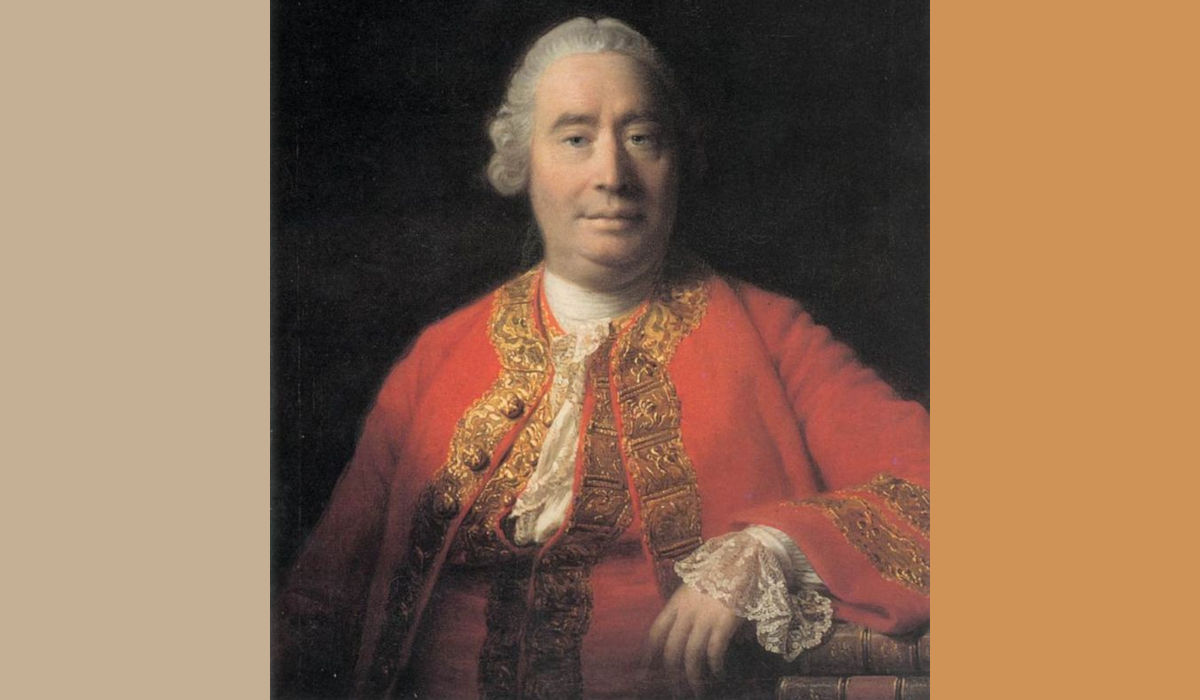
https://en.wikipedia.org/wiki/File:David_Hume.jpg
The Scottish Enlightenment philosopher and historian Hume was a leading exponent of empiricism. The belief that all human knowledge derives solely from experience.

Hume’s Is–Ought Problem

1741
David Hume

In 1740, David Hume published Book III, Of Morals, of his A Treatise of Human Nature. Buried inside was an observation that became one of philosophy’s most important warnings about moral reasoning. Thinkers frequently move from statements about what is true to conclusions about what we ought to do without explaining the value hidden between them. Today we call this the is–ought problem.

TST does not try to prove Hume wrong. It simply refuses to hide that missing step. The normative aim is flourishing, and the directive is explicit: act toward flourishing for all. Once that value is stated openly, empirical facts can enter the reasoning. If an action demonstrably causes unnecessary harm, destroys trust, weakens health, or undermines agency, those facts matter because we have already said what we value. The structure becomes clearer:

normative premise  to empirical premise to practical conclusion.

This also introduces some useful vocabulary.

  • Teleological reasoning asks whether actions actually move us toward an identified end.
  • Evaluative concepts such as harm, fairness, health, and flourishing already include judgments about better and worse conditions.
  • Epistemic norms guide good thinking: follow evidence, reason carefully, and update when reality proves you wrong.

None of these magically creates the original moral “ought.” They help us reason once the value is openly on the table.

That is where the TST Ethical Roadmap fits. It treats ethics as a process model: guidance, choice, intent, result, adjustment. Hume’s warning remains intact. We do not jump directly from nature to morality. We state the moral direction, act, see what happens in reality, and adjust. TST does not erase Hume’s gap. It builds an ethical process that remembers it.

— map / TST —

TST Tracker
✓ Reading recorded.
Michael Alan Prestwood
Author & Natural Philosopher
Prestwood writes on science-first philosophy, with particular attention to the convergence of disciplines. Drawing on his TST Framework, his work emphasizes rational inquiry grounded in empirical observation while engaging questions at the edges of established knowledge. With TouchstoneTruth positioned as a living touchstone, this work aims to contribute reliable, evolving analysis in an emerging AI era where the credibility of information is increasingly contested.
Email
Print
The Prestwood Column
Menu
September 2026
Column Research….
1. Timeline Story
Hume’s Is–Ought Problem
2. Linked Quote
“I meet with no proposition that is not connected with an ought, or an ought not.”
3. Science FAQ »
Can science prove flourishing should be our goal?
4. Philosophy FAQ »
What is the difference between a normative aim and a normative directive?
5. Critical Thinking FAQ »
Is flourishing for all just utilitarianism?
6. History FAQ!
What is the history of the idea of flourishing in philosophy?
Bonus Deep-Dive Article
Flourishing for All: The Normative Aim of TST Philosophy

Comments

Join the Conversation! Currently logged out.

Leave a Reply

NEW BOOK! NOW AVAILABLE!!

30 Philosophers: A New Look at Timeless Ideas

by Michael Alan Prestwood
The story of the history of our best ideas!
Scroll to Top