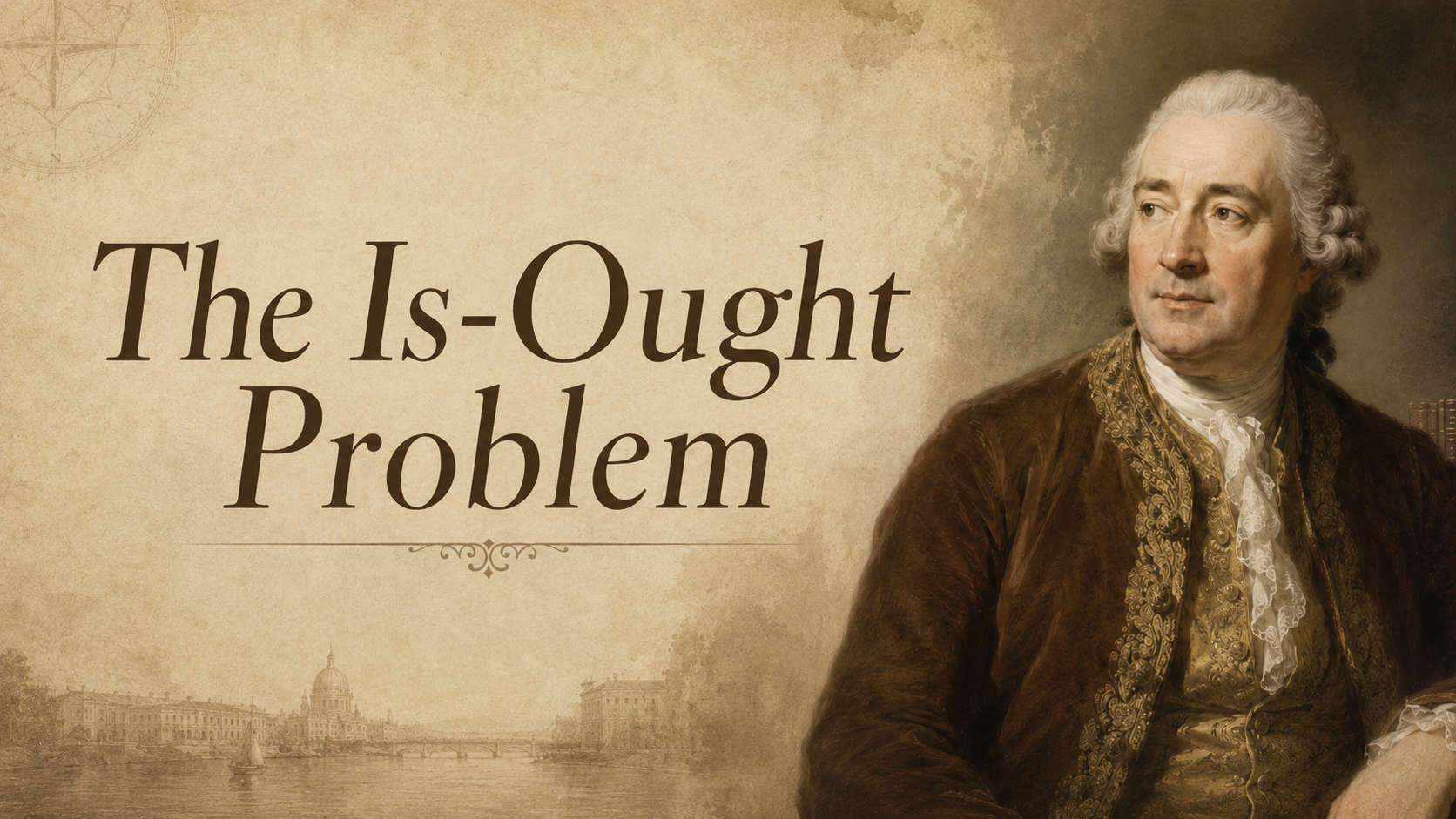
Hume and the is–ought problem is part of the history of critical thinking and philosophy. He observed that thinkers silently jump from factual statements to moral rules. From “is” to “ought”. For example, take the statement:
“AI is automating our jobs; therefore, governments ought to regulate it.”
Hume objects to the “is-ought” relationship there. He’s really just saying you skipped a step, and if you can’t provide it, it’s invalid. Instead of is-ought, you need more, perhaps is-value-ought. In this case, the value of human jobs over AI jobs. So, the statement might become:
“AI is automating our jobs; let’s value human jobs over corporate progress, therefore, governments ought to regulate it.”
Hume is simply demanding that we explain the leap. He wants an explanation for how descriptive facts can logically justify moral imperatives.
Here is another passage from Hume’s 1739, A Treatise of Human Nature:
“For as this ought, or ought not, expresses some new relation or affirmation… [a reason must be given for] how this new relation can be a deduction from others, which are entirely different from it.”
That is Hume’s useful lesson for daily thinking. Whenever a statement suddenly moves from what is to what we ought to do, look for the value hiding between them. Facts can inform moral decisions, but they do not carry the moral command alone. Make the value explicit, then decide whether it deserves your agreement. Hume’s guillotine does not stop moral reasoning; it reminds us to show our work.