
Phil • Cr. Think • Science • Hist •

Explore Natural Philosophy

Related Quotes
“The historian without his facts is rootless…the facts without their historian are…meaningless.”
“Truth is stranger than fiction…[which] is obliged to stick to possibilities;”
“Where ignorance is bliss, ’tis folly to be wise.”
“A wise man proportions his belief to the evidence.”
“Reality is self-creating by definition… our impressions of it are what we use to build knowledge.”
“In order for a war to be just, three things are necessary.”
Share :
Email
Print

Mike's Takeaway:

Hannah Arendt didn’t set out to excuse evil. She set out to understand it. While reporting on the trial of Adolf Eichmann, one of the organizers of the Holocaust, she expected to find a monster—someone fueled by hatred or fanaticism. Instead, she found something more unsettling: a bureaucrat who insisted he was simply doing his job.

Eichmann did not see himself as evil. He did not experience his actions as moral choices at all. He followed procedures. He complied with orders. He avoided thinking about consequences. That absence—of reflection, of judgment, of personal responsibility—is what Arendt found most terrifying.

Her insight was not that evil is trivial, but that it can be ordinary. It emerges when people disengage from moral reasoning and outsource responsibility to systems, laws, or authority figures. In those moments, harm no longer requires malice. It only requires participation.

This is why Arendt’s warning still matters. When people say, “I was just following the law,” or “that’s not my responsibility,” they are not defending justice—they are abandoning it. Law and authority do not absolve moral responsibility; they test it.

Arendt reminds us that the most dangerous failures are not always loud or dramatic. They are quiet. Procedural. Routine. And once thinking stops, almost anything can be done in the name of order.
Analysis By Michael Alan Prestwood
07 Jul 2026
Published 6 months ago.
Updated 1 month ago.
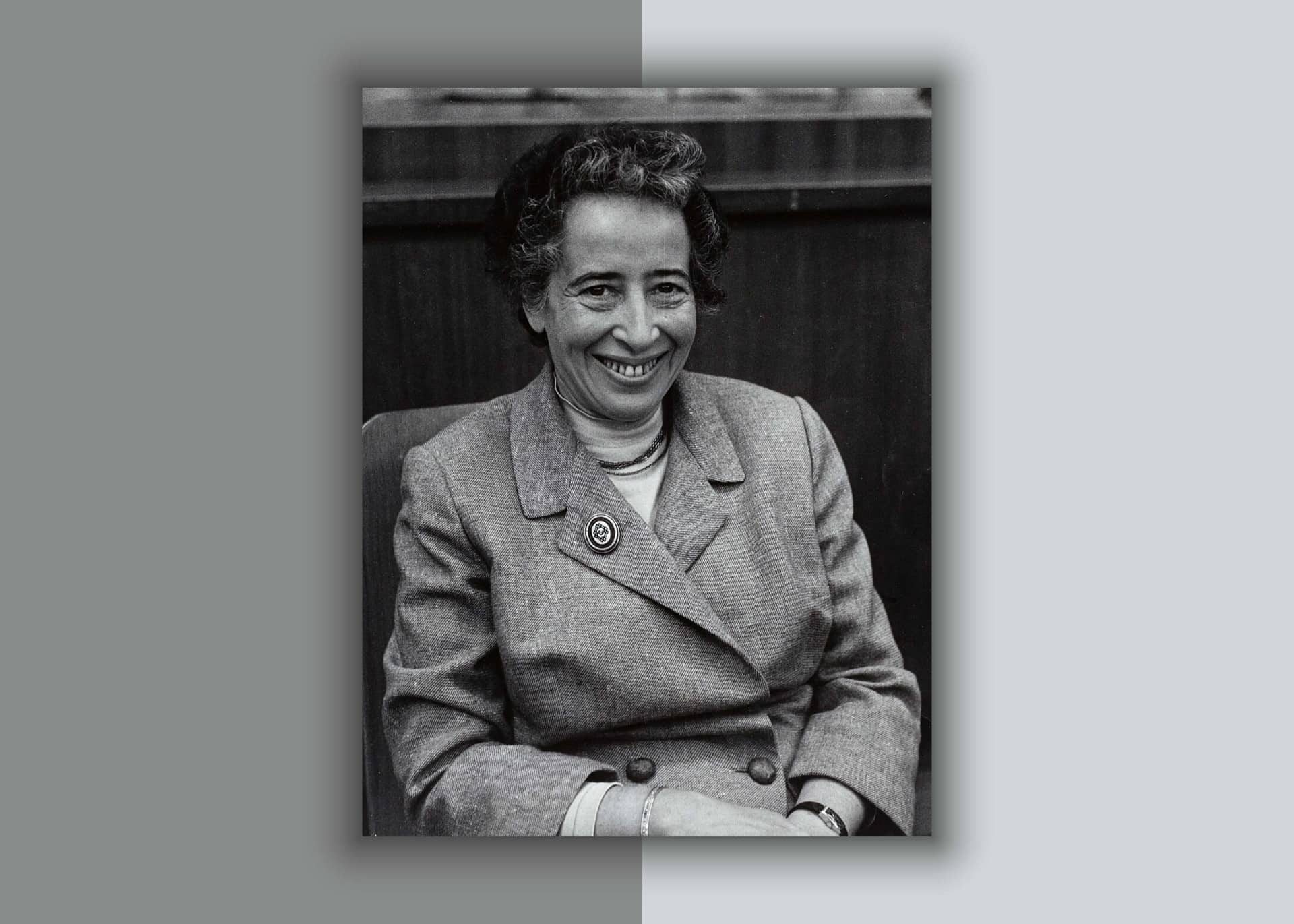
Hannah Arendt (1906-1975) Political philosopher who warned that great harm often comes from ordinary people who stop thinking and simply obey.
Michael Alan Prestwood
Author & Natural Philosopher
Prestwood writes on science-first philosophy, with particular attention to the convergence of disciplines. Drawing on his TST Framework, his work emphasizes rational inquiry grounded in empirical observation while engaging questions at the edges of established knowledge. With TouchstoneTruth positioned as a living touchstone, this work aims to contribute reliable, evolving analysis in an emerging AI era where the credibility of information is increasingly contested.
The Prestwood Column
Menu
August 2026
»COLUMN ARCHIVE
--COLUMN--
Column Research….
1. Timeline Story
Ethical Roadmap
2. Linked Quote
“The greatest weapon against stress is our ability to choose one thought over another.”
3. Science FAQ »
Did morality evolve?
4. Philosophy FAQ »
Is the Me Too movement consistent with TST Ethics?
5. Critical Thinking FAQ »
When should you stop following the crowd?
6. History FAQ!
What did the Nuremberg Trials clarify about moral agents?
Bonus Deep-Dive Article
TST Ethical Roadmap: A Process Model for Ethical Guidance and Moral Choice

Comments

Join the Conversation! Currently logged out.

Leave a Reply

NEW BOOK! NOW AVAILABLE!!

30 Philosophers: A New Look at Timeless Ideas

by Michael Alan Prestwood
The story of the history of our best ideas!
Scroll to Top