
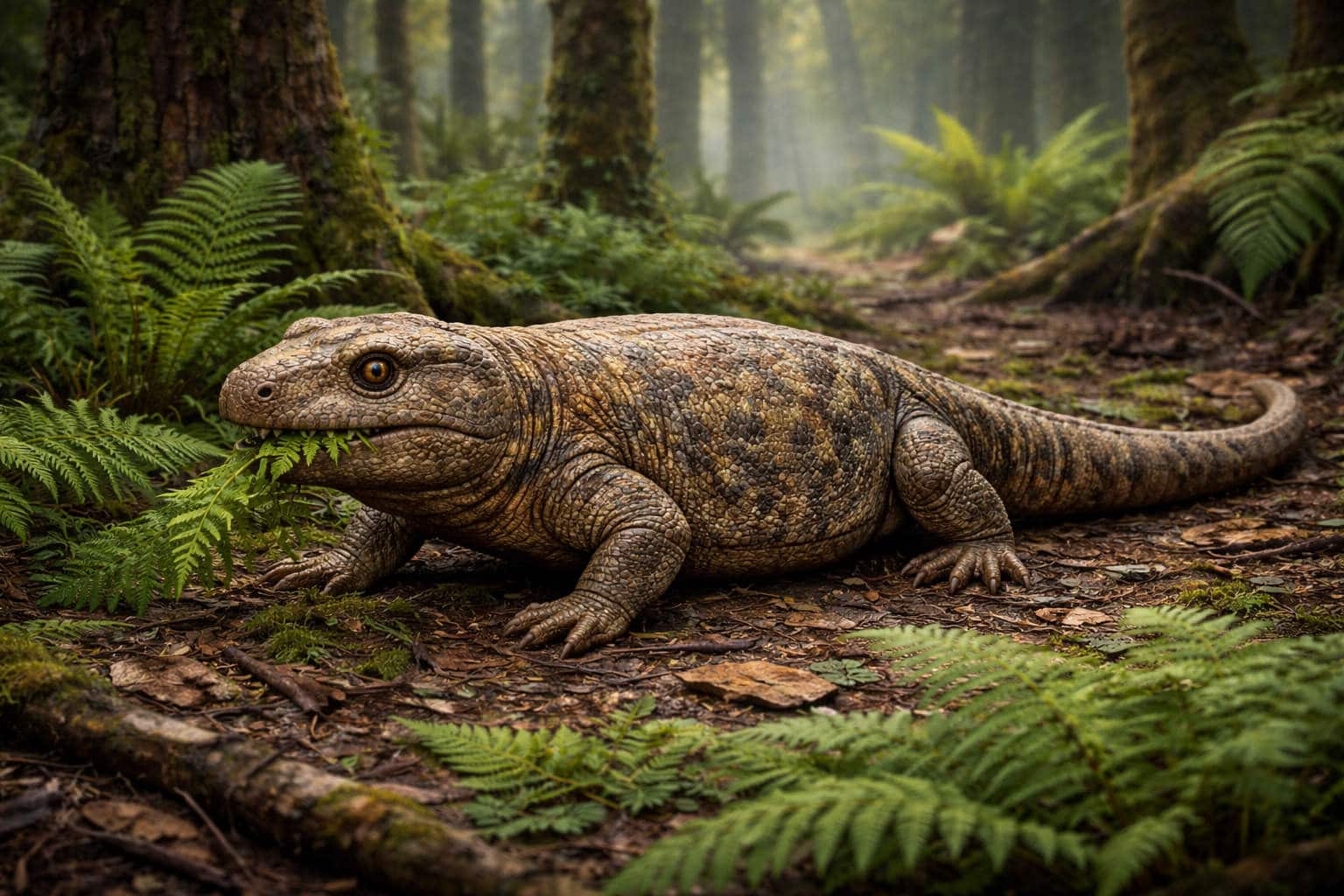
An early reptile known as a microsaur, an amniote relative. A small, stocky stem-amniote tetrapod discovered in Nova Scotia, Canada. Its skull shows dental adaptations for processing tough plant material — large cheek musculature, grinding teeth, and a downturned snout suited for cropping low vegetation. While it probably also consumed insects and small prey, the dental morphology suggests this species was among the earliest vertebrates experimenting with significant plant consumption. This pushes the onset of terrestrial herbivory deeper into the Late Carboniferous than previously assumed and highlights that plant-eating was already part of some tetrapod diets before classic large herbivores like Diadectes and synapsids diversified.
STORY
First Land Herbivore: Tyrannoroter heberti
By Michael Alan Prestwood
Fri 13 Feb 2026
Published 23 hours ago.
Updated 22 hours ago.
Herbivores
Share :
First Land Herbivore: Tyrannoroter heberti
307 million years ago
2026 Discovery Pushing Back Herbivores
— map / TST —
Prestwood writes on science-first philosophy, with particular attention to the convergence of disciplines. Drawing on his TST Framework, his work emphasizes rational inquiry grounded in empirical observation while engaging questions at the edges of established knowledge. With TouchstoneTruth positioned as a living touchstone, this work aims to contribute reliable, evolving analysis in an emerging AI era where the credibility of information is increasingly contested.
Email
Print
This Week @ TST
February 11, 2026
»Edition Archive
WWB Research….