

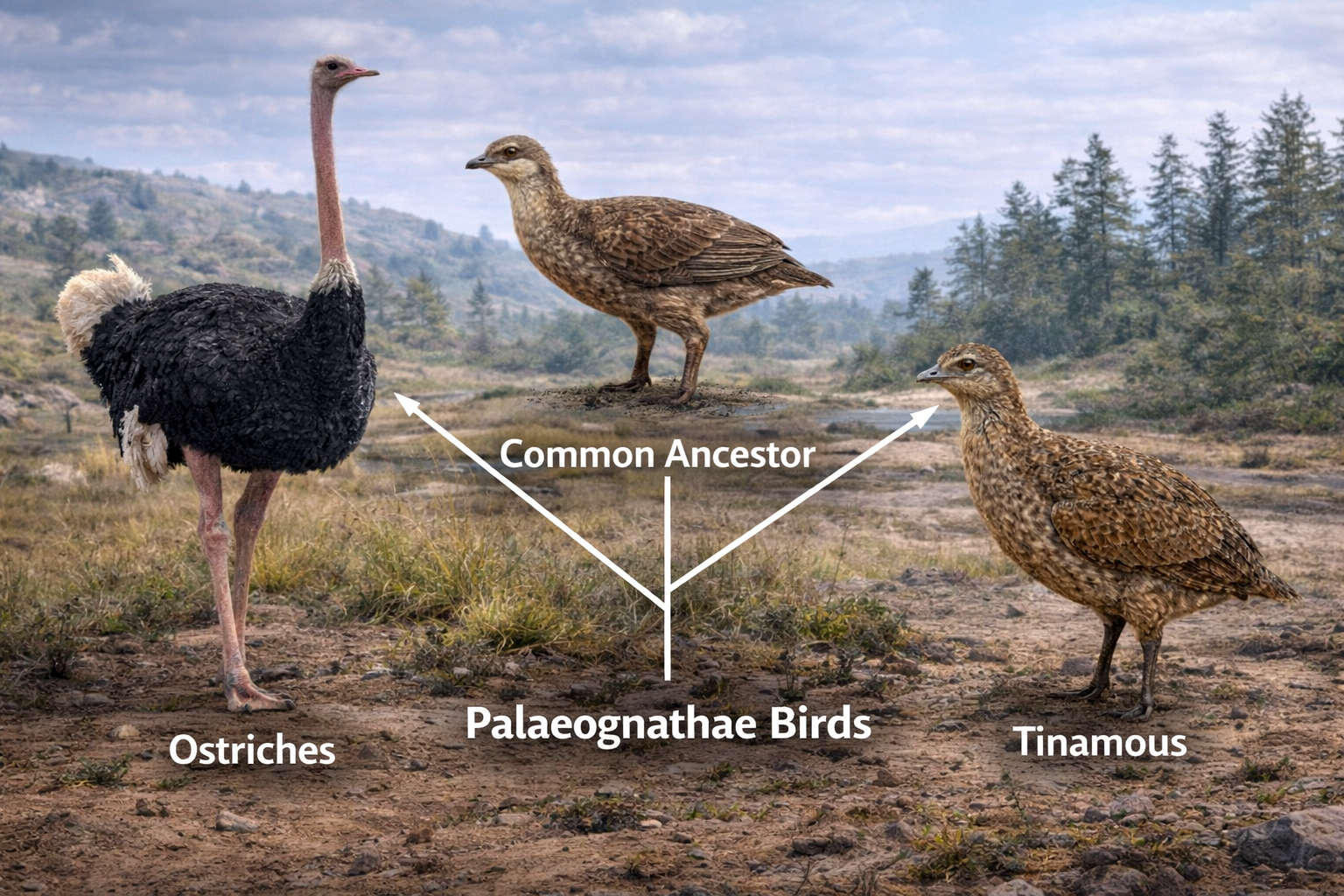
Palaeognathae is the living bird branch that includes ostriches, emus, cassowaries, rheas, kiwis, and tinamous. Most of its best-known members today are large ground birds, and several are flightless, but tinamous remind us that this branch was not simply “the flightless bird line.” In fact, modern genetic work has helped show that the palaeognath story is more complicated than older textbook pictures suggested, with living ratites and tinamous all belonging to the same deeper branch of crown birds.
The genetic clock has often hinted that this branch is older than its earliest clear fossils suggest. That is why an estimate like ~85 million years ago, plus or minus 10 million years works as a reasonable DNA-leaning timeline choice. Older molecular studies often placed palaeognath divergences deep in the Late Cretaceous, and even newer analyses still tend to put the origin of crown Palaeognathae near the end of the Cretaceous rather than much later. In that sense, your date is not claiming certainty so much as representing the “clocks” side of the rocks-vs.-clocks debate.
The fossil record is what keeps the issue open. The K–Pg extinction event occurred about 66 million years ago, and the earliest clear fossil palaeognaths are generally Paleocene or younger, with flying lithornithids often serving as the first strong fossil reference points after the extinction. That means the fossil evidence does not yet cleanly prove that crown palaeognaths were already diversified long before the boundary, even though DNA-based studies often suggest they were. So the debate continues: the clocks tend to push the branch back toward the Late Cretaceous, while the rocks still show the clearest palaeognath record mostly after the extinction.
