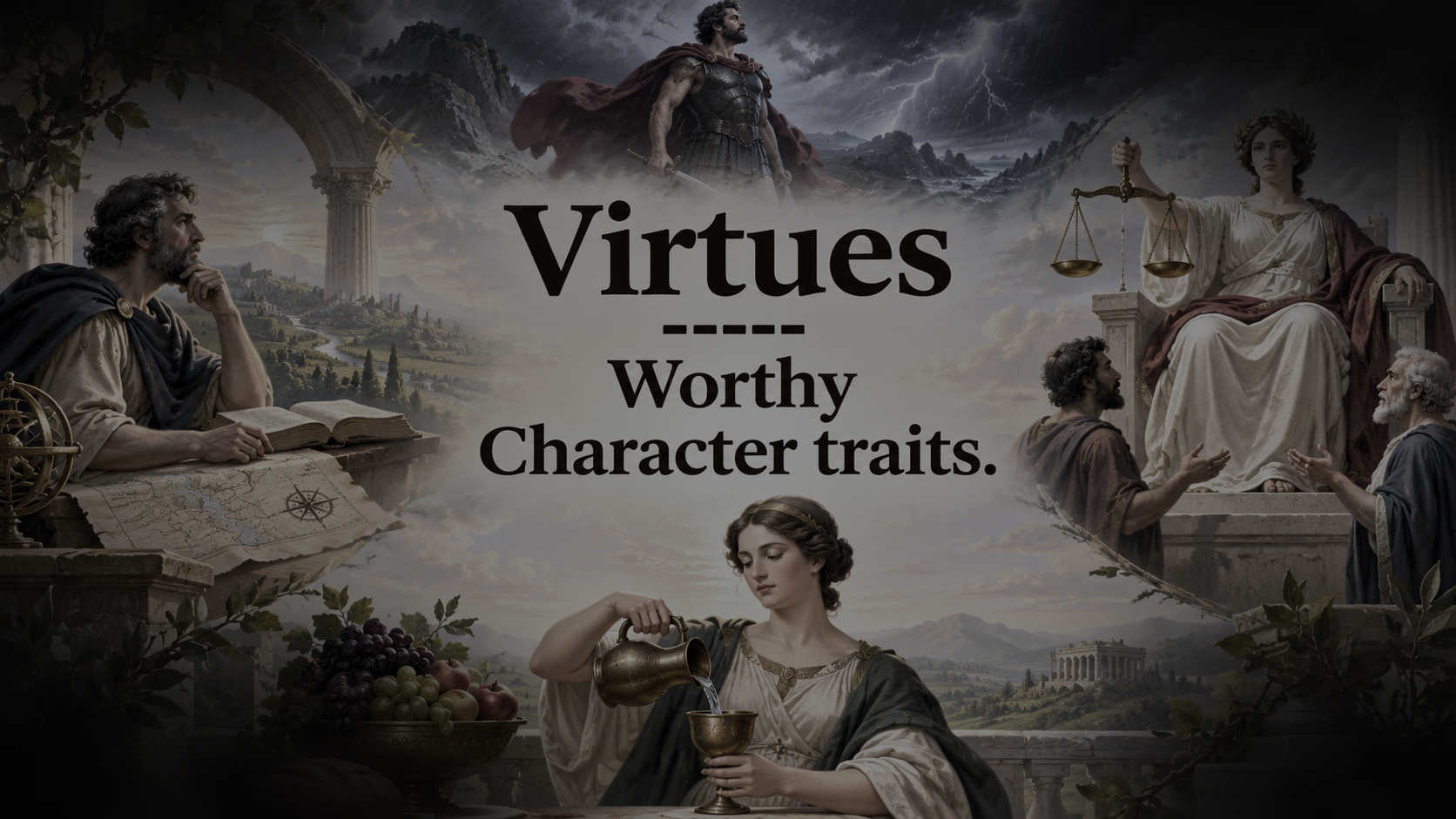
A virtue is a character trait a mind regards as good and worth cultivating. Virtues are properties a mind considers worthy of embracing, such as honesty, courage, wisdom, and compassion. They shape how a mind thinks, judges, and acts. They can also involve overcoming or restraining undesirable tendencies, such as cruelty, arrogance, or recklessness.
Virtues are used throughout TST in their traditional sense. Within the TST Idea Axiom Framework, the virtue role has a particular use. An idea axiom lens uses four roles to explore a core idea: value, virtue, principle, and action. The virtue role identifies a character trait worth cultivating in relation to that core idea. For example, the core idea of truth can be expressed through the virtue of truthfulness, fairness through fair-mindedness, and authenticity through being authentic. Each connects a core idea to a trait we might cultivate in ourselves.
And virtue expressions can be any virtue worth exploring. For example, when exploring authenticity, we might consider being authentic, self-honesty, or integrity. Each emphasizes focusing the authenticity lens differently. We can also explore virtues associated with ideas that aren’t themselves character traits. The value of understanding impermanence might encourage exploring the virtue of adaptability, while overcoming illusion might encourage intellectual humility. These virtues aren’t the same as the core ideas, but they help the mind see it through a particularly configured lens.
Each virtue expression allows you to configure an idea axiom lens to examine different aspects of a core idea. Change the virtue expression, and you change what you explore. That can change what you value, the principles you follow, and the actions you take. The core idea stays the same, but your understanding deepens and widens.