

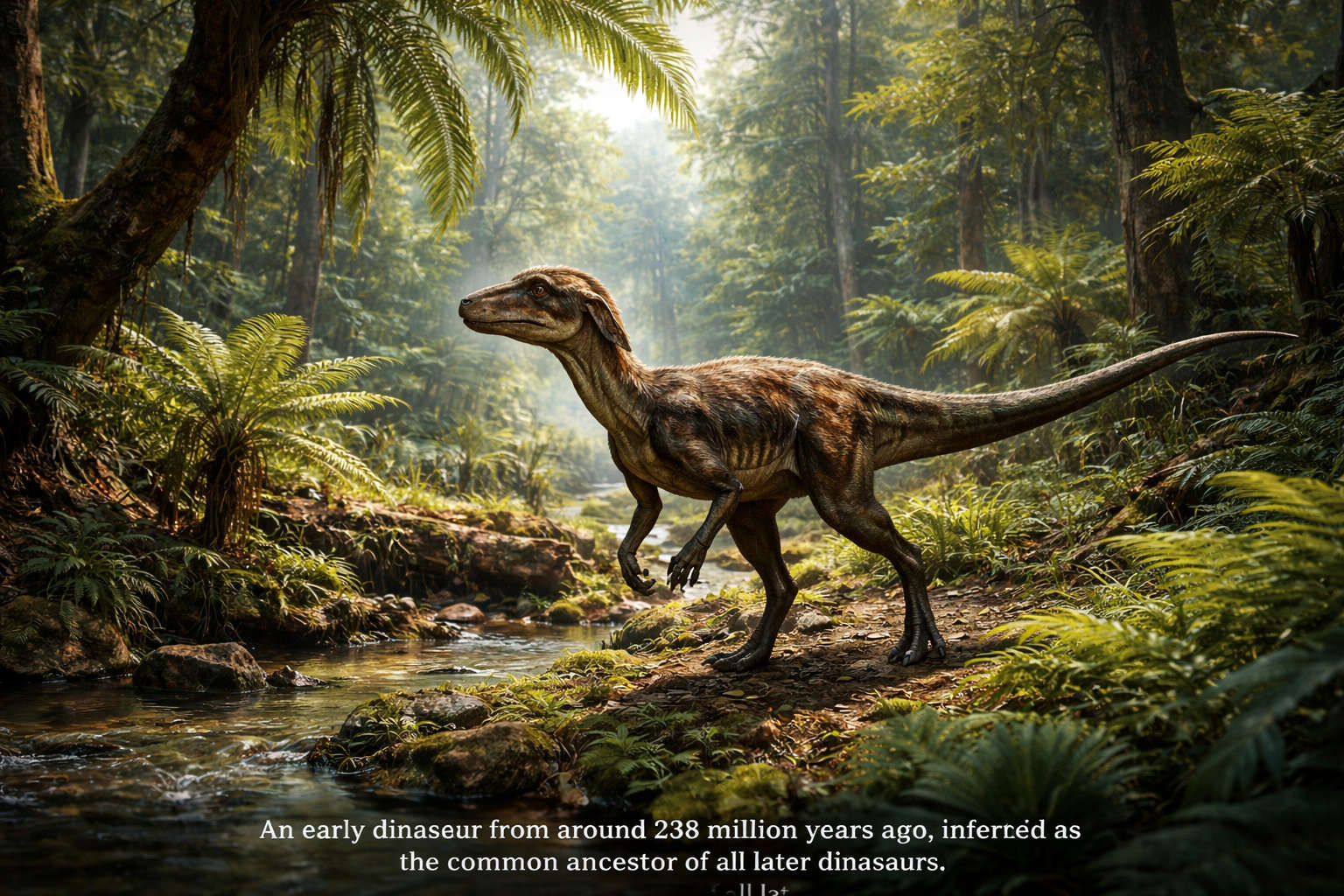
Dinosauria emerges around 238 million years ago, about 15 million years after the P–T extinction event. One of the classic body traits associated with true dinosaurs is the perforated acetabulum, the fully open hip socket that helped support a more upright, efficient stance. It is not the only defining trait of Dinosauria, but it is one of the best-known shared markers of the group. This includes later four-legged dinosaurs too, especially the sauropod line, which became secondarily quadrupedal while retaining the upright limb posture that set dinosaurs apart.
Before this point, the story belongs to the broader bird-line archosaurs rather than to true dinosaurs themselves. Earlier dinosauromorphs such as Asilisaurus lived before definitive dinosaurs and help show the gradual buildup of dinosaur traits. And beside that line, within the broader archosaur world, the pterosaurs had already split off earlier within Ornithodira, which means they were close relatives of dinosaurs but not dinosaurs themselves.
From Dinosauria, the two great classic branches emerge: Saurischia and Ornithischia. From Saurischia come the theropods and sauropodomorphs—the line of predators that eventually includes birds, and the line that leads to the giant long-necked dinosaurs. From Ornithischia come the later plated, armored, horned, and duck-billed plant-eaters, including stegosaurs, ankylosaurs, ceratopsians, and hadrosaurs.

