
Weekly Insights for Thinkers

STORY

Magna Carta

By PrestwoodIT

Tue 3 Sep 2019
Published 6 years ago.
Updated 2 years ago.
Share :

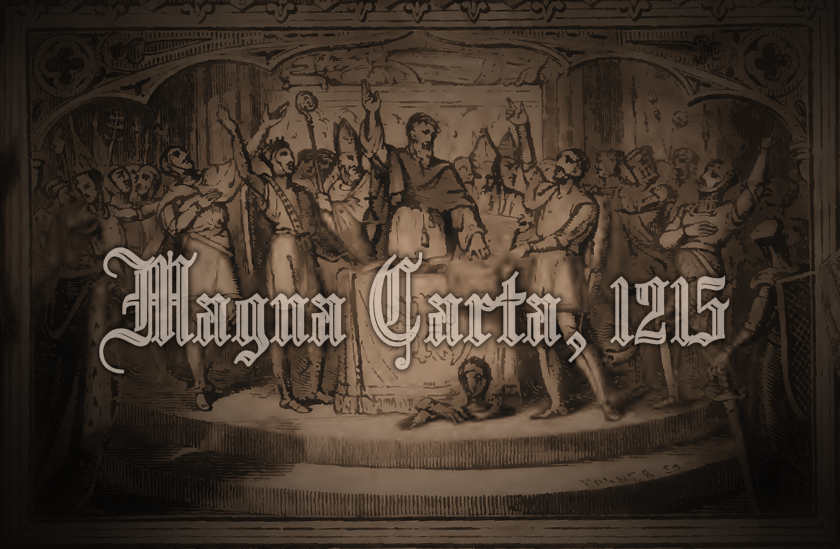
Magna Carta

1215
The Magna Carta in 1215 established the following principles:
  • everyone is subject to the law, even the King,
  • individuals have rights,
  • everyone has the right to justice,
  • and everyone has the right to a fair trial.
The Magna Carta recognized individual responsibility in all, including the King, and it established that the law “should” be applied to everyone equally. Although King John got the pope to void the Magna Carta only 10 weeks after signing it, it was reissued several times over the next century and became a seminal legal document when Sir Edward Coke used it extensively in the 17th century. (Sir Edward Coke was a mentor to Roger Williams.)

— map / TST —

Michael Alan Prestwood
Author & Natural Philosopher
Prestwood writes on science-first philosophy, with particular attention to the convergence of disciplines. Drawing on his TST Framework, his work emphasizes rational inquiry grounded in empirical observation while engaging questions at the edges of established knowledge. With TouchstoneTruth positioned as a living touchstone, this work aims to contribute reliable, evolving analysis in an emerging AI era where the credibility of information is increasingly contested.
This Week @ TST
February 25, 2026
»Edition Archive
WWB Research….
1. Story of the Week
Alfred Korzybski
2. Quote of the Week
Live legal, moral, and fair.
3. Science FAQ »
What does neuroscience say about “identity?”
4. Philosophy FAQ »
Why do people confuse explanations with reality?
5. Critical Thinking FAQ »
What is worldview humility?
6. History FAQ!
What does history teach us about authoritarian rule?
Bonus Deep-Dive Article
Mindscape Framework
Scroll to Top