
Phil • Cr. Think • Science • Hist •
TST PRACTICE

The Philosophy Website

FAQ

How is TST Theory of Truth different than verisimilitude?

☐ Read
☑ Read
You’ve read this 0 times.
You’ve listened to this 0 times.
Sat 12 Sep 2026
Published 36 minutes ago.
Updated 5 seconds ago.
Related FAQs
What does neuroscience say about “identity?”
What are the six realms of karma?
How does the Idea of Ideas handle counterfactuals?
How does TST handle language and definitions?
Is Richard Dawkins right that religious belief is harmful?
Do the empirical and rational categories apply to vocabulary words?
Share :
Email
Print

How is TST Theory of Truth different than verisimilitude?

Verisimilitude, or truthlikeness, is the idea that one description of reality can be closer to the truth than another. Think about models in science, where older models are often not simply discarded as false. Instead, a newer model is just better. It may explain more, predict more accurately, and correct errors in the older one. In that sense, one model can be more truthlike than another.

Truth is alignment with reality. It begins with correspondence to the material world. An idea is true within its scope when it aligns with the reality it describes and does not conflict with it. At the same time, complex representations can vary in accuracy, completeness, precision, and scope. One model can represent reality better than another; Neither model is reality itself.

While verisimilitude is mainly concerned with comparative truthlikeness, TST separates several related questions. First, is the true or false category of an idea within its applied scope. Only after that first step do we then dive into how completely the idea aligns with reality. A simple proposition may be binarily true, while a larger model can still be more or less truthlike. Understanding that difference matters because it keeps us from making two common mistakes: treating an incomplete model as false simply because it is incomplete, or treating all models as equally valid.

TST incorporates the same useful insight while grounding it in the Split between reality and ideas. Reality is determinate. Ideas are representations. Truth is correspondence within scope, while degree of truth concerns how well a representation captures reality. The wisdom is to hold both ideas at once: trust what has earned truth status within its scope, while remaining humble about how much of reality the model actually captures.
— map / TST —

TST Tracker
✓ Reading recorded.
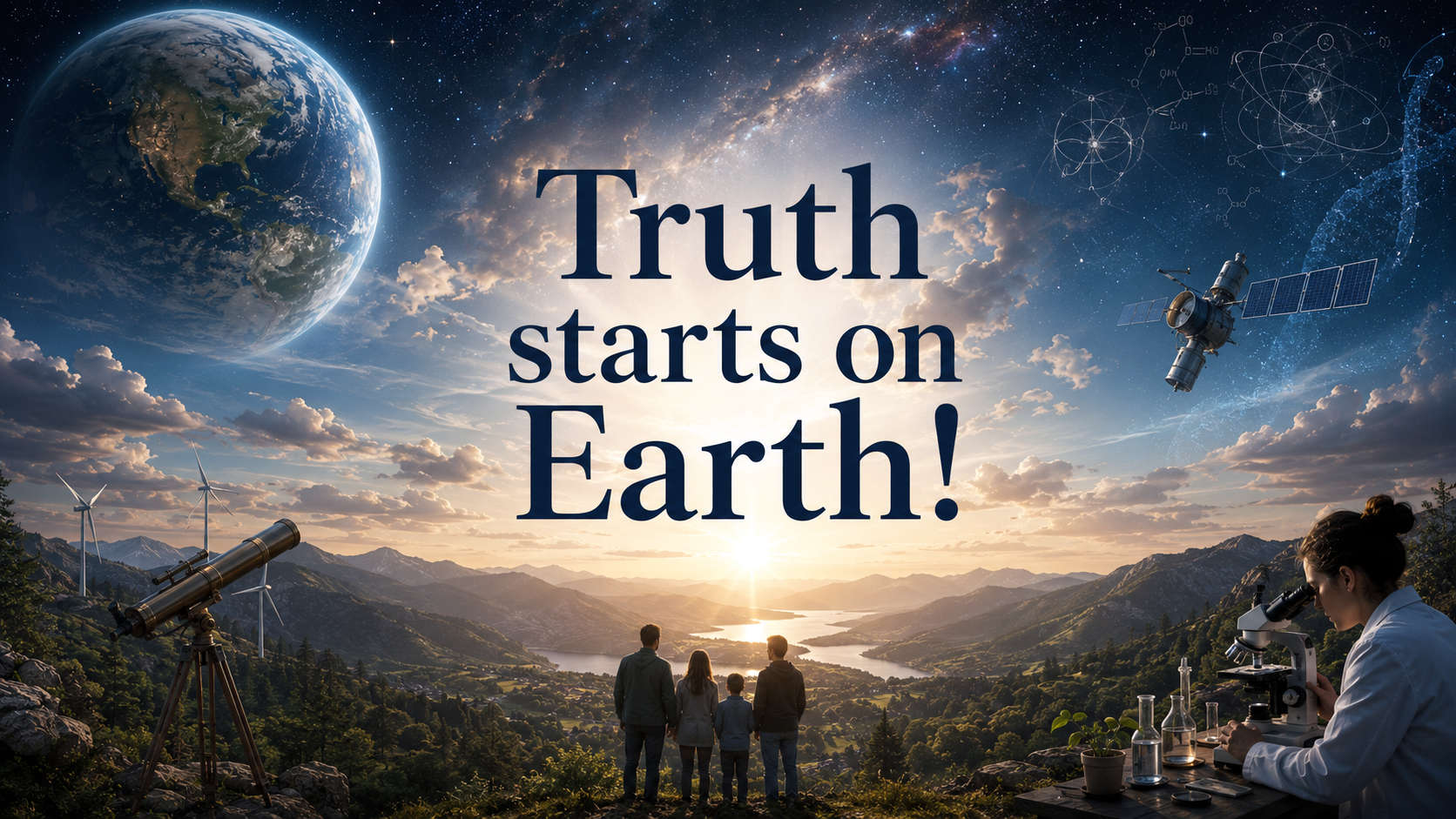
Realism is not a religion and it does not claim we know everything. It simply says reality exists independently of our beliefs, and our ideas succeed or fail by how well they line up with it. Our worldviews differ, but gravity, medicine, vaccines, broken bones, soil, water, light, and time still push back on all of us. Think well by starting on the common floor: this material world we all share.
Michael Alan Prestwood
Author & Natural Philosopher
Prestwood writes on science-first philosophy, with particular attention to the convergence of disciplines. Drawing on his TST Framework, his work emphasizes rational inquiry grounded in empirical observation while engaging questions at the edges of established knowledge. With TouchstoneTruth positioned as a living touchstone, this work aims to contribute reliable, evolving analysis in an emerging AI era where the credibility of information is increasingly contested.
The Prestwood Column
Menu
September 2026
Column Research….
1. Timeline Story
Hume’s Is–Ought Problem
2. Linked Quote
“I meet with no proposition that is not connected with an ought, or an ought not.”
3. Science FAQ »
Can science prove flourishing should be our goal?
4. Philosophy FAQ »
What is the difference between a normative aim and a normative directive?
5. Critical Thinking FAQ »
Is flourishing for all just utilitarianism?
6. History FAQ!
What is the history of the idea of flourishing in philosophy?
Bonus Deep-Dive Article
TST Normative Ethics: Flourishing as a Philosophical Goal

Comments

Join the Conversation! Currently logged out.
NEW BOOK! NOW AVAILABLE!!

30 Philosophers: A New Look at Timeless Ideas

by Michael Alan Prestwood
The story of the history of our best ideas!
Scroll to Top