
Explore Natural Philosophy

Phil • Cr. Think • Science • Hist •

STORY

Genus Dryopithecus: Cultural Transmission Emerges

By Michael Alan Prestwood

Sun 14 Apr 2024
Published 2 years ago.
Updated 4 weeks ago.
Related Stories
Cenozoic Era: Age of Mammals & Birds
First Synapsids
Last Non-Cynodont Therapsids
Last Non-Therapsid Synapsids
Last Non-Mammaliaform Cynodonts
Chimpanzee-Bonobo Split
Share :
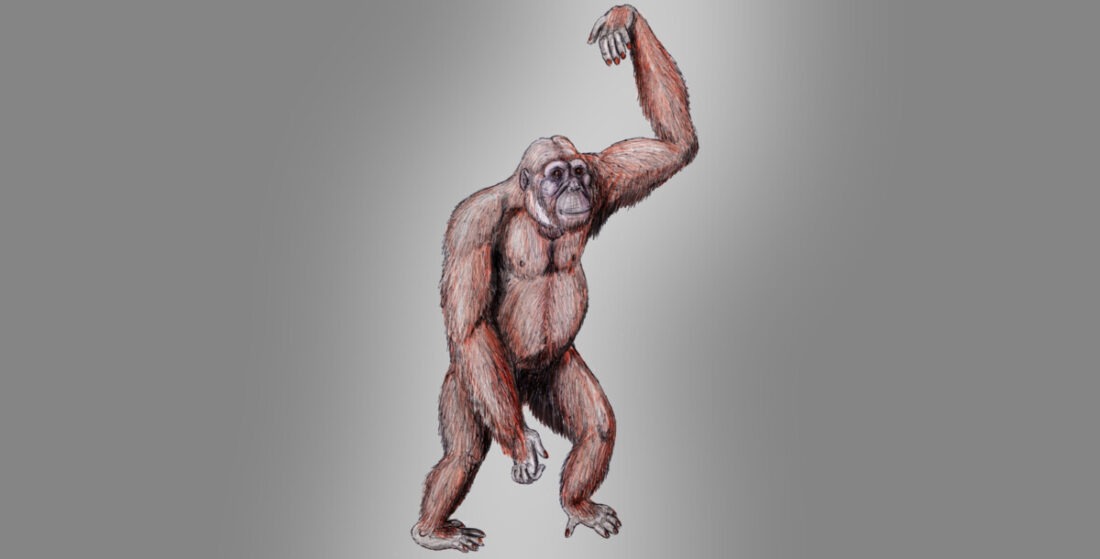
Around 13 million years ago, Dryopithecus lived among the branches of Miocene forests. Young apes learned by watching adults: what to eat, where to climb, who to trust, and how to survive.

Genus Dryopithecus: Cultural Transmission Emerges

Emerged 13 mya, extinct 9 to 7 mya
Cultural Transmission

Likely an orangutan ancestor: As the branches of the ape family tree diverged, Dryopithecus emerged during the Miocene epoch, offering a glimpse into the early development of primate social structures. Living approximately 13 to 12 million years ago, this early ape flourished in the European forests, at a time slightly preceding or overlapping with the divergence of orangutans around 12 to 16 million years ago. This timeline positions Dryopithecus as an example of early apes developing complex social behaviors that may have included rudimentary forms of cultural transmission.

Inhabiting a world of dense forests and diverse ecosystems, Dryopithecus likely navigated a social landscape that required adaptive behaviors and communication skills, setting the stage for the evolution of more sophisticated social learning and cultural transmission. These early apes were not direct ancestors of modern orangutans but rather part of a broader group of Miocene apes that explored various adaptive strategies. The evolution of social learning in such environments underscores the beginnings of culture, where knowledge and behaviors started to be passed down through generations, shaping the social dynamics of future ape lineages.

— map / TST —

Michael Alan Prestwood
Author & Natural Philosopher
Prestwood writes on science-first philosophy, with particular attention to the convergence of disciplines. Drawing on his TST Framework, his work emphasizes rational inquiry grounded in empirical observation while engaging questions at the edges of established knowledge. With TouchstoneTruth positioned as a living touchstone, this work aims to contribute reliable, evolving analysis in an emerging AI era where the credibility of information is increasingly contested.
Email
Print
The Prestwood Column
Menu
July 2026
»COLUMN ARCHIVE
--COLUMN--
Column Research….
1. Timeline Story
The famous Lewis “Truth in Fiction” Paper
2. Linked Quote
“Truth is stranger than fiction…[which] is obliged to stick to possibilities;”
3. Science FAQ »
Why does fiction feel real?
4. Philosophy FAQ »
Can authors create fiction beyond our universe?
5. Critical Thinking FAQ »
How do we know what is true in a fictional world?
6. History FAQ!
What is the history of philosophy of fiction?
Bonus Deep-Dive Article
TST Philosophy of Fiction: Imaginative Realism

Comments

Join the Conversation! Currently logged out.

Leave a Reply

NEW BOOK! NOW AVAILABLE!!

30 Philosophers: A New Look at Timeless Ideas

by Michael Alan Prestwood
The story of the history of our best ideas!
Scroll to Top